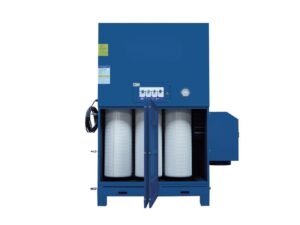
A cartridge dust collector is often used for fine dry pharmaceutical powder generated from tablet presses, capsule filling machines, weighing stations, powder transfer points, and packaging equipment.
Compared with a large central baghouse system, a cartridge collector can provide a large filter area in a compact structure. This makes it useful for local dust extraction in pharmaceutical manufacturing.
However, cartridge dust collectors are not suitable for every powder. Sticky, oily, hygroscopic, high-load, or combustible powders need careful review before final selection.
This guide explains when a cartridge dust collector is suitable for pharmaceutical powder and what buyers should check before requesting a quotation.
Quick Answer
A cartridge dust collector is usually suitable when the pharmaceutical powder is fine, dry, and generated from a local process point.
| Application condition | Suitability |
|---|---|
| Fine dry pharmaceutical powder | Usually suitable |
| Tablet press dust | Often suitable |
| Capsule filling dust | Often suitable |
| Powder weighing station | Usually suitable |
| Small powder transfer point | Usually suitable |
| Compact production area | Suitable |
| Sticky or hygroscopic powder | Needs careful review |
| Heavy dust load | May need larger filter area or baghouse collector |
| Combustible powder | Explosion protection should be evaluated |
For a full industry overview, visit our pharmaceutical dust collection system application page.
Why Cartridge Dust Collectors Are Used for Pharmaceutical Powder
Pharmaceutical powder is often fine and lightweight. Once released during production, it can become airborne quickly and spread around the machine area.
A cartridge dust collector can be useful because it offers:
- Compact structure
- Large filtration area
- Pulse-jet cleaning
- Local dust extraction capability
- Suitable filtration for fine dry powder
- Easier placement near production equipment
- Lower space requirement compared with some larger systems
For local pharmaceutical dust points, the collector does not always need to be very large. The important question is whether the airflow, filter area, filter media, and capture method match the actual powder behavior.
For a tablet press or capsule filling machine with fine dry powder, a cartridge dust collector is often a practical starting point. If the powder is sticky or the dust load is high, the filter cleaning performance should be checked carefully.
Suitable Pharmaceutical Applications
Cartridge dust collectors are commonly considered for local dust sources in pharmaceutical manufacturing.
Tablet Press Dust Collection
Tablet pressing can generate fine powder around the compression area, feeding system, and tablet discharge area.
A cartridge dust collector may be suitable when:
- Dust is fine and dry
- The dust source is close to the machine
- Local extraction is possible
- The airflow requirement is not very large
- The process does not create heavy sticky dust
The capture point should be placed close to the dust release area. If powder escapes before entering the airflow, a larger collector may not solve the problem.
Capsule Filling Dust Collection
Capsule filling machines can release powder during filling, dosing, cleaning, or material transfer.
A cartridge collector may be used for:
- Local extraction near the filling area
- Powder leakage around the machine
- Fine dry powder collection
- Small to medium airflow requirements
If the powder has exposure concerns, secondary filtration or sealed dust handling may need to be considered based on the customer’s internal requirements.
Powder Weighing and Transfer
Powder weighing, manual transfer, and small feeding points often create short bursts of dust.
A cartridge dust collector can be suitable for:
- Weighing stations
- Manual powder feeding
- Small transfer points
- Local dust capture near open powder handling areas
For open powder dumping or transfer, hood design is very important. The collector should be selected together with the capture hood or enclosure.
Packaging and Filling Points
Some pharmaceutical packaging and filling processes generate dust near filling nozzles, discharge points, or container openings.
A cartridge dust collector may help capture fine powder released during:
- Bottle filling
- Sachet filling
- Powder packaging
- Small container filling
- Local discharge points
For packaging dust, the capture design should avoid disturbing lightweight powder while still pulling enough air to collect released dust.
When a Cartridge Dust Collector May Not Be Suitable
A cartridge dust collector is not always the best choice. Some powder conditions may cause filter blockage, high pressure drop, or frequent maintenance.
Be careful when the powder is:
- Sticky
- Oily
- Hygroscopic
- High in moisture
- Very high in concentration
- Difficult to release from filter surfaces
- Mixed with coarse or abrasive particles
- Combustible without proper safety review
Cartridge filters have pleated surfaces. This gives them a large filter area, but sticky powder can build up inside the pleats. If pulse cleaning cannot remove the dust effectively, differential pressure may rise quickly.
In these cases, a baghouse dust collector may be considered for larger airflow, heavier dust load, or continuous central dust collection systems.
Key Design Considerations
Choosing a cartridge dust collector for pharmaceutical powder requires more than selecting a model from airflow.
Filter Media Selection
Filter media should match the powder condition and process requirement.
Possible considerations include:
- Standard filter media for dry powder
- Surface-treated media for better dust release
- Anti-static media for combustible powder
- Moisture-resistant consideration for hygroscopic powder
- Flame-retardant media where fire risk is present
If the powder is very fine, the filter media and sealing quality become more important.
Pulse Cleaning Performance
Pulse cleaning removes dust from the cartridge surface. For dry powder, this can work well. For sticky or hygroscopic powder, dust may not release easily.
Buyers should check:
- Dust concentration
- Powder stickiness
- Filter area
- Pulse cleaning pressure
- Cleaning interval
- Differential pressure monitoring
If powder builds up quickly on the filter, increasing airflow will not solve the problem. Filter media and cleaning performance should be reviewed first.
Source Capture
A cartridge dust collector works only when dust enters the airflow. If the hood is too far from the dust source, powder may spread before being captured.
Common capture methods include:
- Local hood
- Machine connection port
- Partial enclosure
- Backdraft extraction
- Extraction near filling or discharge points
Good source capture can reduce required airflow and improve dust control performance.
Secondary Filtration
Some pharmaceutical applications may require secondary filtration depending on powder properties, exposure concerns, or internal plant requirements.
Secondary filtration may be considered when:
- The powder is very fine
- The powder has exposure concerns
- Higher filtration assurance is needed
- The customer has stricter discharge requirements
This should be confirmed based on the process and local requirements.
Stainless Steel Material
Some pharmaceutical applications may require stainless steel parts, especially where cleaning, corrosion resistance, or contact area requirements are important.
Not every part must be stainless steel in every project. The material selection should depend on:
- Powder properties
- Cleaning requirement
- Corrosion risk
- Contact or non-contact area
- Customer’s internal standard
Combustible Powder and Explosion Protection
Some pharmaceutical powders and excipients may be combustible.
If combustible dust is present, the system should be reviewed for:
- Anti-static filter media
- Grounding
- Explosion venting
- Explosion-proof electrical components
- Isolation or suppression measures where required
- Dust test data such as Kst or Pmax, if available
If the buyer does not know whether the powder is combustible, this should be checked before final design.
Cartridge vs Baghouse for Pharmaceutical Powder
Both cartridge and baghouse dust collectors can be used in pharmaceutical powder applications, but they are suitable for different working conditions.
| Selection point | Cartridge dust collector | Baghouse dust collector |
|---|---|---|
| Space requirement | More compact | Usually larger |
| Fine dry powder | Often suitable | Also possible |
| Local dust point | Very suitable | Less common |
| Large airflow | Limited by model size | More suitable |
| Heavy dust load | Needs careful review | Often more suitable |
| Continuous central system | Possible for smaller systems | More suitable |
| Sticky powder | Needs careful review | Also needs review, but may offer more options |
| Maintenance | Cartridge replacement | Filter bag replacement |
For a single tablet press, capsule filling machine, or weighing station, a cartridge collector is often practical. For a large system with several dust points and higher dust load, a baghouse collector may be more suitable.
Information Needed Before Quotation
To recommend a suitable cartridge dust collector for pharmaceutical powder, please prepare the following information.
Process Information
- Pharmaceutical process type
- Dust source
- Machine type
- Number of dust collection points
- Working hours per day
- Available space for the collector
- Indoor or outdoor placement
- Power supply voltage and frequency
Powder Information
- Powder name or material type
- Particle size
- Dust concentration
- Whether the powder is dry, sticky, oily, or hygroscopic
- Whether the powder is combustible
- Whether the powder has exposure or containment concerns
- Material or exhaust temperature
System Requirements
- Required airflow, if known
- Required filtration level, if any
- Whether secondary filtration is needed
- Whether stainless steel material is required
- Whether explosion protection is required
- Preferred dust discharge method
- Photos, layout drawings, or process flow diagrams
If you are not sure about the airflow, you can send photos of the dust source, machine size, process description, and powder information. Novazure can help make an initial selection based on your application.
FAQs
Yes, a cartridge dust collector is often suitable for fine dry pharmaceutical powder from tablet pressing, capsule filling, powder weighing, transfer, and packaging points. Sticky or hygroscopic powder should be checked carefully.
Common applications include tablet press dust collection, capsule filling dust collection, powder weighing, powder transfer, packaging, and local extraction points.
It may not be suitable when the powder is sticky, oily, high in moisture, very high in concentration, or difficult to clean from filter pleats. In these cases, filter media, cleaning method, or a baghouse option should be reviewed.
Some pharmaceutical powders may be combustible. Explosion protection should be reviewed based on dust properties, test data, equipment location, and local safety requirements.
Yes, stainless steel material can be considered depending on cleaning requirements, corrosion risk, contact area, and customer standards.
Important information includes powder type, dust source, airflow, particle size, dust concentration, moisture or stickiness, combustibility, working hours, and filtration requirements.
Need a Cartridge Dust Collector for Pharmaceutical Powder?
Send us your powder type, dust source, airflow requirement, number of dust collection points, and process information. Novazure can help review your application and recommend suitable dust collection equipment for pharmaceutical powder handling.