
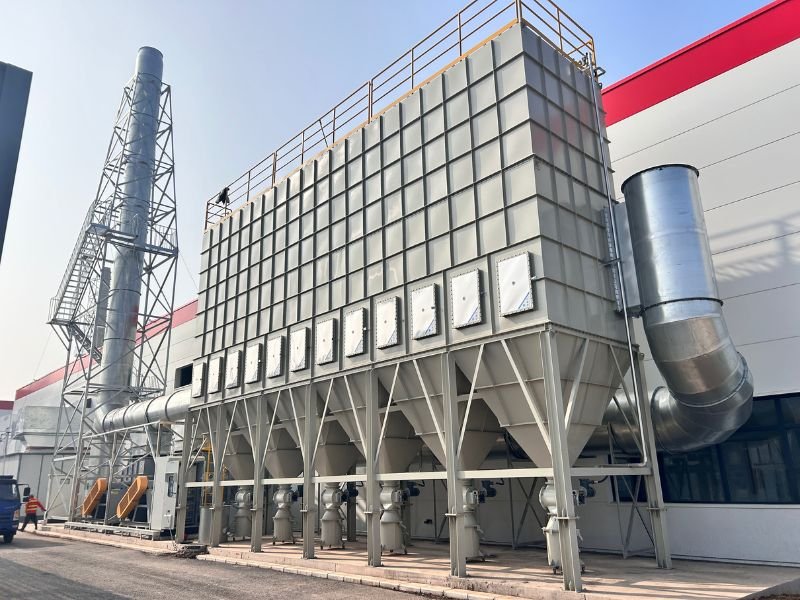
Custom Baghouse Dust Collectors Engineered for Your Process
Novazure is a China-based baghouse dust collector manufacturer providing custom industrial dust collection equipment for different processes and operating conditions.
Baghouse dust collectors use fabric filter bags to separate dry particulate from industrial air streams, making them suitable for large airflow, heavy dust loading and continuous-duty applications.
We design each baghouse around your required airflow, dust characteristics, operating temperature, dust loading, emission target and site conditions. Share your project information with us, and our team can recommend a suitable configuration and prepare a quotation for your application.
Request a QuoteBaghouse Dust Collectors We Can Provide
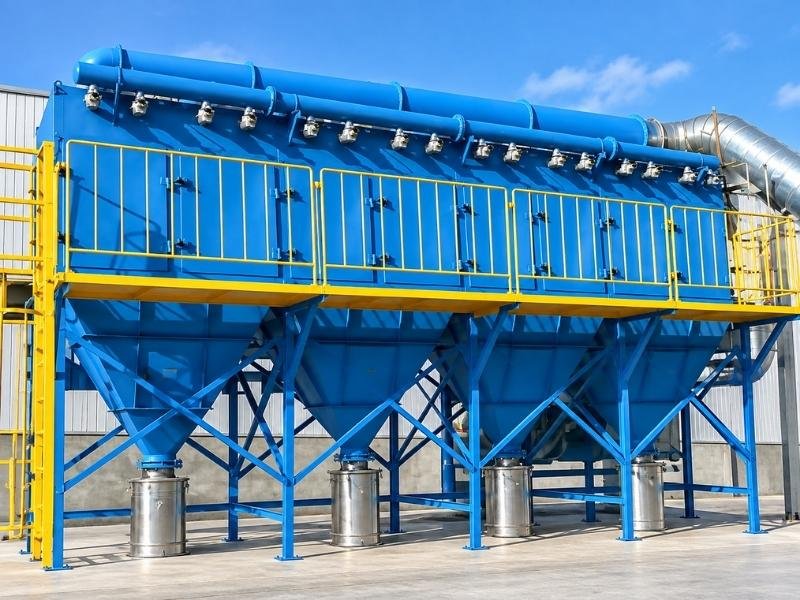
Pulse-Jet Baghouse Dust Collector
Automatic pulse cleaning design for continuous industrial filtration and efficient dust removal in demanding operating conditions.
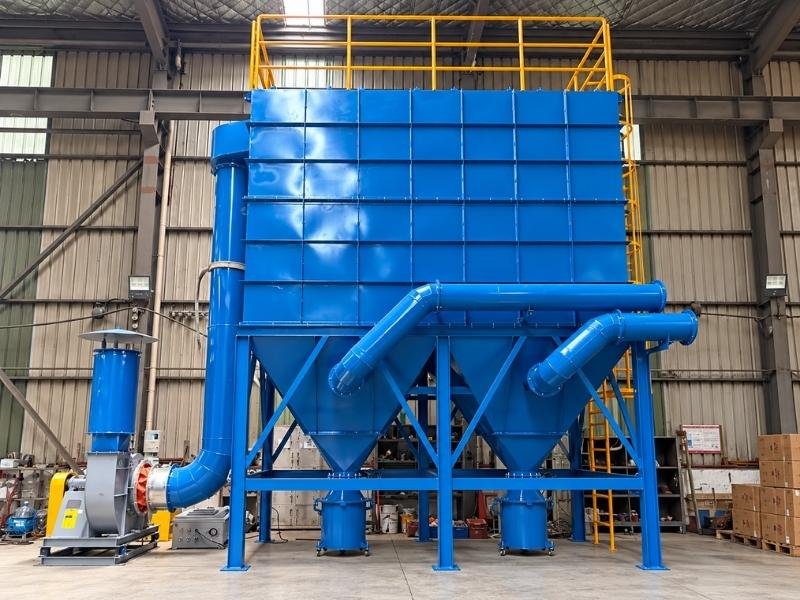
High-Temperature Baghouse Dust Collector
Engineered for elevated gas temperatures with suitable filter media, structural materials and thermal protection options.
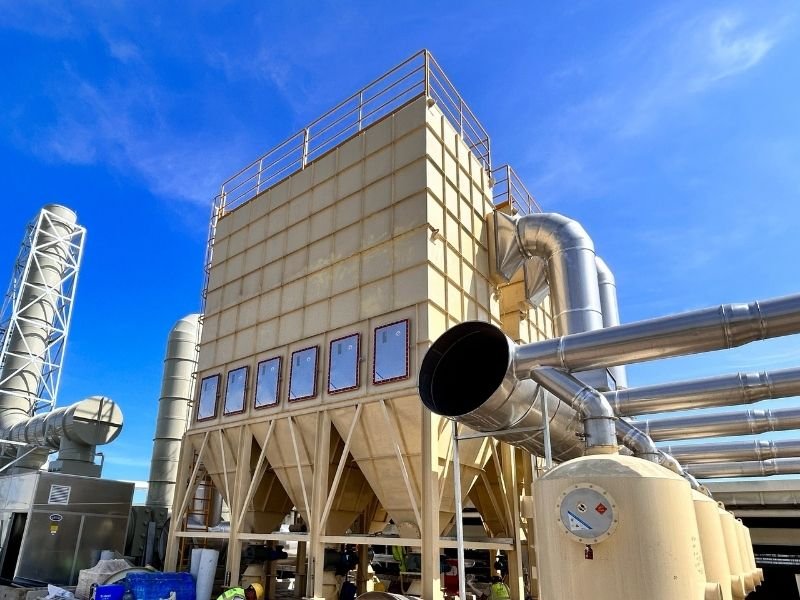
Explosion-Proof Baghouse Dust Collector
Configurable with suitable explosion-protection components for combustible dust applications and project-specific safety requirements.
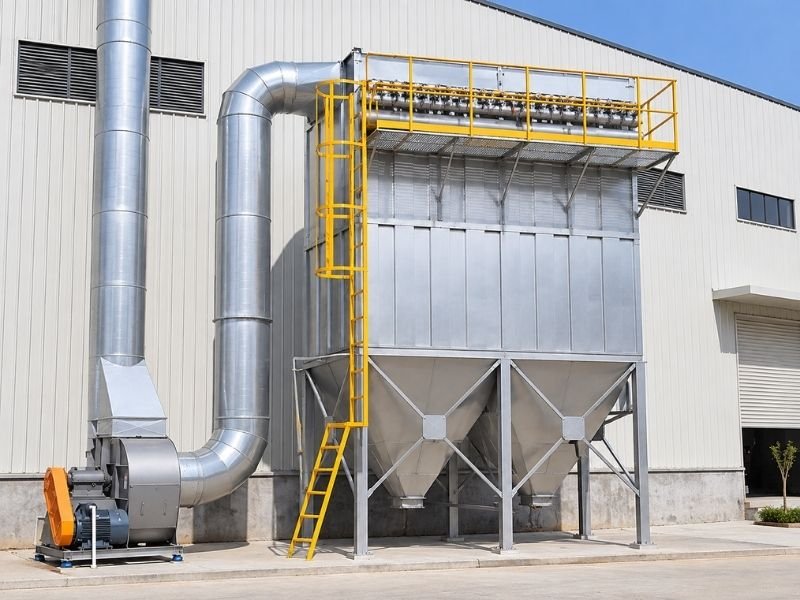
Corrosion-Resistant Baghouse Dust Collector
Designed for corrosive dust or gas conditions with stainless steel construction or suitable anti-corrosion treatment options.
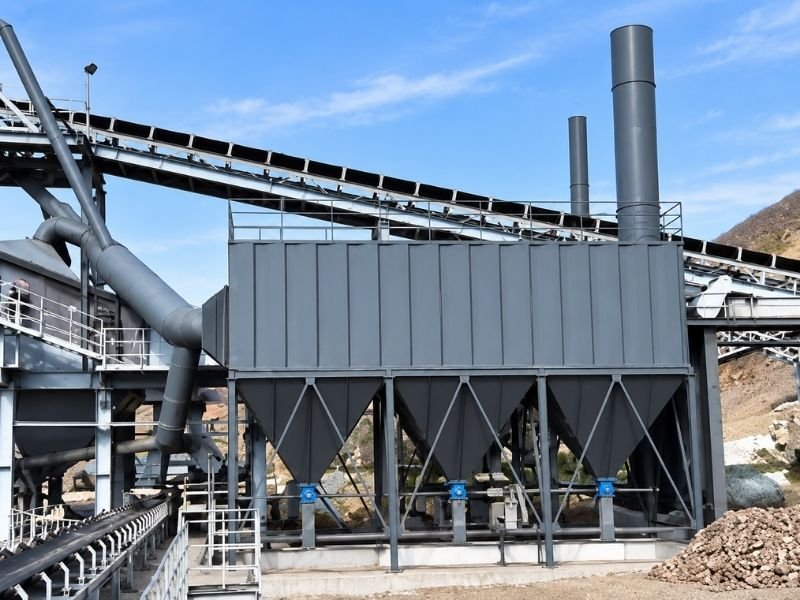
Abrasion-Resistant Baghouse Dust Collector
Suitable for abrasive dust conditions with wear-resistant design details to improve equipment reliability and service life.
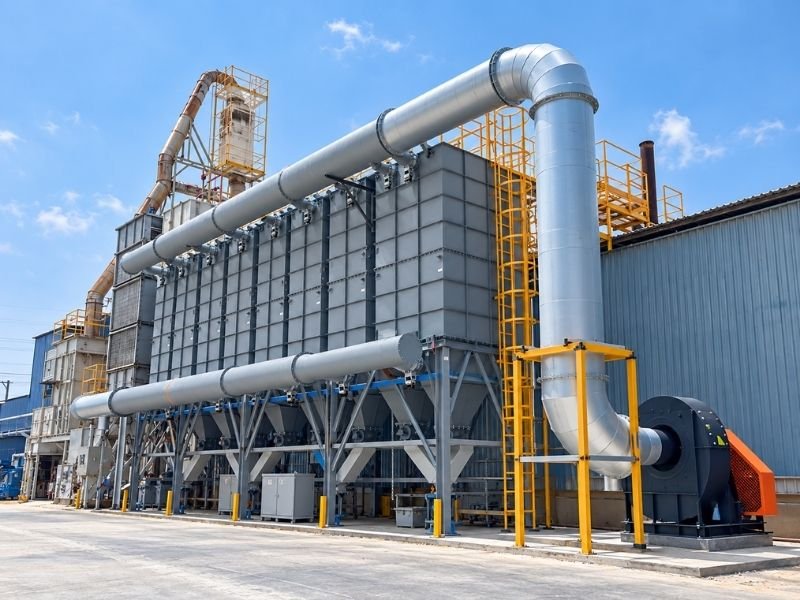
Multi-Compartment Baghouse Dust Collector
Multi-chamber baghouse configuration for larger airflow, flexible maintenance and continuous industrial operation.
Baghouse Dust Collector Models & Specifications
| Parameter | NZ-BDC-050 | NZ-BDC-075 | NZ-BDC-100 | NZ-BDC-150 | NZ-BDC-200 | NZ-BDC-250 | NZ-BDC-300 |
|---|---|---|---|---|---|---|---|
| Airflow (m³/h) | 5,000 | 7,500 | 10,000 | 15,000 | 20,000 | 25,000 | 30,000 |
| Filter Area (m²) | 101 | 143.3 | 202 | 286.6 | 396.8 | 485 | 587.8 |
| No. of Filter Bags | 99 | 117 | 198 | 234 | 324 | 297 | 360 |
| Filter Bag Size (mm) | Ø130 × 2500 | Ø130 × 3000 | Ø130 × 2500 | Ø130 × 3000 | Ø130 × 3000 | Ø130 × 4000 | Ø130 × 4000 |
| Air-to-Cloth Ratio (m/min) | 0.825 | 0.87 | 0.825 | 0.87 | 0.84 | 0.86 | 0.85 |
| No. of Compartments | 1 | 1 | 2 | 2 | 3 | 3 | 4 |
| Pulse Valves (Qty) | 11 | 13 | 22 | 26 | 36 | 33 | 40 |
| Cleaning Method | Pulse-Jet | Pulse-Jet | Pulse-Jet | Pulse-Jet | Pulse-Jet | Pulse-Jet | Pulse-Jet |
| Dust Discharge | Manual / Automatic | Manual / Automatic | Manual / Automatic | Manual / Automatic | Manual / Automatic | Manual / Automatic | Manual / Automatic |
| Inlet Diameter (mm) | Ø300 | Ø350 | Ø400 | Ø500 | Ø600 | Ø650 | Ø700 |
| Outlet Diameter (mm) | Ø300 | Ø350 | Ø400 | Ø500 | Ø600 | Ø650 | Ø700 |
| Body Material | Q235 | Q235 | Q235 | Q235 | Q235 | Q235 | Q235 |
| Dimensions (L × W × H, mm) | 2300 × 1900 × 5800 | 2650 × 1900 × 6700 | 4600 × 1900 × 5800 | 5300 × 1900 × 6700 | 7500 × 1900 × 6600 | 6800 × 1900 × 7600 | 8000 × 1900 × 7200 |
* The specifications above are standard reference data. Actual equipment configuration and dimensions may be adjusted according to operating conditions and project requirements. Final specifications are subject to the approved design drawings.
Not Sure Which Baghouse Model You Need?
Tell us your required airflow and application conditions, and our team can help you identify a suitable model from the specifications above.
Why Project-Specific Baghouse Design Matters
Match the Required Airflow
Different processes, extraction points and operating conditions require different airflow capacities. Proper sizing helps avoid insufficient extraction or unnecessary system oversizing.
Optimize Air-to-Cloth Ratio
Filter area and air-to-cloth ratio should be selected according to the dust and process conditions to control resistance, maintain filtration performance and support longer filter bag life.
Adapt to Dust Characteristics
Fine, abrasive, sticky, hygroscopic and other difficult dusts require different filtration media, collector configurations and design considerations.
Handle Temperature & Corrosion
High temperature, humidity and corrosive process gases directly affect filter media, housing materials and internal component selection.
Improve Cleaning & Continuous Operation
Bag quantity, compartment arrangement, pulse-valve configuration and cleaning sequence can be optimized for stable operation, maintenance access and continuous production.
Fit the Site & System Layout
Equipment dimensions, inlet and outlet orientation, hopper, discharge equipment, fan, controls and safety options can be configured around the available space and process layout.
Baghouse or Cartridge Dust Collector — Which Is Right for Your Process?
Baghouse Dust Collector
Typically selected for larger airflow, heavier dust loading and demanding continuous industrial processes.
Cartridge Dust Collector
Typically selected for fine dry dust where compact equipment and high filtration area are important.
Neither filtration technology is universally better. The correct choice depends on dust characteristics, dust loading, airflow, temperature, available space and operating requirements.
Choose the Right Filter Bag for Your Baghouse
Polyester Filter Bag
A widely used filter media for general dry dust collection under normal operating temperatures.
Explore >>PPS Filter Bag
Suitable for elevated temperatures and applications where chemical resistance is an important operating requirement.
Explore >>Aramid / Nomex Filter Bag
Designed for high-temperature dry filtration where thermal stability and mechanical durability are required.
Explore >>PTFE Filter Bag
Suitable for demanding filtration involving corrosive process gases and aggressive chemical environments.
Explore >>PTFE Membrane Filter Bag
Membrane filtration supports fine-particle capture, easier dust release and lower-emission applications.
Explore >>Fiberglass Filter Bag
Commonly selected for high-temperature gas filtration under suitable process and operating conditions.
Explore >>Antistatic Filter Bag
Conductive properties help control electrostatic charge in selected combustible and static-sensitive dust applications.
Explore >>Pleated Filter Bag
Pleated construction increases filtration area within a compact element for selected applications and retrofits.
Explore >>Looking for Filter Bags for Your Dust Collection System?
Explore our full range of industrial filter bags, materials and filtration options for different temperatures, dust characteristics and operating conditions.
Components of a Complete Baghouse Dust Collection System
Filter Bags & Cages
Filter media and support cages are selected according to temperature, dust properties and required filtration performance.
Explore Filter Bags >>Dust Collector Fan
The fan is selected according to required airflow, total system resistance and actual operating conditions.
Explore Dust Collector Fans >>Pulse-Jet Cleaning System
Pulse valves, blow pipes and compressed-air components provide automatic periodic cleaning of the filter bags.
More Details >>Dust Discharge Equipment
Rotary airlock valves, screw conveyors and other discharge arrangements can be configured according to the project.
More Details >>Electrical Control System
Control options can include pulse cleaning control, differential pressure monitoring, PLC, HMI and VFD integration.
More Details >>Safety & Structural Equipment
Optional scope may include explosion-protection equipment, support structures, access platforms and ladders.
More Details >>Explore Baghouse Dust Collection Solutions
By Industry
By Application
By Dust Type
Operating Conditions
Frequently Asked Questions About Baghouse Dust Collectors
How do I choose the right baghouse dust collector size?
Baghouse sizing is mainly based on the required airflow, dust characteristics, inlet dust concentration, operating temperature and suitable air-to-cloth ratio. These parameters determine the required filtration area, number of filter bags and overall collector size.
What information do you need before providing a quotation?
Ideally, please provide the required airflow, dust type and concentration, operating temperature, emission requirement, process information, power supply and any available equipment layout or installation restrictions. If some parameters are not available, our team can discuss the application with you before preparing the initial configuration.
How often should baghouse filter bags be replaced?
Filter bag service life depends on dust properties, operating temperature, chemical exposure, filtration velocity, cleaning frequency and maintenance conditions. Replacement is normally required when bags become damaged, permanently blinded or can no longer maintain the required filtration performance.
What is the recommended air-to-cloth ratio for a baghouse dust collector?
Learn More About Air-to-Cloth Ratio >>
Can a baghouse dust collector handle high-temperature dust?
Yes. High-temperature applications can be handled by selecting suitable filter media, seals, construction materials and system configuration according to both the normal and peak gas temperatures. The actual design should be confirmed for each process condition.
Baghouse vs cartridge dust collector: which one should I choose?
Compare Baghouse and Cartridge Dust Collectors >>
Can you provide explosion-protection options for combustible dust?
Explosion-protection equipment and project-specific safety configurations can be incorporated when required. The appropriate protection concept depends on the dust hazard, process conditions, installation arrangement and applicable project requirements.
What is the typical production lead time for a custom baghouse?
Production time depends on collector size, material, system configuration and project complexity. For most customized industrial dust collection projects, the typical production period is approximately 30–60 days after technical confirmation and order approval.