High-Temperature Baghouse Dust Collector
High-Temperature Baghouse Filtration for Demanding Processes
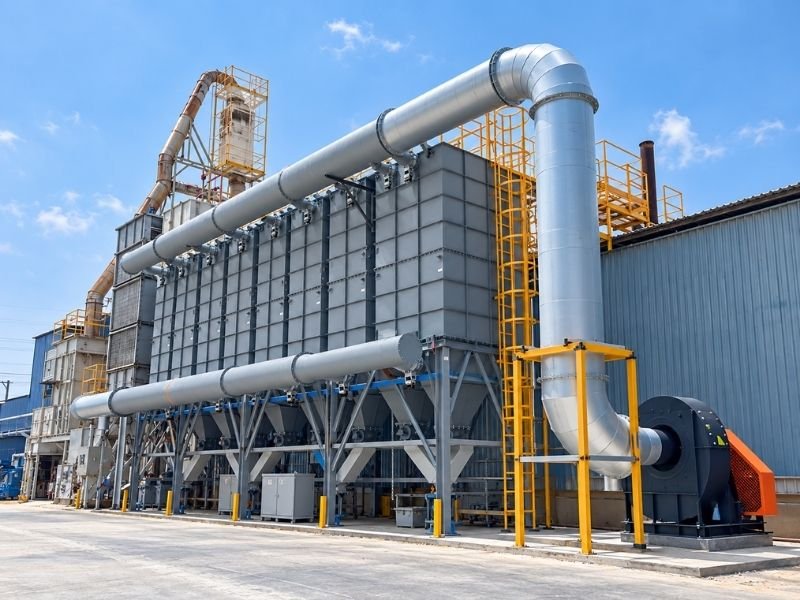
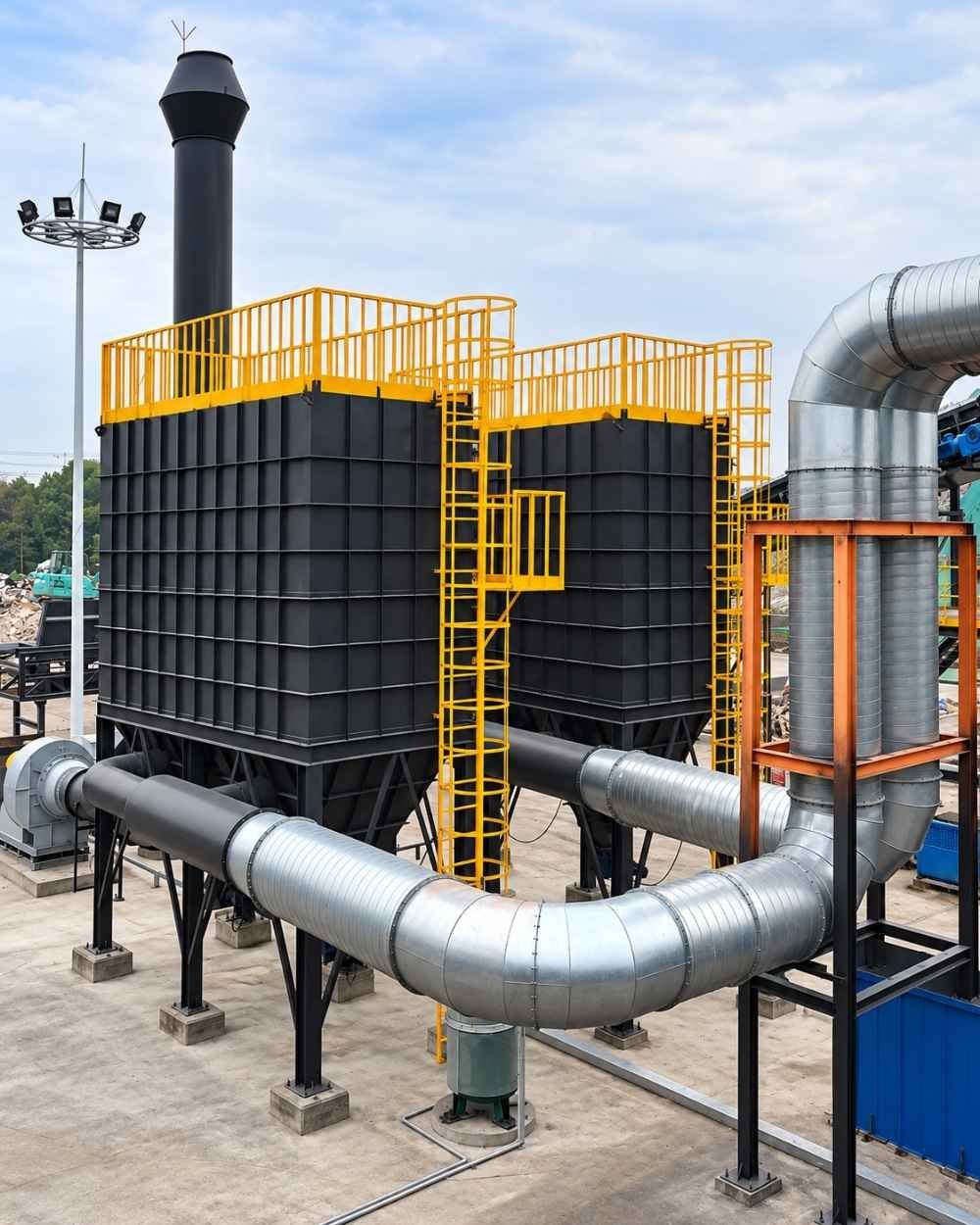
High-temperature baghouse dust collectors remove particulate matter from heated industrial exhaust, including boiler and furnace flue gas. System design considers inlet temperature, dust loading, gas composition, and emission requirements, with suitable filter media, housing materials, insulation, and sealing components selected for the process.
When process gas exceeds the allowable temperature of the selected filter bags, upstream cooling may be required. Novazure can evaluate heat exchangers, controlled ambient-air mixing, temperature monitoring, and protective controls as part of an integrated system, while accounting for condensation risks and changes in airflow.
High-Temperature Gas Cooling & Protection
Engineered Gas Cooling
Upstream heat exchange and, where suitable, controlled air dilution help manage exhaust temperature before baghouse filtration.
Temperature Monitoring
Inlet temperature measurement and project-specific alarms or interlocks help identify overheating and other abnormal operating conditions.
Filter Media Protection
Filter media, seals and housing details are selected with attention to temperature resistance, gas chemistry and condensation risk.
High-Temperature Fume Collection for Aluminum Chip Heating
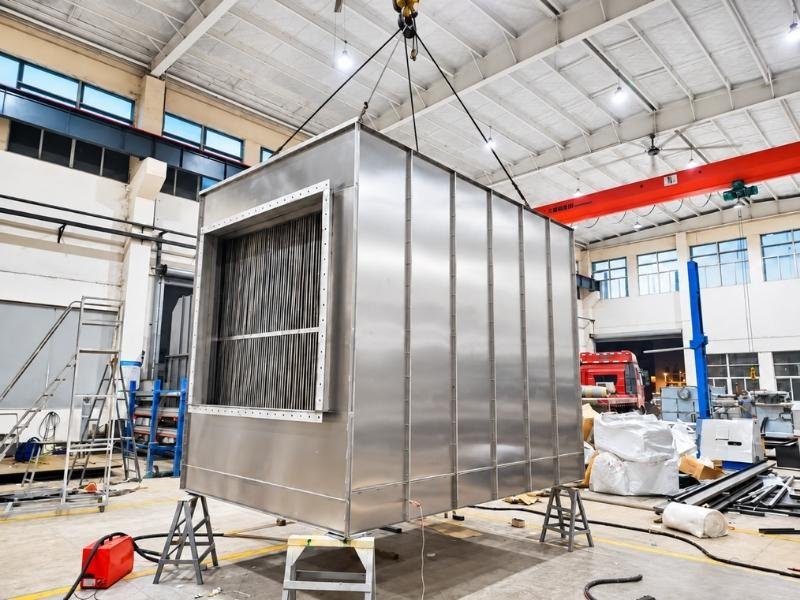
Cooling Hot Exhaust Before Fabric Filtration
High peak gas temperature called for a staged thermal-management arrangement ahead of the baghouse. The system design combined the following measures:
-
01
Heat Exchanger Provides upstream cooling for exhaust from the aluminum-chip heating process.
-
02
Controlled Ambient-Air Mixing Introduces additional cooling air through the ductwork where process conditions permit.
-
03
High-Temperature Baghouse Receives gas at a specified 200°C inlet design condition and uses selected aramid filter bags.
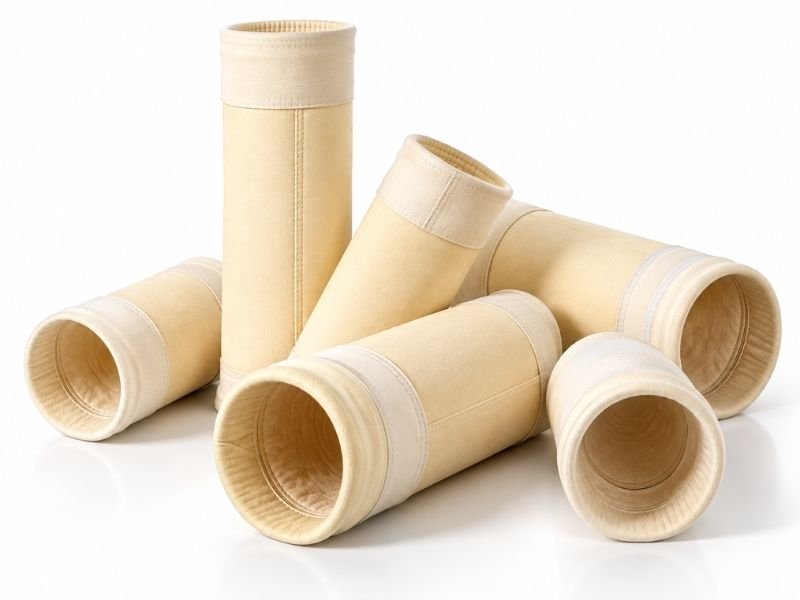
100% Aramid Filter Bags
Aramid filter media was selected for this project. The specified 200°C gas inlet is near the continuous-temperature limit of many aramid media grades; the exact grade, temperature excursions and gas chemistry require engineering verification.
Explore Aramid Filter Bags ↗Key Features of High-Temperature Baghouse Dust Collectors
-
High-Temperature Filter Media
Aramid and other suitable filter media are selected according to inlet temperature, gas chemistry, moisture, and the allowable temperature limits of each grade.
-
Heat-Resistant Construction
Housing materials, insulation, filter cages, and sealing components can be configured for elevated temperatures, thermal expansion, and maintenance access.
-
Temperature Monitoring & Protection
Inlet temperature sensors, alarms, and project-specific protective controls can be integrated to help manage abnormal heat exposure at the filter bags.
-
Integrated Cooling & Filtration
When gas cooling is required, heat exchangers and suitable ambient-air mixing can be coordinated with baghouse sizing, ductwork, and fan selection.
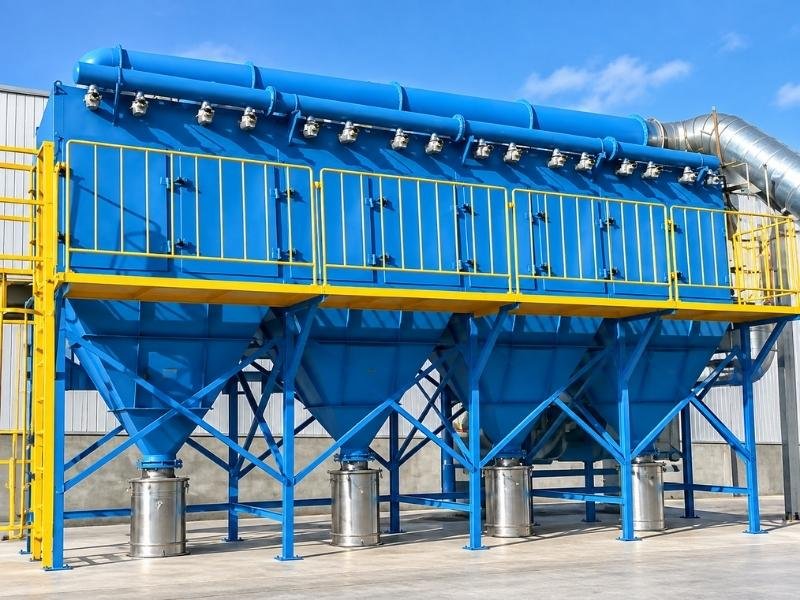
High-Temperature Baghouse Models & Specifications
| Parameter | NZ-BDC-050 5,000 m³/h | NZ-BDC-075 7,500 m³/h | NZ-BDC-100 10,000 m³/h | NZ-BDC-150 15,000 m³/h | NZ-BDC-200 20,000 m³/h | NZ-BDC-250 25,000 m³/h | NZ-BDC-300 30,000 m³/h |
|---|---|---|---|---|---|---|---|
| Reference Airflow (m³/h) | 5,000 | 7,500 | 10,000 | 15,000 | 20,000 | 25,000 | 30,000 |
| Filter Area (m²) | 101 | 143.3 | 202 | 286.6 | 396.8 | 485 | 587.8 |
| No. of Filter Bags | 99 | 117 | 198 | 234 | 324 | 297 | 360 |
| Filter Bag Size (mm) | Ø130 × 2500 | Ø130 × 3000 | Ø130 × 2500 | Ø130 × 3000 | Ø130 × 3000 | Ø130 × 4000 | Ø130 × 4000 |
| Air-to-Cloth Ratio (m/min) | 0.825 | 0.87 | 0.825 | 0.87 | 0.84 | 0.86 | 0.85 |
| No. of Compartments | 1 | 1 | 2 | 2 | 3 | 3 | 4 |
| Pulse Valves (Qty) | 11 | 13 | 22 | 26 | 36 | 33 | 40 |
| Reference Cleaning | Pulse-Jet | Pulse-Jet | Pulse-Jet | Pulse-Jet | Pulse-Jet | Pulse-Jet | Pulse-Jet |
| Dust Discharge | Manual / Automatic | Manual / Automatic | Manual / Automatic | Manual / Automatic | Manual / Automatic | Manual / Automatic | Manual / Automatic |
| Reference Dimensions (L × W × H, mm) | 2300 × 1900 × 5800 | 2650 × 1900 × 6700 | 4600 × 1900 × 5800 | 5300 × 1900 × 6700 | 7500 × 1900 × 6600 | 6800 × 1900 × 7600 | 8000 × 1900 × 7200 |
Showing specifications for NZ-BDC-100
High-Temperature Filter Bag Material Options
High-Temperature System Design Considerations
Temperature & Protection
Define normal and peak gas temperatures, filter-media limits, inlet monitoring, alarms and suitable process protection or bypass arrangements.
Cooling & Actual Airflow
Evaluate upstream heat exchange or controlled ambient-air mixing. Recalculate gas volume and air-to-cloth ratio at final inlet conditions.
Housing & Gas Chemistry
Specify steel grade, insulation, seals, ductwork and cleaning hardware based on corrosion, dew point, thermal expansion and particulate properties.
Need Help Sizing a High-Temperature Baghouse?
Share your airflow, normal and peak gas temperatures, dust properties, gas composition and emission requirements. We'll help evaluate the filtration and cooling arrangement.
Explore High-Temperature Dust Collection Solutions
Industries Served
Explore IndustriesIndustries with heated exhaust streams where temperature-controlled baghouse filtration may be appropriate.
-
Cement & Lime Production ↗
-
Steel & Foundries ↗
-
Aluminum & Metal Recycling ↗
-
Asphalt Production ↗
-
Power Generation ↗
-
Ceramics & Brick Manufacturing ↗
-
Glass Manufacturing ↗
-
Chemical Manufacturing ↗
-
Waste-to-Energy Facilities ↗
Industrial Applications
Explore ApplicationsProcesses that may require upstream gas cooling, suitable filter media, and thermal protection.
-
Boiler & Furnace Exhaust ↗
-
Kiln & Calciner Exhaust ↗
-
Thermal Processing & Heating ↗
-
Industrial Dryer Exhaust ↗
-
Metal Melting & Casting Fumes ↗
-
Aluminum Chip Heating Fumes ↗
Dust Types & Particulate Materials
Explore Dust TypesParticulate characteristics influence filter media, operating temperature limits, and safety measures.
-
Cement Kiln Dust ↗
-
Fly Ash ↗
-
Mineral & Refractory Dust ↗
-
Silica-Containing Dust ↗
-
Metal Oxide Dust ↗
-
Foundry Sand & Dust ↗
-
Soot & Carbonaceous Dust ↗
-
Alumina & Aluminum Oxide Dust ↗
-
Chemical Process Dust ↗
Operating Conditions
Explore ConditionsThermal, chemical, and particulate conditions that shape high-temperature baghouse system design.
-
High-Temperature Gas ↗
-
Temperature Fluctuations ↗
-
Abrasive Particulate ↗
-
Corrosive Flue Gas ↗
-
Combustible Dust Hazards ↗
-
Condensation & Acid Dew Point ↗
System suitability depends on gas temperature, dew point, dust properties, filter-media limits, and project-specific risk assessment.
Related Dust Collection Products
Aramid Filter Bags
Temperature-resistant fabric filter bags for industrial baghouses, selected according to gas temperature and process conditions.
Explore Product
Pulse-Jet Baghouse Dust Collector
Industrial baghouse systems using compressed-air pulses to clean filter bags, with configurations tailored to the application.
Explore Product
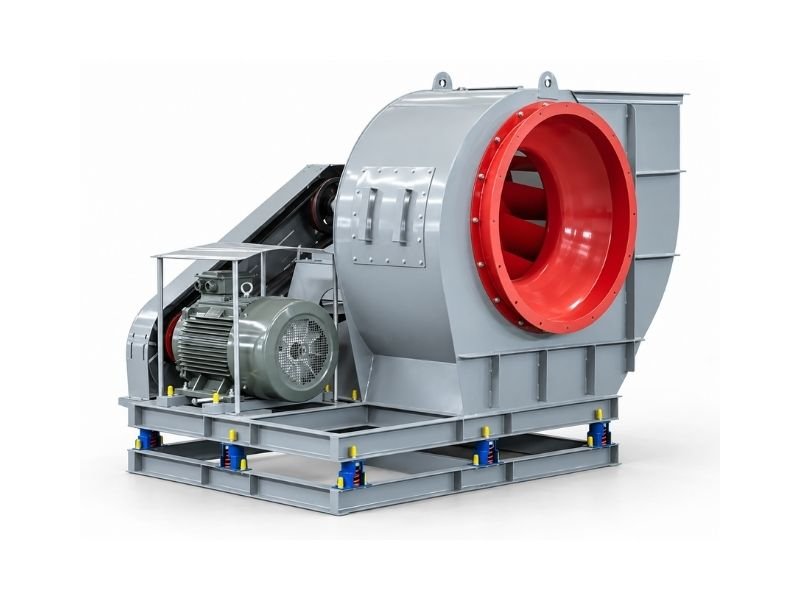
Dust Collector Fans
Centrifugal fans selected for system airflow, pressure requirements, and operating gas temperatures.
Explore Product
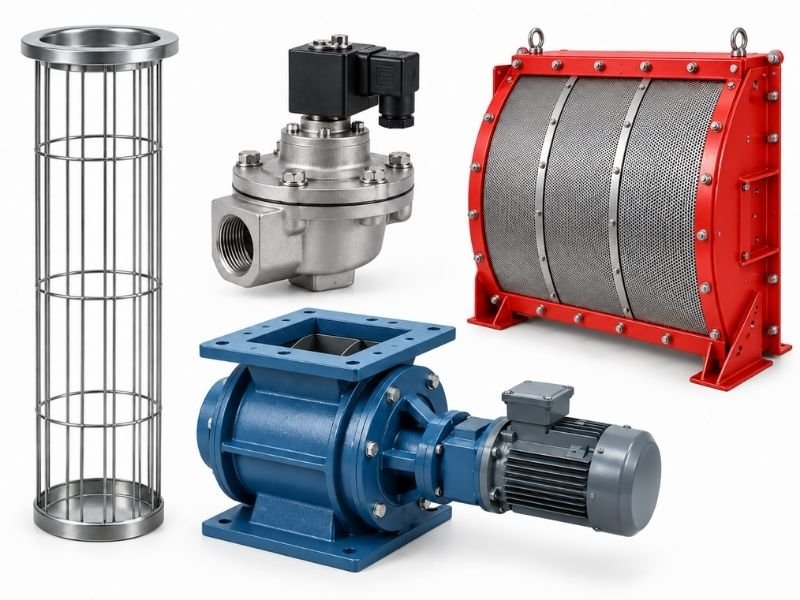
Dust Collector Parts & Components
Explore filter cages, pulse jet valves, solenoid valves, controllers, airlocks, and other dust collector spare parts.
Explore ProductHigh-Temperature Baghouse Dust Collector FAQs
Can a high-temperature baghouse handle 400°C exhaust directly?
Not with ordinary fabric filter bags. Gas entering the baghouse must remain within the continuous and peak temperature limits of the selected filter media and other components. If process exhaust reaches 400°C, an engineered cooling stage is generally required before filtration. In our Indonesia aluminum-chip heating project, 400°C was the maximum upstream gas temperature and 200°C was the specified baghouse inlet design condition—not a claim that filter bags withstand 400°C.
How is hot flue gas cooled before entering a baghouse?
Cooling methods may include an upstream heat exchanger and, where suitable, controlled mixing with ambient air. The appropriate arrangement depends on gas composition, temperature, pressure drop, condensation risk, and system capacity. Introducing ambient air also changes the oxygen concentration and total gas flow, so it is not appropriate for every process.
Which filter bag materials are suitable for high-temperature dust collection?
Potential choices include aramid, PPS, P84 (polyimide), PTFE, and fiberglass-based filter media. Each offers different temperature limits and resistance to oxygen, moisture, acids, alkalis, and mechanical cleaning. Material selection must be based on the actual gas conditions and the filter manufacturer’s specifications rather than temperature alone.
Can 100% aramid filter bags operate continuously at 200°C?
Some aramid grades are rated near 200°C, but allowable continuous temperature varies by product and service conditions. A 200°C baghouse inlet design temperature should not be treated as a universal safe operating point. Confirm the exact grade, temperature peaks, oxygen exposure, moisture, and a suitable safety margin. Explore our aramid filter bags for related product information.
How can filter bags be protected against sudden temperature spikes?
Inlet temperature sensors, alarms, and project-specific interlocks can help protect the filter media. Depending on the hazard assessment and process, protective actions may involve controlling cooling equipment, isolating hot gas, or stopping the process. Monitoring and protective functions must be engineered and verified for each installation; they should not be assumed to be standard on every model.
How do you avoid condensation and acid dew-point corrosion?
The system should maintain a suitable operating temperature above relevant water and acid dew points while remaining below the filter media’s permitted temperature. Gas chemistry, moisture, insulation, startup and shutdown conditions, and the chosen cooling method all affect this balance. Condensation can blind filter bags and accelerate corrosion, so the design temperature cannot be selected on heat resistance alone.
Does ambient-air mixing change baghouse sizing and airflow capacity?
Yes. Cooling changes the actual volumetric flow of the hot process gas, and added ambient air contributes extra flow through the baghouse. Filtration area, air-to-cloth ratio, duct sizing, and fan performance should therefore be calculated using the final mixed-gas conditions. Always clarify whether a quoted airflow is measured at process conditions or refers to a standardized reference condition.
Can a high-temperature baghouse collect fumes from aluminum-chip heating?
A suitably engineered system may capture particulate matter generated during aluminum-chip heating, as illustrated by our Indonesia design example. However, the exhaust may also contain condensable oil mist or vapors, which fabric filters do not necessarily remove. The process also requires assessment of combustible aluminum particles, ignition sources, and applicable safeguards before specifying a baghouse and any cooling-air arrangement.
What information is needed for a high-temperature baghouse quotation?
Please share the process description, actual airflow and its reference conditions, normal and peak exhaust temperatures, target baghouse inlet temperature, dust or fume composition, particle loading, moisture, gas chemistry, emission requirements, and site constraints. Details of any existing heat exchanger, ductwork, fans, and safety assessment are also useful. If some data are unavailable, we can begin with a preliminary technical discussion.
Let's Discuss Your Dust Collection Needs
Whether you need a complete dust collection system, compact equipment, or replacement filters, share your requirements with us. We'll help you evaluate a suitable solution.