
Industrial Welding Fume Collector
Welding Fume Extraction, Built for Your Workspace
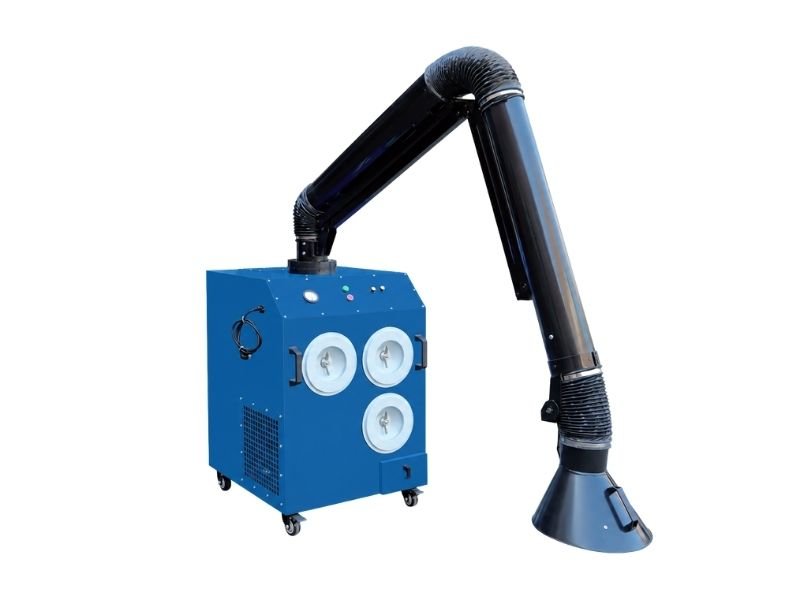
Novazure welding fume collectors are designed to capture airborne welding smoke and fine particulates near the source. Portable units with flexible extraction arms provide targeted fume collection for individual welding stations and metal fabrication workshops.
Suitable configurations can be evaluated for MIG/MAG, TIG, and manual arc welding applications. Share your welding process, number of workstations, operating hours, and installation requirements. Our team can help you select an appropriate extraction solution and provide a quotation.
Fume Extraction for Common Welding Processes
MIG / MAG Welding
Localized extraction for welding fumes and airborne particles generated during wire-feed welding operations.
02 / Precision WeldingTIG Welding
Carefully positioned fume capture for precision welding applications, with attention to shielding gas flow.
03 / Electrode WeldingStick / Arc Welding
Source capture for manual electrode welding in metal fabrication, repair, and maintenance workshops.
04 / Automated WeldingRobotic Welding
Application-specific extraction layouts for automated welding cells and connected production lines.
Selection Consideration: Welding fume extraction requirements depend on the welding process, base and filler materials, workstation layout, and operating conditions.
Practical Features for Welding Fume Extraction
Source Capture
Capture welding fumes close to where they are generated to help reduce dispersion into the surrounding workshop environment.
Fine Particle Filtration
Filter-based collection of airborne welding particulates, with filter media selected according to the application requirements.
Flexible Extraction Arm
An adjustable extraction arm allows the capture hood to be positioned near the welding point as workpiece positions change.
Portable Workstation Use
Mobile configurations can be repositioned between welding stations, supporting flexible workshop layouts and changing production needs.
Convenient Maintenance
Accessible filtration components support routine inspection, cleaning, and filter replacement during scheduled maintenance.
Application-Matched Setup
Extraction configurations can be evaluated around welding materials, workstation layout, operating hours, and site requirements.
Welding Fume Extraction, Matched to Your Workspace
Effective welding fume extraction begins with capture near the welding point. The right setup must fit the welding process and the operator's workspace.
Novazure helps evaluate extraction layout, filtration needs, equipment placement, and air discharge based on your materials, workstation arrangement, and operating hours.
Source Capture
Position the extraction hood near the weld, with attention to operator access and shielding gas.
Filtration & Airflow
Evaluate capture airflow and suitable filter media for the welding materials and duty cycle.
Installation & Discharge
Plan equipment position, maintenance access, and filtered-air discharge for the site.
Welding Fume Collector FAQs
What is a welding fume collector and how does it work?
A welding fume collector captures airborne fumes near the welding operation using an extraction arm, hood, or other capture device. The collected air passes through suitable filtration equipment before discharge. Capture performance depends on hood position, airflow, process conditions, and correct system design.
Which welding processes can use a welding fume collector?
Welding fume extraction can be considered for MIG/MAG, TIG, stick (manual metal arc), and robotic welding. Each process produces different fume quantities and contaminants. The extraction arrangement should be selected according to the welding method, materials, and workstation layout.
Should I choose a portable welding fume extractor or a fixed system?
A portable welding fume extractor is often practical for individual or changing workstations where the extraction arm can be positioned near the weld. Fixed or centralized systems may be more suitable for multiple stations or production lines. The choice depends on simultaneous use, available space, ductwork, and required airflow.
Can one welding fume collector serve multiple workstations?
Yes, when the system is designed for the number of extraction points operating at the same time. Airflow, duct resistance, capture-hood design, and balancing must be evaluated. A portable single-arm unit should not be assumed to support multiple welding stations without a separate engineering review.
Where should the extraction arm be positioned during welding?
Position the capture hood close enough to collect rising welding fumes without obstructing the welder or disrupting the shielding gas. The appropriate distance and orientation depend on the welding process, hood design, and cross-drafts. Reposition the arm when the welding location changes.
What filters are used, and when should they be replaced?
Welding fume collectors may use cartridge or other particulate filters, with filter media selected for the fume composition and required performance. Some applications may need additional filtration stages. Inspect filters routinely and replace them when damaged, when pressure drop remains excessive, or when filtration performance no longer meets the application requirements.
Can filtered welding air be returned to the workshop?
Indoor air recirculation is not suitable for every welding application. It depends on the metals and coatings being welded, contaminants such as hexavalent chromium or nickel, filtration performance, exposure assessment, and applicable local rules. Air discharge and any additional filtration requirements must be evaluated before recirculation is considered.
How are welding sparks and fire risks addressed?
Hot sparks and combustible materials can create fire hazards in extraction equipment. Depending on the process, the design may require suitable spark control, safe duct and filter arrangements, housekeeping, and other protective measures. A standard welding fume collector should not be assumed suitable for combustible or explosive atmospheres without a project-specific risk assessment.
What information is needed for a welding fume collector quotation?
Please share the welding process, base and filler materials, number of workstations, simultaneous operating points, daily operating hours, and available installation space. Photos, layout drawings, power supply, and planned air discharge are also helpful. If some details are unavailable, send what you know for an initial selection discussion.
Related Dust Collection Products

Cartridge Dust Collector
Pleated cartridge filtration systems for fine welding particulates and extraction from multiple industrial workstations.
Explore Product
Portable Dust Collector
Compact, movable dust collectors for local extraction at individual welding stations and flexible workshop arrangements.
Explore Product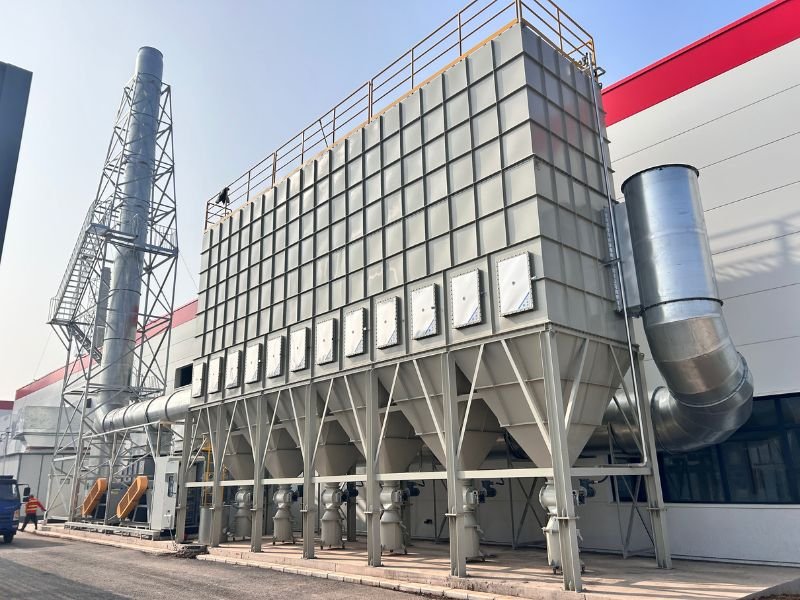
Baghouse Dust Collector
Customizable dust collection equipment for larger extraction networks and selected high-volume industrial processes.
Explore ProductLet's Discuss Your Dust Collection Needs
Whether you need a complete dust collection system, compact equipment, or replacement filters, share your requirements with us. We'll help you evaluate a suitable solution.