
Industrial Downdraft Table Dust Collector
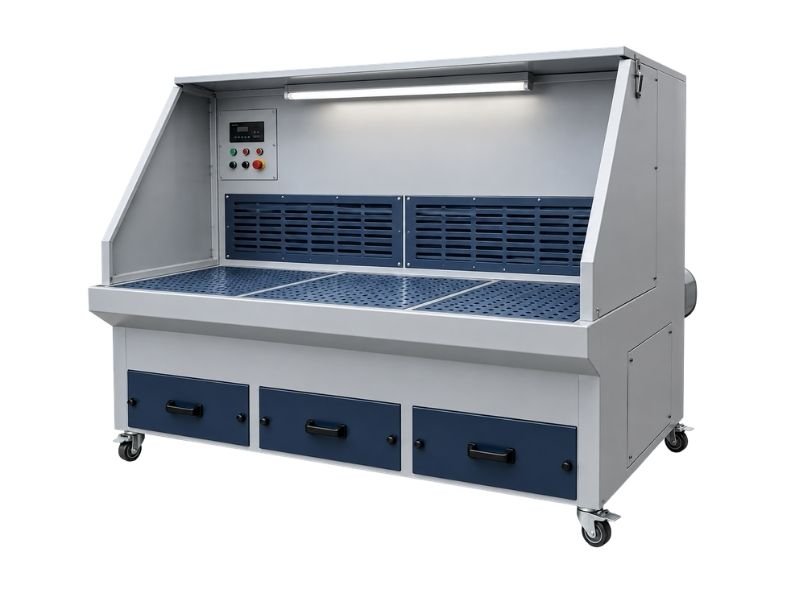
Downdraft Dust Collection, Built for Your Workstation
Novazure industrial downdraft tables are designed to capture dust and airborne particles generated during grinding, sanding, deburring, and surface finishing operations. Downward airflow through the work surface helps collect dust close to its source, reducing its spread around the workstation.
Each downdraft dust collection solution can be evaluated according to your workpiece dimensions, dust characteristics, operating conditions, and available space. Share your application details with our team to discuss a suitable table and filtration arrangement and request a quotation.
Dust Control for Common Finishing Processes
Grinding & Deburring
Downward airflow helps collect airborne grinding and deburring dust near the work surface on suitable workpieces.
02 / Surface PreparationSanding & Surface Preparation
Capture dust released during manual sanding and surface preparation at supported workstation surfaces.
03 / Finishing OperationsPolishing & Finishing
Support localized dust capture during polishing and finishing operations where a downdraft table is appropriate.
04 / Bench-Top WorkSmall-Part Processing
Provide a designated extraction work surface for manual handling and processing of smaller components.
Selection Consideration: Select the downdraft arrangement according to dust properties, workpiece size, and required capture airflow. Spark-producing work and combustible dust require a separate hazard assessment.
Designed for Workstation Dust Control
Downward Dust Capture
Downdraft airflow draws airborne dust and particles toward the extraction surface, helping limit dust dispersion around the workstation during suitable finishing operations.
Workstation Integration
A combined work surface and dust extraction arrangement provides a designated area for grinding, sanding, deburring, and other compatible manual finishing tasks.
Flexible Configuration
Table dimensions, dust extraction requirements, and filtration arrangements can be evaluated according to workpiece size, dust characteristics, and available installation space.
Practical Maintenance Access
Routine inspection, dust removal, and filter servicing should be considered when selecting the table and extraction arrangement, supporting practical long-term use.
Dust Collection Matched to Your Workstation
Effective downdraft collection starts with airflow through the work surface. The right setup depends on the finishing operation, workpiece dimensions, and dust characteristics.
Novazure helps evaluate table dimensions, required capture airflow, filtration options, and installation needs to match your workstation and operating conditions.
Work-Surface Capture
Evaluate airflow through the table surface to capture dust close to grinding or sanding operations.
Filtration & Equipment Scope
Review suitable filter media and determine whether integrated or externally connected extraction is required.
Installation & Safety Review
Consider maintenance access, available space, spark generation, and combustible dust risks.
Downdraft Table Dust Collector FAQs
What is a downdraft table dust collector and how does it work?
A downdraft table captures dust near the work surface by drawing air downward through a perforated or slotted tabletop. Dust-laden air is directed to a suitable filtration or dust collection system. Actual capture performance depends on airflow, workpiece placement, dust characteristics, and the extraction arrangement.
Which processes are suitable for a downdraft table?
Downdraft tables are commonly considered for manual sanding, grinding, deburring, polishing, and surface finishing. Suitability depends on the workpiece size, how the dust is generated, and whether the downward airflow can capture particles effectively without interfering with the operation.
What types of dust can a downdraft table collect?
A properly selected system can capture airborne particles from certain metalworking and other dry finishing applications. Fine, hazardous, abrasive, sticky, wet, or combustible dusts may require different filters, extraction arrangements, or additional protective measures. Dust composition and process conditions must be reviewed before selecting equipment.
Does a downdraft table include a fan and filtration system?
Not necessarily. Some downdraft tables are supplied as self-contained units with a fan and filtration equipment, while others connect to an external dust collector. The supplied configuration depends on the project. Filtered-air discharge or indoor recirculation must also be assessed against the collected contaminants and applicable local requirements.
How do I select the right table size and extraction airflow?
Selection starts with the workpiece dimensions, weight, active working area, dust generation rate, and number of simultaneous workstations. Required airflow also depends on the open tabletop area, capture characteristics, and system resistance. There is no single airflow value suitable for every downdraft table application.
Can a downdraft table handle grinding sparks or combustible metal dust?
A standard dry downdraft table should not be assumed suitable for hot sparks or combustible dust. Grinding may introduce ignition sources, while materials such as aluminum or magnesium can present combustible dust hazards. A process-specific risk assessment is needed to determine appropriate collection methods, fire protection, and explosion protection measures before use.
How should a downdraft table and its filters be maintained?
Keep the work surface and internal dust collection areas free from excessive accumulation, following safe cleaning procedures for the collected material. Inspect the extraction path, fan, and filters where fitted. Replace or service filtration components according to their condition, pressure-drop readings, and the equipment manufacturer's instructions.
What information is needed for a downdraft table quotation?
Please share the material being processed, grinding or sanding process, typical workpiece size and weight, required table dimensions, daily operating hours, and number of workstations. Photos, layout drawings, electrical supply, available space, and whether an external dust collector is available are also helpful. You can still send an inquiry if some details are not yet confirmed.
Related Dust Collection Products

Cartridge Dust Collector
Pleated-cartridge filtration systems for fine dust generated by grinding, sanding, and industrial finishing operations.
Explore Product
Portable Dust Collector
Compact and movable dust collection equipment for localized extraction at smaller workshops and processing stations.
Explore Product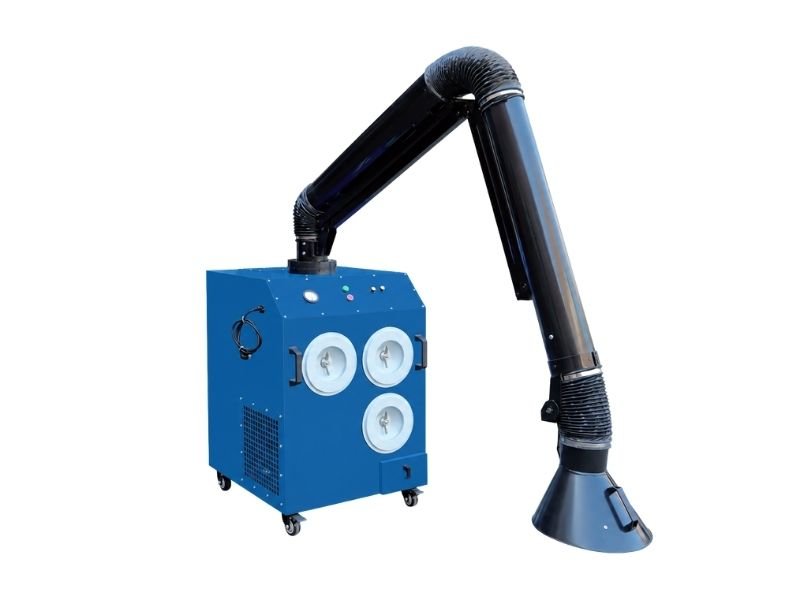
Welding Fume Collector
Localized fume extraction solutions for welding workstations and metal fabrication processes requiring source capture.
Explore ProductLet's Discuss Your Dust Collection Needs
Whether you need a complete dust collection system, compact equipment, or replacement filters, share your requirements with us. We'll help you evaluate a suitable solution.