
Abrasion-Resistant Baghouse Dust Collector
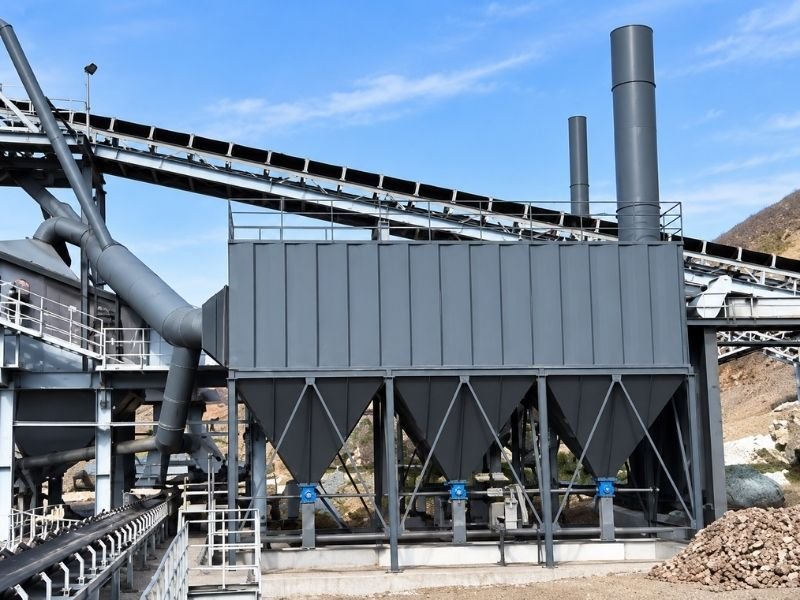
Abrasion-Resistant Dust Collection for Demanding Processes
Abrasion-resistant baghouse dust collectors are engineered for industrial processes handling hard, sharp, or highly abrasive particles. Applications such as mining, quarrying, cement production, and bulk material handling require protection against particle impact and accelerated component wear.
Novazure offers tailored wear protection using optimized inlet baffles, localized Hardox® or equivalent wear-resistant steel plates, and suitable filter bag configurations. Optional ceramic-lined cyclone pre-separation can further reduce coarse particle loading before the baghouse, helping protect critical components and reduce maintenance requirements.
When Is Abrasion-Resistant Design Needed?
Baghouse dust collectors handling hard, sharp, or highly abrasive particles can experience accelerated wear at the inlet, internal baffles, filter bags, hoppers, and dust discharge components.
Novazure evaluates dust hardness, particle size, dust loading, and airflow conditions to develop targeted wear protection using inlet baffles, wear-resistant materials, and optional pre-separation.
Hard & Angular Dust
Quartz sand, mineral ores, cement clinker, and other hard or angular particles can erode exposed surfaces and accelerate component wear.
High-Velocity Particle Impact
Concentrated dust-laden airflow at inlets and directional changes can strike internal walls, baffles, and filter bags at damaging velocities.
High Dust Loading
High particle concentrations increase abrasive contact in inlet zones, hoppers, and discharge equipment, particularly with coarse particles.
Frequent Wear & Maintenance
Repeated damage to filter bags, inlet baffles, or hopper surfaces may call for localized wear protection and improved airflow distribution.
Materials and Components for Abrasive Dust Collection
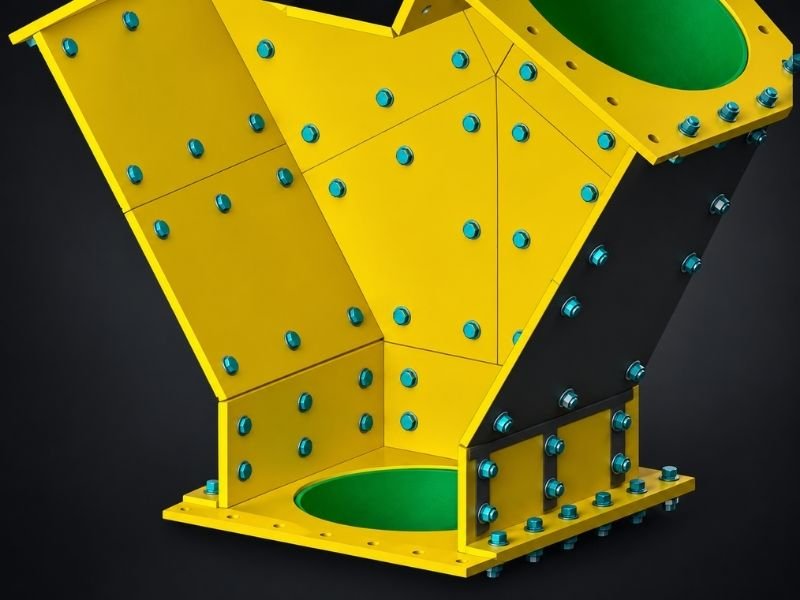
Hardox® & Equivalent Wear-Resistant Steel
Use Hardox® wear plate or technically suitable equivalent steel in high-wear areas such as inlet impact zones, internal baffles, and hopper surfaces—without requiring full wear-plate construction.
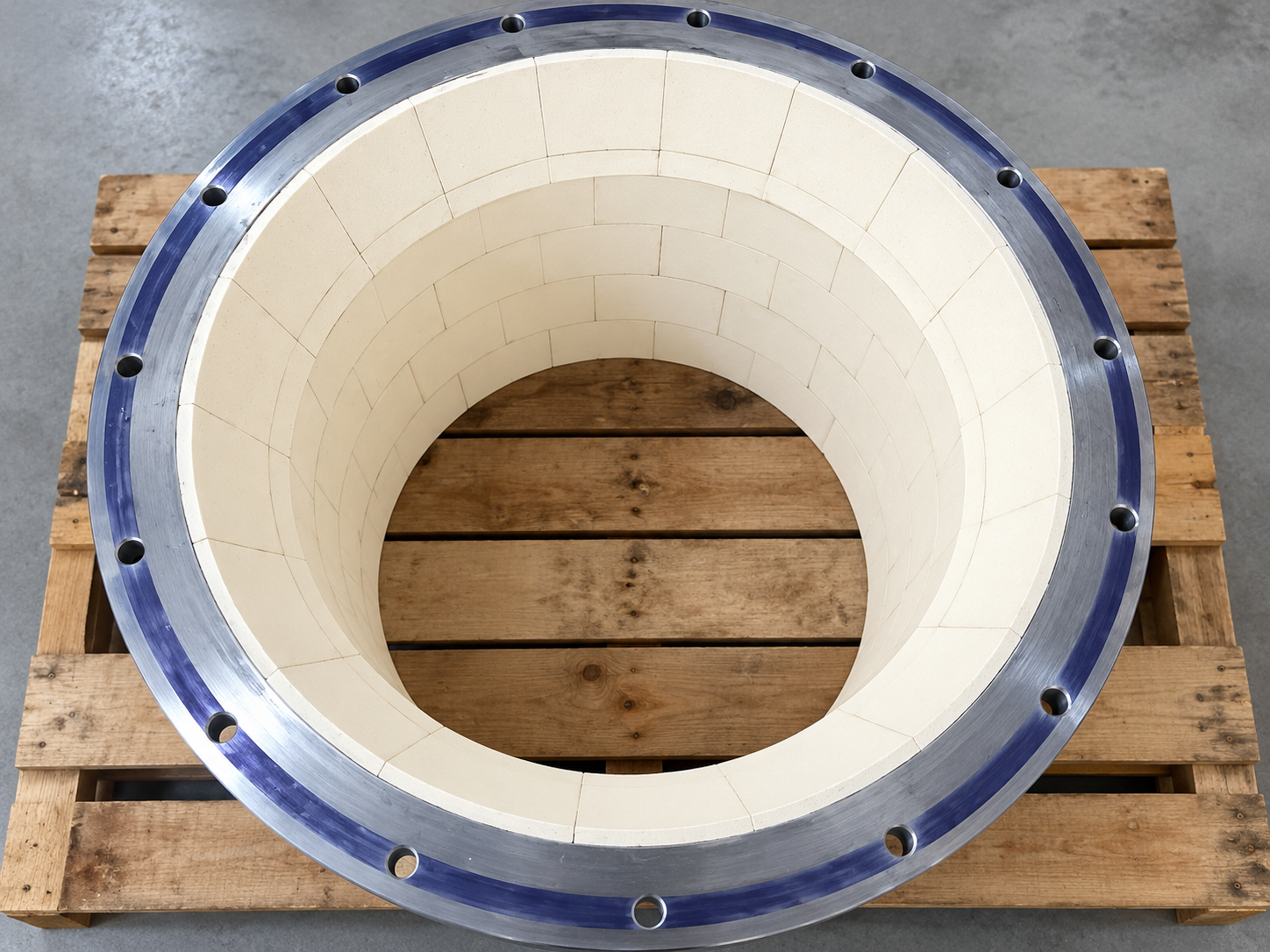
Ceramic-Lined Cyclone Pre-Separation
An optional upstream cyclone can separate part of the coarse dust load. Ceramic tiles or liners protect selected high-wear internal surfaces when required by particle characteristics and operating conditions.
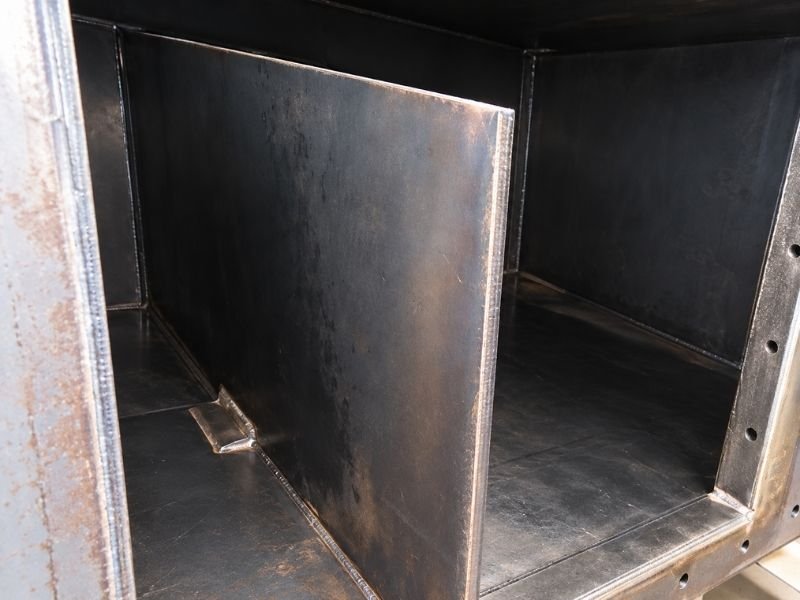
Optimized Inlet & Airflow Distribution
Inlet baffles and internal flow-guiding structures help distribute dust-laden air and reduce direct particle impact on filter bags, casing walls, and other vulnerable components.
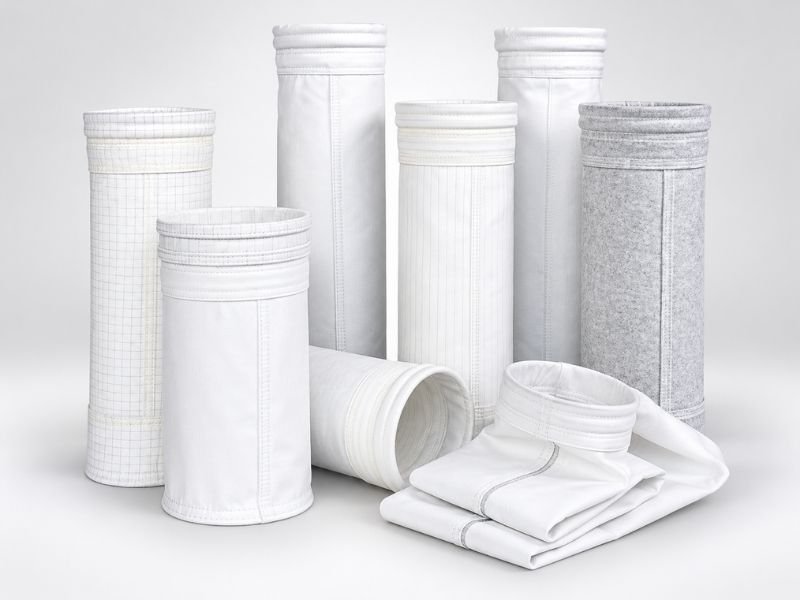
Abrasion-Resistant Filter Bags
Filter media, bag construction, and localized reinforcements can be selected for abrasive service. Proper airflow distribution is also important for reducing avoidable contact and wear.
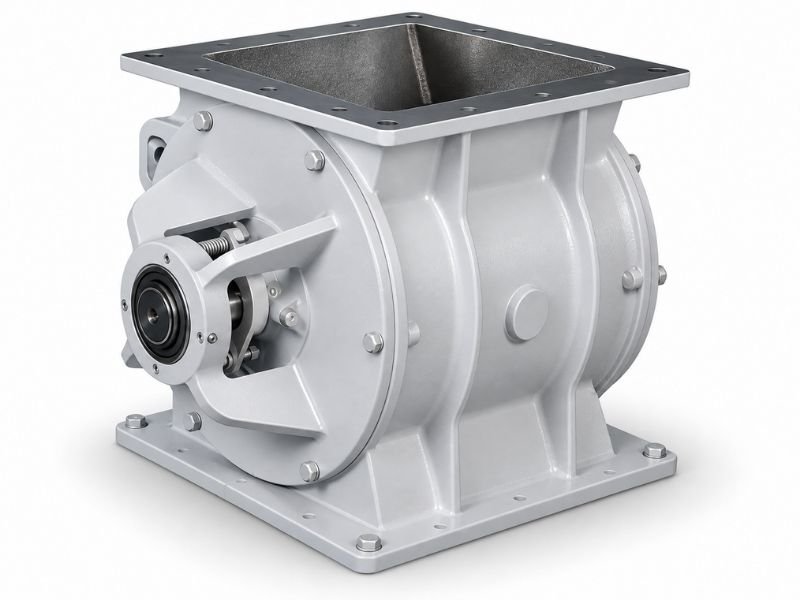
Heavy-Duty Dust Discharge Components
Hoppers, rotary airlock valves, and screw conveyors can be reinforced or fitted with replaceable wear parts to handle abrasive collected dust and reduce localized component deterioration.
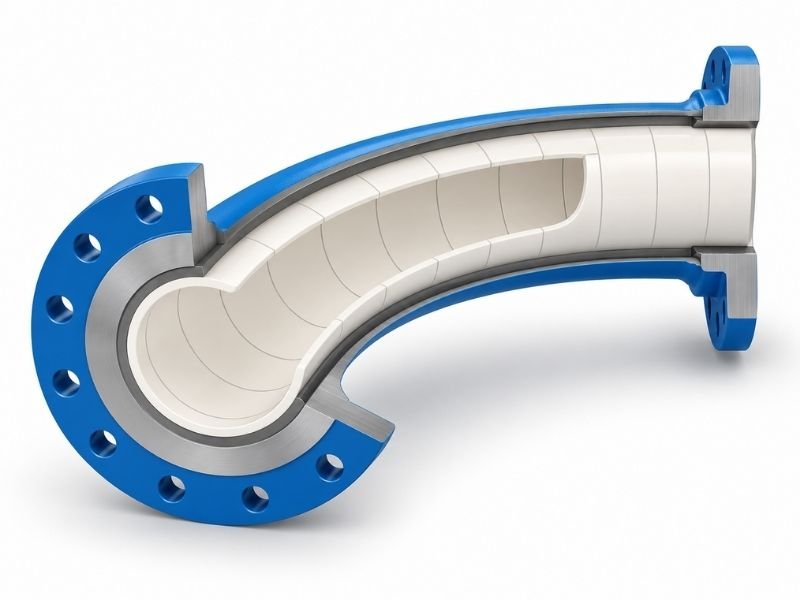
Wear-Resistant Ductwork & Elbows
High-impact duct sections and bends may use wear-resistant steel, replaceable liners, or ceramic protection, depending on dust hardness, flow velocity, impact angle, and maintenance needs.
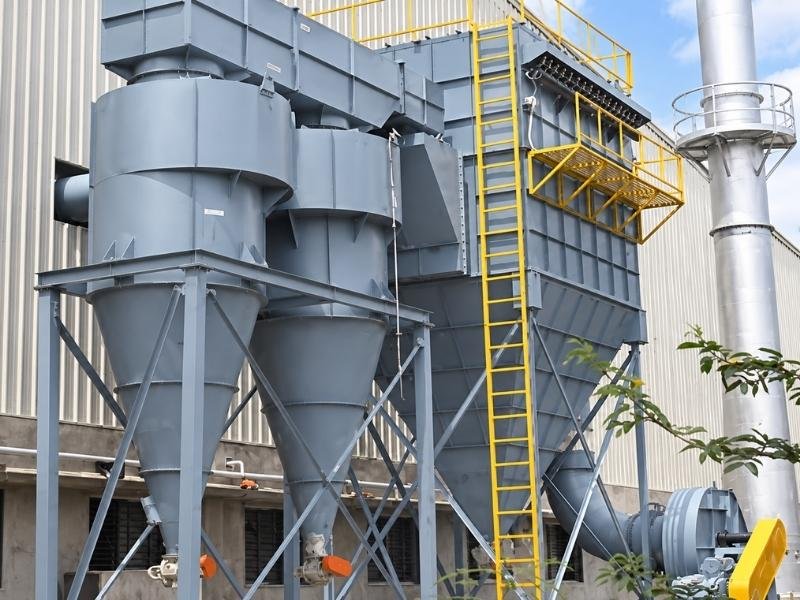
Australia Tire Recycling: 30,000 m³/h Dust Collection
For a tire-shredding project in Australia, Novazure proposed a 30,000 m³/h system combining two cyclone pre-separators with a baghouse. The design focuses on abrasive dust control and equipment protection.
Engineering Approach
Ceramic linings protect high-wear areas inside the cyclones, while internal baghouse baffles redirect dust-laden airflow to reduce direct particle impact on filter bags and critical components. Additional wear protection can be configured as needed.
Abrasion-Resistant Baghouse Specifications & Configurations
| Parameter | NZ-BDC-050 5,000 m³/h | NZ-BDC-075 7,500 m³/h | NZ-BDC-100 10,000 m³/h | NZ-BDC-150 15,000 m³/h | NZ-BDC-200 20,000 m³/h | NZ-BDC-250 25,000 m³/h | NZ-BDC-300 30,000 m³/h |
|---|---|---|---|---|---|---|---|
| Airflow (m³/h) | 5,000 | 7,500 | 10,000 | 15,000 | 20,000 | 25,000 | 30,000 |
| Filter Area (m²) | 101 | 143.3 | 202 | 286.6 | 396.8 | 485 | 587.8 |
| Number of Filter Bags | 99 | 117 | 198 | 234 | 324 | 297 | 360 |
| Filter Bag Size (mm) | Ø130 × 2500 | Ø130 × 3000 | Ø130 × 2500 | Ø130 × 3000 | Ø130 × 3000 | Ø130 × 4000 | Ø130 × 4000 |
| Air-to-Cloth Ratio (m/min) | 0.825 | 0.87 | 0.825 | 0.87 | 0.84 | 0.86 | 0.85 |
| Number of Compartments | 1 | 1 | 2 | 2 | 3 | 3 | 4 |
| Pulse Valves (Qty) | 11 | 13 | 22 | 26 | 36 | 33 | 40 |
| Cleaning Method | Pulse-Jet | Pulse-Jet | Pulse-Jet | Pulse-Jet | Pulse-Jet | Pulse-Jet | Pulse-Jet |
| Operating Temperature | Project-Specific | Project-Specific | Project-Specific | Project-Specific | Project-Specific | Project-Specific | Project-Specific |
| Filter Bag Material | Polyester / Aramid / Custom | Polyester / Aramid / Custom | Polyester / Aramid / Custom | Polyester / Aramid / Custom | Polyester / Aramid / Custom | Polyester / Aramid / Custom | Polyester / Aramid / Custom |
| Filter Bag Reinforcement | Optional / As Designed | Optional / As Designed | Optional / As Designed | Optional / As Designed | Optional / As Designed | Optional / As Designed | Optional / As Designed |
| Cyclone Pre-Separation | Optional / Ceramic-Lined | Optional / Ceramic-Lined | Optional / Ceramic-Lined | Optional / Ceramic-Lined | Optional / Ceramic-Lined | Optional / Ceramic-Lined | Optional / Ceramic-Lined |
| Dust Discharge | Manual / Automatic | Manual / Automatic | Manual / Automatic | Manual / Automatic | Manual / Automatic | Manual / Automatic | Manual / Automatic |
| Inlet Diameter (mm) | Ø300 | Ø350 | Ø400 | Ø500 | Ø600 | Ø650 | Ø700 |
| Outlet Diameter (mm) | Ø300 | Ø350 | Ø400 | Ø500 | Ø600 | Ø650 | Ø700 |
| Housing Material | Q235 / Q355B | Q235 / Q355B | Q235 / Q355B | Q235 / Q355B | Q235 / Q355B | Q235 / Q355B | Q235 / Q355B |
| Wear Plate Options (Optional) | Hardox® / Approved Equivalent | Hardox® / Approved Equivalent | Hardox® / Approved Equivalent | Hardox® / Approved Equivalent | Hardox® / Approved Equivalent | Hardox® / Approved Equivalent | Hardox® / Approved Equivalent |
| Inlet & Internal Baffles | Flow-Guiding / Impact Shields | Flow-Guiding / Impact Shields | Flow-Guiding / Impact Shields | Flow-Guiding / Impact Shields | Flow-Guiding / Impact Shields | Flow-Guiding / Impact Shields | Flow-Guiding / Impact Shields |
| Ductwork & Elbows | Wear Liners as Required | Wear Liners as Required | Wear Liners as Required | Wear Liners as Required | Wear Liners as Required | Wear Liners as Required | Wear Liners as Required |
| Emission Requirements | Per Project Standard | Per Project Standard | Per Project Standard | Per Project Standard | Per Project Standard | Per Project Standard | Per Project Standard |
| Dimensions (L × W × H, mm) | 2300 × 1900 × 5800 | 2650 × 1900 × 6700 | 4600 × 1900 × 5800 | 5300 × 1900 × 6700 | 7500 × 1900 × 6600 | 6800 × 1900 × 7600 | 8000 × 1900 × 7200 |
Showing reference configuration for NZ-BDC-100
The specifications above are for reference only. Final parameters, materials, and dimensions are subject to the engineer's design drawings. Optional wear liners and cyclone pre-separators are not included in standard model dimensions.
Need an Abrasion-Resistant Baghouse for Your Process?
Share your airflow, dust type, particle size, and dust loading. We can help configure wear plates, inlet baffles, filter bags, and optional cyclone pre-separation for your process.
Explore Abrasion-Resistant Baghouse Solutions for Your Process
Industries with Abrasive Dust & High-Wear Processes
Explore IndustriesExplore industries where hard particles, high dust loading, and repeated impact call for targeted abrasion protection.
-
Mining & Quarrying
-
Cement & Clinker Manufacturing
-
Sand & Aggregate Processing
-
Mineral Processing Plants
-
Steel & Metal Foundries
-
Tire & Rubber Recycling
-
Glass & Ceramics Production
-
Construction Materials Manufacturing
-
Industrial Material Recycling
Abrasive Dust Collection Applications
Explore ApplicationsExplore crushing, conveying, grinding, shredding, and other processes where abrasive particles can damage dust collection equipment.
-
Crusher & Screening Dust Extraction
-
Conveyor Transfer Point Collection
-
Mineral Grinding & Milling
-
Tire Shredding Dust Collection
-
Bulk Material Loading & Unloading
-
Abrasive Blasting Dust Extraction
Abrasive Dust Types & Materials
Explore Dust TypesParticle hardness, shape, size, and concentration influence wear at inlets, filter bags, hoppers, and ductwork.
-
Quartz & Silica Dust
-
Cement Clinker Dust
-
Crushed Stone & Gravel Dust
-
Iron Ore & Mineral Dust
-
Slag & Metal Oxide Dust
-
Foundry Sand & Casting Dust
-
Glass & Ceramic Dust
-
Abrasive Blasting Media Dust
-
Tire Shredding & Rubber Dust
Operating Conditions
Explore ConditionsDust velocity, impact zones, loading, and operating duty determine where wear-resistant liners and airflow protection may be needed.
-
High-Velocity Particle Impact
-
High Dust Loading & Coarse Particles
-
Frequent Filter Bag Abrasion
-
Wear at Duct Bends & Elbows
-
Continuous Heavy-Duty Operation
-
Wear-Prone Hoppers & Discharge
Wear-resistant plates, ceramic linings, inlet baffles, and cyclone pre-separation are selected according to dust properties and actual operating conditions; not every application requires all options.
Related Dust Collection Products

Cyclone Dust Collector
Cyclone separators reduce coarse particle loading before final filtration. Optional ceramic linings can protect internal surfaces exposed to abrasive dust.
Explore Product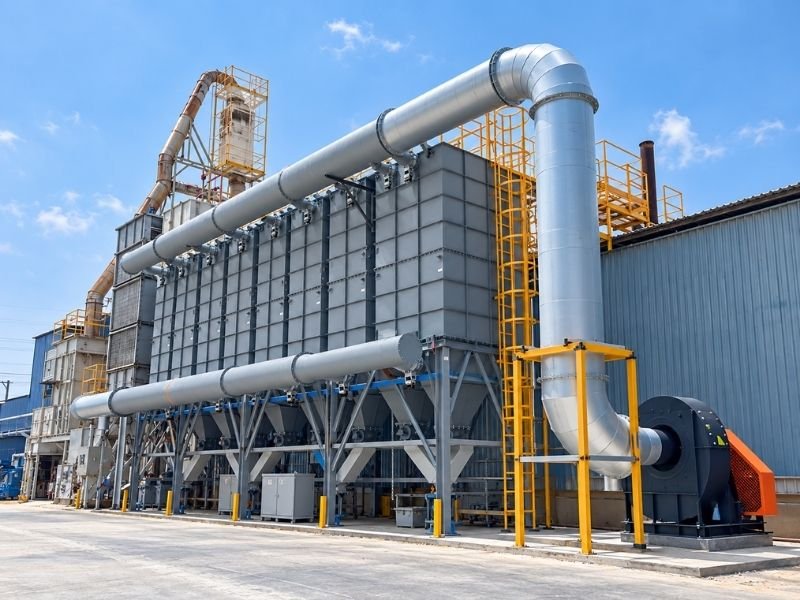
Baghouse Dust Collector
Industrial pulse-jet baghouse systems for high dust loading and continuous operation, with customizable inlet protection, filter media, and dust discharge arrangements.
Explore Product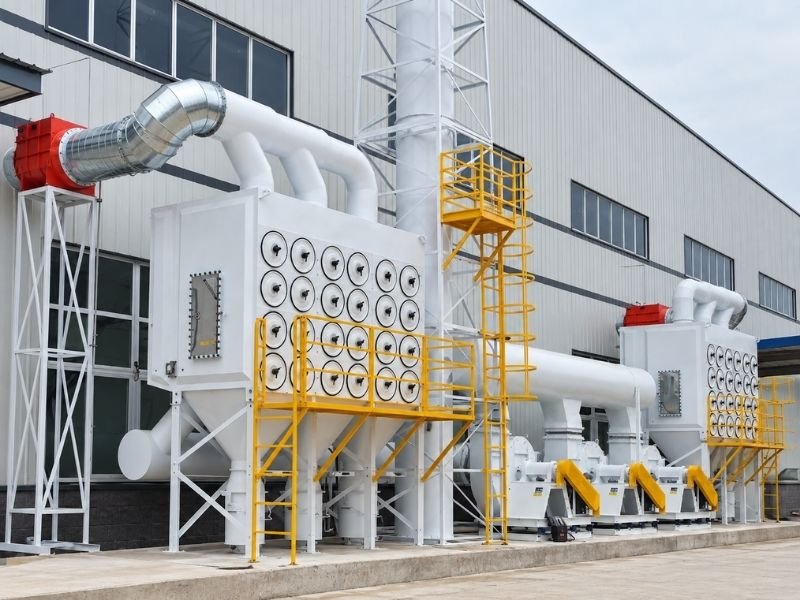
Cartridge Dust Collector
Compact cartridge filtration for suitable dry fine-dust processes. For abrasive particles, inlet protection and pre-separation should be evaluated before equipment selection.
Explore Product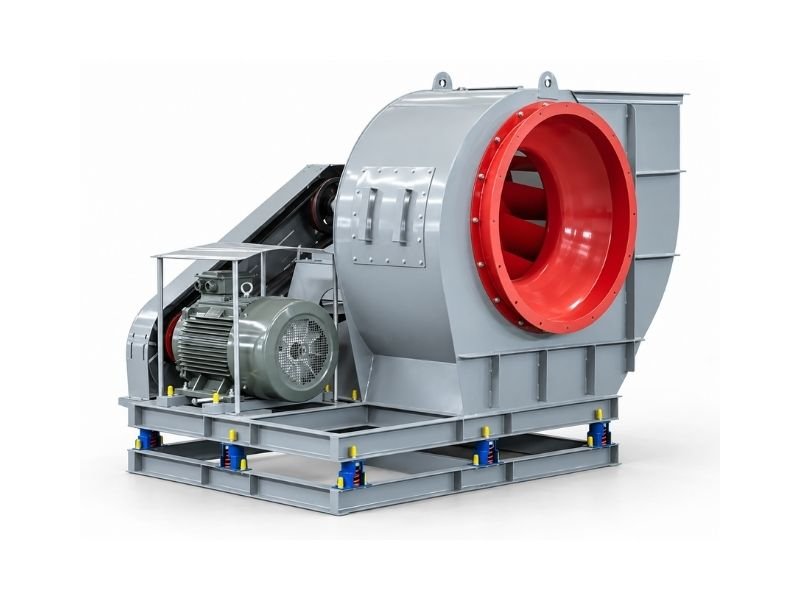
Industrial Dust Collector Fans
Centrifugal fans for industrial dust collection systems, with airflow matching and wear protection options evaluated for dust-laden gas streams and demanding operating conditions.
Explore ProductAbrasion-Resistant Baghouse Dust Collector FAQs
What Is an Abrasion-Resistant Baghouse Dust Collector?
An abrasion-resistant baghouse dust collector is designed to capture airborne particles while limiting wear caused by hard, sharp, or high-velocity dust. Protection is concentrated around vulnerable areas such as inlets, internal baffles, filter bags, hoppers, and discharge components.
Depending on the process, the design may combine improved airflow distribution, wear-resistant steel liners, reinforced filter bags, and optional cyclone pre-separation.
When Is Abrasion-Resistant Baghouse Design Needed?
It should be considered for mineral processing, quarrying, crushing, cement production, abrasive blasting, and other applications involving abrasive particles or heavy dust loading.
Dust hardness, particle size and shape, inlet velocity, impact angle, and existing wear patterns help determine the level of protection required.
Does the Entire Baghouse Need to Be Made of Hardox® Steel?
No. Hardox® wear plate or a technically approved equivalent is usually specified for selected high-wear zones, not necessarily for the entire housing. Typical locations include inlet impact areas, internal baffles, hopper surfaces, and replaceable liners.
The appropriate plate grade, thickness, fabrication method, and equivalent material must be evaluated against the actual duty. An equivalent hardness rating alone does not guarantee identical performance.
Is a Ceramic-Lined Cyclone Pre-Separator Necessary?
Not always. An upstream cyclone may be useful when the particle-size distribution allows meaningful separation of coarse particles before the baghouse. Ceramic tiles or liners can protect the cyclone surfaces exposed to concentrated particle impact.
Cyclone sizing, pressure drop, wear protection, and the expected separation efficiency should be assessed together. Fine particles still require appropriate downstream filtration.
How Do Inlet Baffles Reduce Wear on Filter Bags?
Inlet baffles and flow-guiding structures help redirect or distribute dust-laden airflow so that abrasive particles do not strike filter bags and internal components as directly.
Their layout must be engineered for the actual airflow and dust loading. Poorly positioned baffles can create new high-velocity impact zones or unwanted pressure loss.
Which Filter Bags Are Suitable for Abrasive Dust?
Filter bag selection depends on dust abrasiveness, particle size, filtration velocity, operating temperature, and chemical conditions. Suitable constructions may include appropriately selected polyester or aramid needle felt, reinforced cuffs, or localized protective layers.
No filter fabric is wear-proof. Reducing direct particle impact and selecting the correct air-to-cloth ratio are just as important as the bag material itself.
Can This System Be Used for Tire Shredding and Recycling?
Yes, a baghouse can be considered as part of a properly engineered tire-recycling dust collection system. For an Australian tire-shredding project, Novazure proposed a 30,000 m³/h configuration with two cyclone pre-separators and a baghouse, including ceramic-lined cyclone wear protection and internal baghouse baffles.
This was a proposed design, not a completed installation. Tire-processing dust and mixed materials also require a separate evaluation of fire, spark, and combustible-dust hazards; abrasion protection alone does not address these risks.
What Information Is Needed for a Custom Design and Quotation?
Please provide the required airflow, dust source and composition, particle size distribution, estimated inlet dust concentration, operating temperature, emission target, and available installation space. Equipment photographs, ductwork details, and known wear locations are also useful.
With these details, we can evaluate inlet protection, localized Hardox® or equivalent liners, suitable filter bags, dust discharge arrangements, and whether ceramic-lined cyclone pre-separation is justified.
Let's Discuss Your Dust Collection Needs
Whether you need a complete dust collection system, compact equipment, or replacement filters, share your requirements with us. We'll help you evaluate a suitable solution.