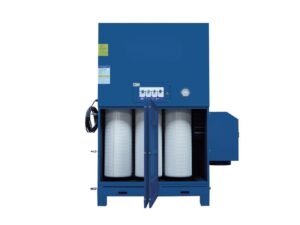
For most industrial welding workshops, the choice is simple at the beginning: use a portable welding fume extractor for one station or flexible work areas, and use a central ducted welding fume extraction system when several fixed welding stations need planned, stable fume collection.
That is only the starting point. The final choice should still consider the welding process, station count, capture method, airflow requirement, duct layout, filter maintenance, installation space, and quotation information. If you are still defining the full project scope, the main welding fume extraction system page gives a broader overview of welding fume sources, capture methods, and suitable dust collector options.
This article focuses on one practical buyer question: should your workshop choose portable units or a central ducted system?
Quick Answer: Portable or Central?
| Workshop Condition | Usually Better Choice | Why |
|---|---|---|
| One welding station | Portable welding fume extractor | Simple local capture, easier placement, and no central duct layout required. |
| Flexible or changing work area | Portable welding fume extractor | The extractor can move closer to the changing welding point. |
| Temporary repair or maintenance area | Portable welding fume extractor | Useful when the welding location is not fixed or not used continuously. |
| Multiple fixed welding stations | Central ducted welding fume extraction system | One planned system can serve several capture points with balanced airflow. |
| Robotic or repeated welding cells | Central ducted system or enclosed capture | Fixed capture points make ducted extraction easier to plan. |
| Workshop wants centralized filtration and maintenance | Central system with cartridge dust collector | Filters, fan, controls, and dust handling can be managed in one system location. |
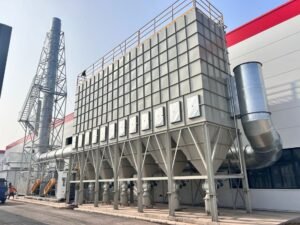
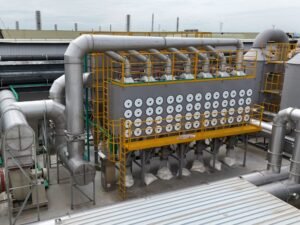
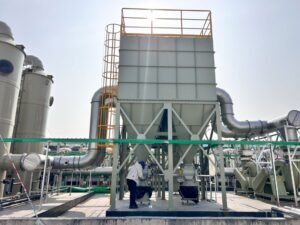
A portable welding fume extractor is usually the practical choice when the welding point moves or the project has only one or two local sources. A central ducted system is usually more suitable when the welding points are fixed, the workshop has multiple stations, and the buyer wants centralized extraction through ducts connected to a cartridge dust collector.
Compare by Welding Layout
Single Station or Flexible Work Area
Portable extraction is usually easier to justify when the welding work is local, intermittent, or changing. Typical examples include:
- One manual welding station
- Maintenance welding in different workshop areas
- Small batch fabrication
- Repair stations
- Flexible work tables
- Projects where duct installation is not practical yet
The main advantage is that the collector can be placed close to the welding source. Shorter capture distance usually helps the suction arm or local hood work more effectively. Installation is also simpler because the system does not need a long duct route, branch balancing, or a central collector location.
However, portable does not mean automatic. The operator still needs to position the suction arm or hood close enough to the fume source. If the arm is too far away, fumes may rise and spread before they are captured.
Multiple Fixed Welding Stations
A central ducted welding fume extraction system becomes more practical when a workshop has several fixed welding points that operate regularly. Common examples include:
- Several manual welding booths or tables
- Fixed fabrication stations along one workshop area
- Repeated welding cells
- Production lines where station positions are stable
- Workshops that want one shared dust collector and fan system
In this layout, a central system can connect multiple capture points to one collector through ductwork. The system can be designed around the number of stations operating at the same time, branch duct routing, fan pressure, and filter loading.
The tradeoff is that the project needs more planning before quotation. The supplier must understand the station positions, duct distance, branch layout, capture devices, and simultaneous operating condition before recommending the collector size and fan configuration.
Capture Method Comes First
The capture method often matters more than the equipment name. A portable unit and a central system can both perform poorly if the capture point is far from the welding source.
Common welding fume capture methods include:
| Capture Method | Common Use | Selection Notes |
|---|---|---|
| Flexible suction arm | Manual welding stations | Works well when the arm can stay close to the welding point. |
| Fixed hood | Repeated welding position | Better when the workpiece and welding point are stable. |
| Enclosed booth or cell | Robotic or repeated welding | Helps contain fumes before they spread into the workshop. |
| Downdraft table | Small parts welding or mixed light grinding | Useful when the work is done on the table surface. |
| Central duct branch | Multiple fixed stations | Requires duct layout, airflow balance, and fan pressure review. |
For a single flexible welding point, a portable unit with a suction arm may be enough. For multiple fixed hoods or booths, a central ducted system is usually easier to manage. For large workpieces or open welding areas, the capture method may need special review because fumes can rise, move with thermal airflow, and escape weak capture points.
Airflow Requirement: Do Not Size Only by Workshop Area
Welding fume extraction airflow should be estimated from the capture point, not only from the room size. The required airflow depends on the capture device, distance from the weld, hood opening, number of stations, duct size, and how many points operate at the same time.
For a portable welding fume extractor, the main question is usually:
- Can the suction arm or hood stay close to the welding point?
- Is one unit serving one station, or will it move between areas?
- Is the welding light, intermittent, or continuous?
- Does the filter area match the fume load and working schedule?
For a central system, the main questions are wider:
- How many welding stations are connected?
- How many stations operate at the same time?
- What capture method is used at each point?
- What is the duct diameter, duct length, and branch layout?
- What fan pressure is needed after duct resistance is considered?
If the airflow is too low, fumes can escape at the source. If airflow is oversized without reason, the system may cost more, consume more energy, increase noise, and load filters faster. For early planning, the existing guide on how to calculate airflow for a dust collection system can help buyers understand hood airflow, duct velocity, and multiple collection point estimates.
Duct Layout and Pressure Loss
Portable systems usually need little or no fixed ductwork. This is one reason they are useful for small or flexible welding areas. The unit is placed near the work area, and the suction arm or short connection handles local capture.
Central systems are different. Duct layout becomes part of the equipment selection. A central welding fume extraction system may include:
- Branch ducts from each station
- Main duct routing to the collector
- Elbows, dampers, and connection points
- Fan and collector location
- Maintenance access around ducts and filters
- Spark review before fumes reach the filter area
Long duct distance, many elbows, and unbalanced branches can reduce suction at some stations. A central system may look cleaner in the workshop, but only if the duct route is planned correctly. For buyers, a basic layout drawing is often more useful than a short text description because it helps the supplier estimate duct length, pressure loss, and collector position.
Filter and Maintenance Considerations
For many fine, dry welding fumes, cartridge filtration is a common starting point because cartridge filters provide a large filter area in a compact structure. This applies to many portable units and many central cartridge dust collector systems.
The maintenance question is different for each layout.
| Item | Portable Welding Fume Extractor | Central Ducted System |
|---|---|---|
| Filter location | Each unit has its own filter area. | Filters are usually centralized in one collector. |
| Maintenance style | Simple for one unit, but several units mean several maintenance points. | One central maintenance area, but larger collector access must be planned. |
| Dust handling | Local drawer, bin, or filter service. | Central dust collection drawer, hopper, or discharge arrangement. |
| Filter loading | Depends on each station’s fume load and working hours. | Depends on total connected stations and simultaneous operation. |
| Shutdown impact | One portable unit can often be serviced separately. | Central system maintenance may affect several stations if no backup plan exists. |
If the welding area also includes heavy grinding dust, cutting sparks, oily smoke, sticky particulate, or mixed dust, the system should be reviewed carefully. A standard welding fume setup may not be suitable for every mixed metalworking condition. Spark protection, pre-separation, filter media, and duct design may need to be adjusted according to the actual process.
Installation Space and Workshop Management
Portable systems need space near the welding station. This can be convenient, but the buyer should confirm whether the unit will block material handling, operator movement, forklift routes, or maintenance access. Power supply, arm reach, and movement path also matter.
Central ducted systems can keep the collector away from the immediate welding area, which may make the work zone cleaner and less crowded. The collector can sometimes be placed at the side of the workshop or in another suitable equipment area. However, the central system needs:
- A collector installation position
- Duct routing space
- Fan and control cabinet space
- Filter replacement access
- Dust disposal access
- Structural support for ductwork if required
In a compact workshop with only one welding point, a central system may be more work than necessary. In a larger workshop with fixed stations, multiple portable units may become harder to manage than one planned central system.
Quotation Information Buyers Should Prepare
A useful welding fume extraction quotation needs more than the words “portable” or “central.” Prepare the project information below before asking for a recommendation.
| Information Needed | Why It Matters |
|---|---|
| Welding process | MIG, TIG, stick, robotic welding, or other processes may create different fume conditions. |
| Welding material | Carbon steel, stainless steel, galvanized steel, and coated materials may need different review. |
| Station count | Determines whether local portable extraction or a central system is more practical. |
| Fixed or flexible station layout | Helps decide whether ductwork is worth planning. |
| Capture method | Suction arm, hood, booth, downdraft table, or enclosure changes the airflow estimate. |
| Airflow estimate | Helps size the collector, fan, ductwork, and filter area. |
| Workshop layout | Shows station positions, collector location, duct route, and space limits. |
| Duct distance | Affects pressure loss and fan selection in central systems. |
| Working hours | Continuous operation may need more filter area and stable pulse cleaning. |
| Spark or mixed dust condition | Welding with grinding, cutting, sparks, or heavier dust may need extra review. |
Photos, layout drawings, station dimensions, and a short process description can make the first quotation much more accurate.
Practical Decision Guide
Choose a portable welding fume extractor when:
- The project has one welding station.
- Welding points move often.
- The work area is temporary or flexible.
- Installation space for ductwork is limited.
- The buyer wants a simple local capture solution first.
Choose a central ducted welding fume extraction system when:
- Several fixed welding stations operate regularly.
- The workshop wants centralized filtration and maintenance.
- Capture hoods, booths, or suction arms can be connected through planned ductwork.
- The station layout is stable enough for duct design.
- The buyer can provide layout and duct distance information for quotation.
Request a project review when:
- Welding is combined with grinding, cutting, or other dust sources.
- Sparks or hot particles may enter the extraction path.
- The material, coating, or fume condition is uncertain.
- The airflow requirement is not clear.
- The workshop may expand later.
Conclusion
Portable and central welding fume extraction systems are not competing answers to the same problem. They solve different workshop layouts.
A portable welding fume extractor is usually better for single stations, flexible welding areas, and simple local capture. A central ducted welding fume extraction system is usually better for multiple fixed welding stations, repeated production layouts, and workshops that want one planned collector, fan, ductwork, and maintenance location.
Before requesting a quotation, prepare your welding process, station count, capture method, airflow estimate, workshop layout, duct distance, and whether sparks or mixed dust are present. With that information, Novazure can help review whether a portable unit, a central cartridge dust collector system, or another welding dust collector configuration is more suitable for your workshop.
You can contact Novazure with your working conditions and layout information to start a practical welding fume extraction quotation.