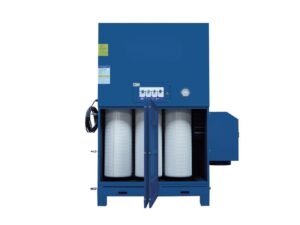
Welding fume source capture design should be decided before selecting the dust collector size. If the hood, arm, booth, or table cannot capture fumes close to the welding point, a larger collector may still fail to solve the real workshop problem.
For most industrial welding projects, the first question is not only “Which dust collector do we need?” It is “Where should the fumes be captured?” A flexible extraction arm, fixed hood, welding booth, and downdraft table each fit different station layouts.
If you are still comparing the full equipment direction, see the main welding fume extraction system page. This guide focuses only on the capture method: how to decide between arms, hoods, booths, and downdraft tables before quotation.
Quick Answer: Which Welding Fume Capture Method Should You Choose?
Choose the capture method according to how fixed the welding point is, how large the workpiece is, how much the operator moves, and whether the station can be enclosed or partially enclosed.
| Welding Condition | Usually Suitable Capture Method | Why It Fits |
|---|---|---|
| One manual station with changing weld positions | Flexible extraction arm | The hood can be repositioned close to the weld point. |
| Repeated weld location on a fixed fixture | Fixed hood or local enclosure | The capture point can stay in one controlled position. |
| Small parts welded on a table | Downdraft table or local hood | Capture can be built into the table or close to the work surface. |
| Robotic or repeated production cell | Booth, enclosure, or fixed hood | The process is stable enough for planned capture geometry. |
| Multiple fixed welding stations | Local hoods, arms, or booths connected to central ductwork | Each source can be connected to a shared filtration system. |
| Large workpieces or crane-handled parts | Project review needed | Capture distance, access, and workpiece movement may make simple arms or tables unsuitable. |
A source capture method should be practical for real work, not only attractive in a layout drawing. If operators cannot keep the suction arm close, if a hood blocks welding access, or if a downdraft table is covered by the workpiece, the system may need a different capture design.
Why Source Capture Comes Before Dust Collector Selection
Welding fumes are fine and can rise quickly with heat from the weld. If the capture point is too far away, fumes may pass through the operator area or spread into the workshop before entering the extraction system.
That is why source capture comes before collector selection. The dust collector, fan, filters, and ductwork all depend on the capture method.
For example:
- A flexible arm near the welding point may need a different airflow plan from a large open hood.
- A fixed hood above a repeated weld may be easier to balance than a movable arm that changes position every hour.
- A booth may help contain fumes, but it also needs enough working access and practical part movement.
- A downdraft table can be useful for small parts, but it may not fit tall, large, or closed-bottom workpieces.
The best capture method is the one that can stay close to the fume source while still allowing the operator, fixture, material handling, and maintenance work to function normally.
Option 1: Flexible Welding Fume Extraction Arms
A flexible extraction arm is often used for manual welding stations, repair stations, and work areas where the weld position changes. The arm can be moved so the hood is closer to the fume source.
This makes extraction arms useful when:
- The welding station is local or flexible.
- The workpiece position changes.
- The shop needs a simple source capture method.
- The operator can reposition the arm during work.
- A fixed hood or enclosure would block access.
For one or two flexible stations, an extraction arm may be connected to a portable dust collector or to a local duct connection. For several fixed stations, arms may also be connected to a central extraction system if the layout is planned carefully.
Selection Points for Extraction Arms
When reviewing an extraction arm, check:
- arm reach
- hood shape
- arm diameter
- movement range
- whether the arm holds position
- distance from hood to weld point
- whether the arm blocks the operator or workpiece
- how often the operator needs to reposition it
The most common problem is simple: the arm is installed but not kept close enough to the weld. If the operator must constantly move around a large part, or if the arm is heavy and inconvenient, the capture result may be inconsistent.
When Extraction Arms May Not Be Enough
An extraction arm may not be the best first choice when:
- The workpiece is very large.
- The weld point is deep inside a structure.
- The operator cannot keep the hood near the fume source.
- Multiple welders work on the same large part from different sides.
- The station has heavy grinding or cutting dust mixed with welding fume.
In these cases, a fixed hood, partial enclosure, booth, or custom capture arrangement may be worth reviewing.
Option 2: Fixed Welding Fume Hoods
A fixed hood is useful when the welding point is repeated and predictable. Instead of asking the operator to move a suction arm, the hood stays in a planned position near the fume source.
Fixed hoods are often considered for:
- repeated welding fixtures
- small production cells
- dedicated welding tables
- fixed robot or semi-automatic stations
- areas where the workpiece position is stable
The advantage is consistency. If the weld point, hood position, and operator access stay the same, the airflow and capture condition are easier to review.
Selection Points for Fixed Hoods
Before using a fixed hood, confirm:
- hood opening size
- distance from the welding point
- direction of rising fume
- operator access
- fixture and clamp position
- part loading and unloading path
- whether the hood blocks visibility or handling
- whether sparks or hot particles may enter the extraction path
A hood that is too large may require more airflow than expected. A hood that is too far away may allow fumes to escape. A hood that blocks the operator will be moved, bypassed, or ignored in real production. The capture design must fit the work, not just the drawing.
Fixed Hood vs Extraction Arm
Use a fixed hood when the weld location is stable and repeated. Use an extraction arm when the weld location changes and the operator can move the hood close to the work.
| Question | Better Fit: Extraction Arm | Better Fit: Fixed Hood |
|---|---|---|
| Does the weld point move often? | Yes | No |
| Is the station repeated and fixture-based? | Sometimes | Yes |
| Does the operator need flexible access? | Yes | Sometimes |
| Can the hood stay in one position? | No | Yes |
| Is consistent capture more important than movement? | Sometimes | Yes |
For early quotation, photos and short videos of the welding station are often more useful than a verbal description. They show whether the hood can realistically stay close to the fume source.
Option 3: Welding Booths and Partial Enclosures
A welding booth or partial enclosure helps control the area around the welding process. Instead of relying only on one open hood, the booth can limit how far fumes spread before they enter the extraction path.
Booths and enclosures may be useful for:
- fixed welding stations
- repeated manual welding
- robotic welding cells
- training or testing booths
- stations where the workpiece fits inside a defined area
- workshops that want clearer separation between welding and other work zones
A booth does not remove the need for airflow planning. It only gives the system a more controlled space to capture from. The opening size, exhaust location, part access, and operator movement still need review.
Selection Points for Welding Booths
Before choosing a booth or enclosure, check:
- booth opening size
- access for loading and unloading parts
- operator entry and movement
- overhead crane or forklift needs
- welding cable and fixture layout
- exhaust connection point
- whether the booth is fully enclosed or partially open
- maintenance and cleaning access
The booth should not trap fumes around the operator. It should help guide fumes toward the extraction point while allowing usable and practical work access. If the booth opening is too large or the exhaust location is poorly placed, capture may still be weak.
When Booths Are Not Practical
A booth may not fit when parts are too large, when crane handling needs open access, or when welders move around the workpiece continuously. In those cases, local hoods, movable arms, or project-specific capture points may be more practical.
Option 4: Downdraft Tables for Welding Fume Capture
A downdraft table pulls air downward through or near the work surface. It can be useful for small parts welding or light mixed work where the source is close to the table.
Downdraft tables may be considered when:
- parts are small enough to sit on the table
- welding happens near the table surface
- the workpiece does not block too much open area
- the operator does not need to weld high above the table
- the station may also need light dust capture from nearby finishing work
This option should be reviewed carefully because welding fumes naturally rise with heat. A downdraft table may be less suitable if the fume plume rises before the downward airflow can capture it, or if the workpiece blocks the table opening.
Selection Points for Downdraft Tables
Before choosing a downdraft table, review:
- table size
- open area
- workpiece size and shape
- whether parts block the surface
- welding height above the table
- whether grinding dust is mixed with welding fume
- dust tray or cleaning access
- connection to local or central extraction
Do not choose a downdraft table only because it looks compact. It must match the actual welding position. For some small parts, it can be practical. For tall assemblies, deep welds, large frames, or overhead welding, another capture method may be more suitable.
How Capture Method Affects Airflow Planning
The capture method controls how airflow should be estimated. A small hood close to the weld, a large booth opening, and a downdraft table do not use the same planning logic.
For general formulas and airflow principles, the published guide on how to calculate airflow for a dust collection system explains hood area, duct airflow, and multiple collection points. For welding capture design, the main planning questions are more practical:
- How close is the capture point to the weld?
- Is the fume rising, spreading sideways, or blocked by the workpiece?
- Is the capture opening too large for the available airflow?
- How many capture points operate at the same time?
- Does the duct route create pressure loss before the collector?
- Can the selected fan maintain suction at the farthest station?
For fine dry welding fume systems, a cartridge dust collector is often a practical filtration path because cartridge filters provide a large filtration area in a compact collector body. But the collector should be selected after the capture method, airflow, fume load, duct layout, and maintenance access are reviewed.
Common Capture Design Mistakes
Avoid these common mistakes when planning welding fume extraction:
| Mistake | Why It Causes Problems |
|---|---|
| Choosing the dust collector before the capture method | The collector size may not match the real capture requirement. |
| Placing the hood too far from the weld | Fumes can spread before entering the extraction path. |
| Using a suction arm where operators cannot keep it close | Capture becomes inconsistent during real work. |
| Making a hood too large without airflow review | The system may need more airflow than expected. |
| Adding a booth without checking opening size and exhaust location | Fumes may still stay near the operator or escape through the opening. |
| Using a downdraft table for workpieces that block the surface | Downward capture may be weak or uneven. |
| Ignoring material handling | Hoods, booths, or arms may interfere with cranes, forklifts, fixtures, or part movement. |
| Mixing welding with grinding or cutting without review | Sparks, heavier dust, and mixed particles may change the system design. |
Good capture design is usually not the largest hood or the strongest fan. It is the capture point that stays close enough to the source while fitting real production work.
What Buyers Should Prepare Before Requesting a Quote
Before asking for a welding fume source capture recommendation, prepare the following information:
| Information Needed | Why It Matters |
|---|---|
| Welding process | MIG, TIG, stick, robotic welding, or other processes create different fume and access conditions. |
| Base material and coating | Carbon steel, stainless steel, galvanized steel, coated parts, and mixed materials may need different review. |
| Station type | Manual, robotic, fixed fixture, repair area, or flexible worktable changes the capture method. |
| Workpiece size | Large or tall parts may not fit a booth or downdraft table. |
| Weld position | Flat, side, inside, or overhead positions affect hood placement. |
| Station count | Helps decide whether local units or a central system should be reviewed. |
| Simultaneous operation | Affects total airflow and collector size. |
| Preferred capture method | Arm, hood, booth, downdraft table, or Need confirmation. |
| Workshop layout | Shows station location, collector position, duct route, and material handling space. |
| Duct distance | Important for pressure loss and fan selection. |
| Spark or mixed dust condition | Welding combined with grinding or cutting needs careful review before filtration. |
| Photos or videos | Helps confirm whether the proposed capture method fits real work. |
If you are unsure which capture method is suitable, send the welding station photos, workpiece dimensions, station count, and layout. Novazure can review whether an extraction arm, fixed hood, booth, downdraft table, or another welding dust collector configuration is more practical.
Conclusion
Welding fume source capture design is the foundation of a useful welding fume extraction system. The dust collector cannot perform well if fumes are not captured near the welding point.
Use a flexible extraction arm when the weld location changes and the operator can keep the hood close. Use a fixed hood when the weld point is repeated and stable. Use a booth or partial enclosure when the work area can be controlled. Consider a downdraft table only when the workpiece and welding position fit the table surface.
Before requesting a quotation, prepare the welding process, station count, workpiece size, weld position, capture method, airflow estimate, workshop layout, duct distance, and spark or mixed dust condition.
You can contact Novazure with this information. Novazure can help review the capture method first, then recommend a suitable welding fume extraction layout, dust collector type, and quotation direction.