
Quick Answer
For most PCB drilling, routing, depaneling, and trimming processes, we usually recommend a cartridge dust collector because PCB dust is fine and dry, the machines often need stable source capture, and cartridge filters provide a large filtration area in a compact structure.
If the dust source is a single CNC router, repair station, prototype milling point, or intermittent local process, a portable dust collector may be more suitable. If the system serves several drilling or routing machines, a central cartridge dust collection system is usually the better choice.
The right collector depends on machine port size, dust load, simultaneous operating points, ESD requirements, duct distance, and site layout.
Dust Sources in PCB Manufacturing
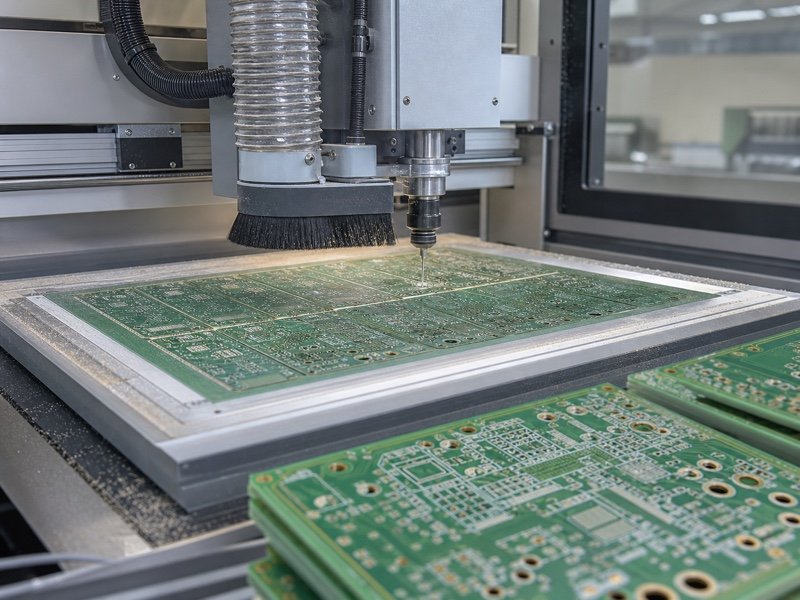
PCB dust is usually generated when board material is drilled, cut, routed, trimmed, milled, or separated. The dust problem often appears around CNC drilling machines, PCB routers, depaneling equipment, V-cut or saw cutting stations, trimming areas, prototype milling machines, and repair stations.
The dust source is usually small, but it can still be difficult to control. Fine dust may escape through machine openings, settle on fixtures and worktables, or collect around electrical cabinets and inspection areas.
Some PCB lines may also include laser marking, laser depaneling, soldering, or wet chemical processes. These should be reviewed separately because smoke, fume, and chemical exhaust are not the same as dry PCB routing dust.
PCB Dust Characteristics and Collection Challenges
PCB dust may include FR-4 particles, fiberglass, resin dust, copper particles, and mixed board material. The dust is usually fine, light, and dry, and it can spread quickly if the machine port or enclosure does not have enough capture airflow.
The main challenge is source capture. A large collector will not solve the problem if dust escapes before it reaches the suction point. For PCB applications, the capture design should focus on the drilling head, router zone, cutting slot, enclosed machine area, or local hood.
Common design concerns include fine dust filtration, abrasive fiberglass particles, dust containment during maintenance, branch airflow balance, static-sensitive production areas, and possible mixed emissions from laser or soldering work.
For most projects, PCB dust should be treated as a fine dry dust application with extra attention to machine connection, grounding, and maintenance access.
Recommended Dust Collector for PCB Dust
A cartridge dust collector is usually the first option for dry PCB dust from CNC drilling, routing, edge milling, depaneling, and trimming machines. It is compact, suitable for fine dust, and can support automatic pulse cleaning for stable operation.
For a single enclosed PCB router or prototype station, a portable unit may be enough when the airflow requirement is moderate and the dust source is intermittent. For several fixed machines, a central cartridge system is usually easier to maintain and balance than several small local units.
A cyclone is usually not enough for final PCB dust filtration because fine FR-4 and resin dust can pass through coarse separation. It may only be considered as a pre-separator if the process produces larger board chips or trimming scraps.
A baghouse dust collector is not normally the first choice for standard PCB machining. It may be considered only for unusually large airflow or a central system serving other compatible dry dust processes.
PCB Dust Collection System Layout
A practical PCB dust collection system starts at the machine, not at the collector body. Dust should be captured at the machine port, enclosed cutting area, spindle zone, router head, drilling point, or local hood.
For one machine, the layout may be simple: machine port, short hose or duct, compact collector, fan, and dust bin. For several machines, the system usually needs branch ducts, airflow balancing, a central cartridge collector, fan, control cabinet, and a contained dust discharge method.
Try to keep flexible hose runs short and avoid unnecessary elbows. Long duct runs, small port sizes, and too many branches can reduce capture performance. If the production area has ESD requirements, the layout should also review conductive hoses, grounding, anti-static filter media, and electrical bonding.
Key Selection Factors
Before selecting a PCB dust collector, review the process and machine details first. The most useful information includes:
| Factor | What to check |
|---|---|
| Process | Drilling, routing, depaneling, trimming, milling, laser marking, or cleaning. |
| Dust source | Machine port, enclosure, local hood, open table, or repair station. |
| Machines | Number of machines and how many run at the same time. |
| Airflow | Port size, capture distance, duct length, branch quantity, and pressure loss. |
| Dust condition | Fine dust, coarse board chips, fiberglass, resin, copper particles, or smoke. |
| Site needs | ESD control, maintenance access, dust discharge, and available installation space. |
If airflow is unclear, start with the machine port size, dust point quantity, and layout drawing. The general guide on how to calculate airflow for a dust collection system can help with early planning, but the final selection should still follow the actual machine enclosure and duct layout.
Safety and Special Design Considerations
PCB production areas may need extra review before the dust collector is selected.
For ESD-sensitive areas, check whether conductive hoses, grounding, anti-static filter media, and proper electrical bonding are required. Do not assume that an ordinary plastic hose or ungrounded local collector is suitable for every PCB workshop.
For laser marking, laser depaneling, soldering, or rework processes, review the emissions before connecting them to the same system. Laser smoke and solder fume may need different filtration from dry routing dust.
For wet chemical processes such as etching, plating, or cleaning, do not use a dry dust collector as the default solution. Chemical mist or corrosive vapor should be reviewed as a separate exhaust problem.
Why Choose Novazure for PCB Dust Collection
Novazure provides practical industrial dust collector systems for factory dust sources, including compact cartridge collectors, portable collectors, fans, ductwork, controls, and related system components.
For PCB dust collection, we help review the process type, machine model, dust port position, number of machines, dust condition, ESD requirements, airflow requirement, duct route, and available installation space.
Instead of only quoting a standard collector, we help match the collector type and system layout to the actual PCB production line. For many projects, this means selecting a cartridge dust collector for central capture or a portable dust collector for a single local source, then adjusting the system around your machine layout.
You can also review related dust collection applications if your factory handles other fine dust, metal dust, powder, or machining processes.
FAQ
For most dry PCB drilling, routing, trimming, and depaneling dust, a cartridge dust collector is usually the first option. It provides compact filtration for fine dust and can connect to machine ports, local hoods, or a central duct system.
Yes. A portable dust collector can be suitable for a single PCB router, prototype milling station, repair area, or intermittent local process. For several fixed machines running together, a central cartridge system is usually easier to control and maintain.
It depends on the production area and customer requirements. If the PCB workshop has ESD control requirements, the system should review conductive hoses, grounding, anti-static filter media, and electrical bonding.
Not always. Laser smoke and dry routing dust may need different filter media, airflow, and discharge review. If laser cutting, laser marking, soldering, or chemical exhaust is involved, the emissions should be checked before connecting them to one system.
Request a PCB Dust Collection Solution
If you need a dust collection system for PCB drilling, routing, depaneling, trimming, or local board cleaning, send us your machine information, dust points, airflow requirement, and layout drawing.
Novazure will help you review whether a cartridge dust collector, portable dust collector, or central PCB dust collection system is more suitable for your production line.