
Quick Answer
For most powder coating dust collection applications, the main goal is to capture overspray powder from the spray booth and prevent fine powder from spreading into the workshop. A cartridge dust collector or powder recovery collector is commonly used because powder coating dust is usually fine, dry, and suitable for cartridge filtration.
If the powder needs to be recovered and reused, the system should be designed around powder type, booth airflow, filter cleaning performance, color change frequency, and collection method. For some powder materials, combustible dust risk, anti-static filter media, and safety configuration should also be considered. If you are not sure whether your process requires simple dust collection or powder recovery, you can send us your powder type, booth size, production mode, and recovery requirements for an initial recommendation.
Common Powder Coating Dust Sources
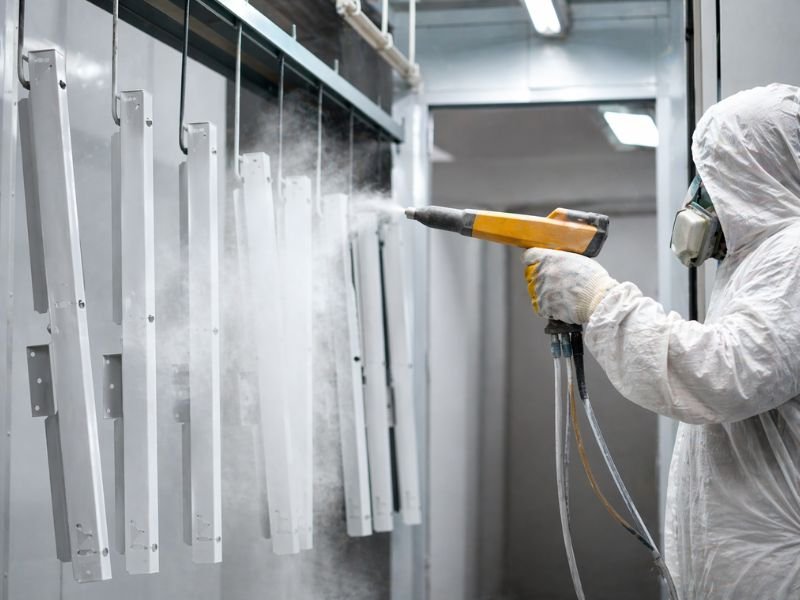
Powder coating dust is mainly generated from overspray powder that does not attach to the workpiece during spraying. Depending on the production method, powder may also be released during feeding, recovery, sieving, color change, and booth cleaning. Understanding where the powder comes from is important for selecting the right dust collection or powder recovery system.
Common powder coating dust sources include:
- Overspray powder from manual or automatic spray booths.
- Powder coating guns and spray areas.
- Powder transfer, feeding, and loading points.
- Powder recovery systems and filter cartridge cleaning.
- Powder sieving or screening processes.
- Color change and booth cleaning operations.
- Workpiece blow-off or cleaning before coating.
- Multiple spray booths connected to a central extraction system.
Because powder coating dust is fine, dry, and easy to spread, the dust collection system should be designed around the booth structure, airflow direction, powder type, and recovery requirement.
Why Powder Coating Dust Is Difficult to Control
Powder coating dust can be difficult to control because overspray powder is fine, dry, and easy to move with airflow. If the booth extraction system is not properly designed, powder may escape from the spray area, settle on equipment, contaminate the workshop, or reduce coating quality.
Common challenges include:
- Fine overspray powder that can spread outside the spray booth.
- Poor airflow balance that affects powder capture and coating quality.
- Filter cartridge blockage caused by high powder load or poor pulse cleaning.
- Low powder recovery efficiency when the collection system is not properly matched.
- Color contamination during frequent color changes.
- Powder accumulation inside the booth, ductwork, or filter area.
- Combustible dust risk for certain powder coating materials.
- Maintenance difficulty if the booth and filter system are not easy to clean.
For these reasons, a powder coating dust collection system should be designed around booth airflow, powder characteristics, recovery requirements, filter cleaning performance, and cleaning convenience.
Recommended Dust Collection Equipment
The recommended equipment depends on the spray booth design, powder type, recovery requirement, color change frequency, and production mode. For fine and dry overspray powder, a cartridge dust collector is commonly used because it provides efficient filtration and can be designed for compact booth extraction or central collection.
If reusable powder recovery is required, the system should be designed to collect overspray powder efficiently while reducing contamination and filter blockage. For automatic powder coating lines or multiple booths, a central booth extraction and recovery system may be more suitable.
| Working Condition | Recommended Equipment | Notes |
|---|---|---|
| Manual powder coating booth | Cartridge dust collector or powder recovery collector | Captures overspray powder from the spray area. |
| Automatic powder coating line | Central booth extraction and recovery system | Suitable for continuous production and larger airflow. |
| Fine dry powder | Cartridge dust collector | Provides efficient filtration for fine powder particles. |
| Powder recovery requirement | Powder recovery collector with suitable filter cartridges | Helps collect reusable powder and reduce waste. |
| Frequent color change | Easy-clean booth and filter design | Helps reduce powder residue and color contamination. |
| Combustible powder risk | Anti-static filter media and safety configuration | Depends on powder properties and risk assessment. |
In powder coating applications, the dust collector should be selected together with the spray booth airflow, filter cartridge cleaning method, powder recovery target, and cleaning requirements. A suitable system should not only collect powder, but also support stable coating quality and easier maintenance.
Powder Dust Capture and Recovery Methods
Powder coating dust control depends on both capture and recovery design. The system should collect overspray powder from the spray booth before it escapes into the workshop, while also supporting stable airflow, filter cleaning, and convenient maintenance. If powder recovery is required, the design should also reduce powder loss and cross-contamination during color changes.
| Capture / Recovery Method | Suitable For | Notes |
|---|---|---|
| Booth side extraction | Manual powder coating booths | Captures overspray powder from the spray area. |
| Bottom extraction | Certain booth designs | Helps collect powder that moves downward or settles. |
| Cartridge filter collection | Fine dry powder | Filters and collects powder from the booth exhaust air. |
| Cyclone recovery before final filtration | High recovery requirement or larger systems | Separates recoverable powder before final dust collection. |
| Central extraction system | Multiple booths or automatic lines | Connects several powder sources to one collection system. |
| Easy-clean booth design | Frequent color change | Helps reduce powder residue and color contamination. |
For powder coating applications, airflow should be strong enough to capture overspray powder, but not so aggressive that it disturbs the coating process or wastes recoverable powder. A suitable capture and recovery method should be selected according to the booth structure, powder type, color change frequency, and production mode.
Key Factors for Selecting a Powder Coating Dust Collection System
A powder coating dust collection system should be selected according to the spray booth design, powder characteristics, production mode, and recovery target. The same cartridge dust collector may perform differently depending on airflow balance, filter cleaning, color change frequency, and powder load. Before selecting equipment, the following factors should be reviewed.
| Factor | Why It Matters |
|---|---|
| Powder type | Different powder materials may have different flow, adhesion, and safety characteristics. |
| Powder particle size | Fine powder requires suitable filter cartridges and stable cleaning performance. |
| Recovery requirement | Determines whether the system should focus on dust collection only or reusable powder recovery. |
| Spray booth design | Booth size, airflow direction, and opening area affect powder capture efficiency. |
| Color change frequency | Frequent color changes require easier cleaning and reduced powder residue. |
| Airflow requirement | Correct airflow helps capture overspray powder without disturbing the coating process. |
| Filter cleaning method | Pulse cleaning performance affects pressure drop, filter life, and recovery stability. |
| Combustible dust risk | Some powder coating materials may require anti-static filters or safety measures. |
| Production mode | Manual spraying, automatic lines, or batch production affect system configuration. |
If you are not sure about the required airflow or system type, you can provide the powder type, booth size, spraying method, color change frequency, and recovery requirement. These details help determine whether a cartridge dust collector, powder recovery collector, cyclone recovery system, or central extraction system is more suitable.
Typical Powder Coating Dust Collection System Configuration
A powder coating dust collection system can be configured according to the booth design, powder type, airflow requirement, recovery target, and production mode. For simple manual spraying booths, the system may use a cartridge dust collector or compact powder recovery collector. For automatic lines or multiple booths, the system may require a central extraction and recovery design.
A typical system may include:
- Powder coating booth or capture hood
- Cartridge dust collector or powder recovery collector
- Filter cartridges
- Pulse jet cleaning system
- Fan
- Electrical control cabinet
- Powder collection drawer or hopper
- Rotary valve or discharge device, if required
- Ductwork connection
- Anti-static filter media, if required
- Cyclone recovery unit, if required
- Explosion-proof components or safety devices, if required
The final configuration should be confirmed according to the actual powder material, booth size, airflow direction, color change frequency, recovery requirement, and safety conditions. For applications with frequent color changes or reusable powder recovery, cleaning convenience and powder residue control are especially important.
FAQ About Powder Coating Dust Collection Systems
For most powder coating applications, a cartridge dust collector or powder recovery collector is commonly used because powder coating dust is fine, dry, and suitable for cartridge filtration. The final equipment should be selected according to the spray booth design, powder type, airflow requirement, and recovery target.
In many powder coating processes, overspray powder can be collected and reused if the powder is clean and the recovery system is properly designed. The recovery efficiency depends on the booth airflow, filter system, powder type, color change frequency, and contamination control.
Yes, a cartridge dust collector is suitable for many powder coating dust collection applications. It provides efficient filtration for fine dry powder and can be used for booth extraction or powder recovery. However, the filter media, pulse cleaning system, and airflow design should be selected according to the actual powder load and working conditions.
The required airflow depends on the booth size, booth opening area, airflow direction, spraying method, powder load, and production mode. The airflow should be strong enough to capture overspray powder, but not so high that it disturbs the coating process or wastes recoverable powder.
To reduce color contamination, the booth, filter area, ductwork, and powder collection parts should be easy to clean. For frequent color changes, the system should focus on reducing powder residue, improving cleaning access, and using a suitable recovery design.
Anti-static filter media may be required when the powder has combustible dust risk or when static buildup needs to be controlled. The need for anti-static filters, explosion-proof components, or other safety measures should be confirmed according to the powder properties and project requirements.
To recommend a suitable system, it is helpful to provide the powder type, spray booth size, number of spray booths, manual or automatic spraying method, color change frequency, recovery requirement, estimated airflow, and any safety requirements. If you are not sure about the airflow, you can send us your booth information and production process for initial review.