
Quick Answer
For most industrial woodworking dust collection systems, the suitable solution depends on the number of woodworking machines, dust type, airflow requirement, duct layout, and dust discharge method. Large woodworking workshops, furniture factories, and wood processing plants usually require a central dust collection system connected to multiple machines.
For high airflow and heavy wood dust load, a baghouse dust collector is often a practical choice because it can handle large air volume and continuous dust collection. For finer dust or limited installation space, a cartridge dust collector may also be considered. If the process produces wood chips, shavings, or larger particles, a cyclone or pre-separator can be used before the final dust collector to reduce filter load.
Wood dust may also create fire or combustible dust risks, so anti-static filter media, spark control, explosion venting, or other safety options may be required depending on the actual working conditions.
Common Wood Dust Sources in Woodworking Shops
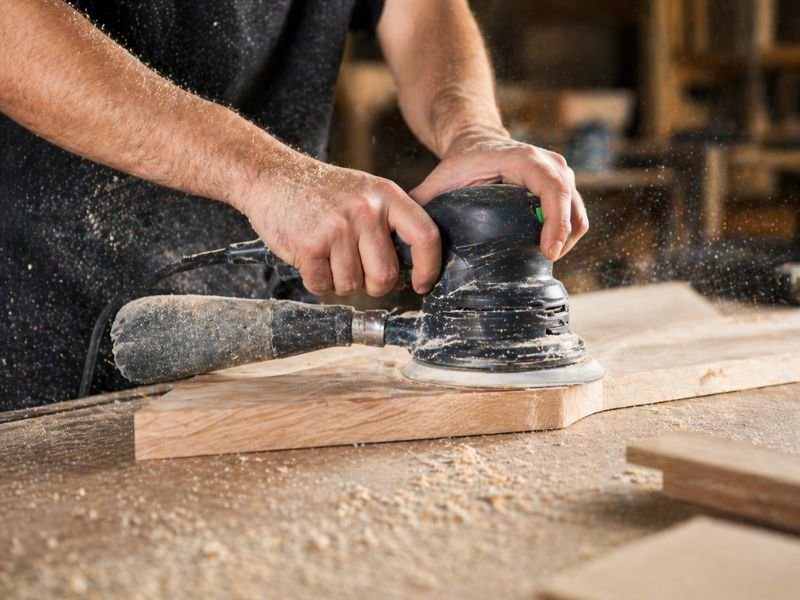
Wood dust can be generated from many machines and processes in a woodworking shop. Different machines produce different dust loads, particle sizes, and chip volumes, so the dust collection system should be designed according to the actual production process and machine layout.
Common wood dust sources include:
- Table saws, panel saws, and cutting machines.
- Sanding machines and wide belt sanders.
- Planers, moulders, and thicknessers.
- CNC routers and wood engraving machines.
- Edge banding machines.
- Drilling, milling, and trimming operations.
- Furniture manufacturing and cabinet production lines.
- Wood chips, shavings, sawdust, and fine sanding dust from mixed woodworking processes.
- Multiple woodworking machines connected to a central dust collection system.
Because woodworking shops often have several machines operating at the same time, the dust collection system should consider both the total airflow requirement and the airflow needed at each machine connection point.
Why Wood Dust Is Difficult to Control
Wood dust can be difficult to control because woodworking processes often generate a mixture of fine dust, sawdust, chips, and shavings. Fine sanding dust may spread quickly in the workshop air, while larger wood chips and shavings may increase dust load, block ductwork, or reduce system efficiency if they are not handled properly.
Common challenges include:
- High dust load from continuous cutting, sanding, planing, or routing operations.
- Mixed dust types, including fine sanding dust, sawdust, wood chips, and shavings.
- Large particles that may block ducts or increase filter load.
- Fine wood dust that can remain suspended in the workshop air.
- Multiple woodworking machines requiring balanced airflow at each collection point.
- Long duct systems that increase pressure loss and affect fan selection.
- Dust accumulation on machines, floors, and finished products.
- Fire or combustible dust risks, depending on dust concentration and working conditions.
For these reasons, an industrial woodworking dust collection system should be designed around the actual machine layout, dust type, airflow requirement, duct route, and safety considerations.
Recommended Dust Collection Equipment
The recommended dust collection equipment depends on the dust load, wood dust type, number of machines, airflow requirement, and duct layout. For large woodworking workshops, furniture factories, and wood processing plants, a baghouse dust collector is often suitable because it can handle large airflow, high dust load, and continuous operation.
For fine sanding dust or limited installation space, a cartridge dust collector may also be considered. If the process produces wood chips, shavings, or larger particles, a cyclone dust collector or pre-separator can be installed before the final filter collector to reduce filter load and improve system stability.
| Working Condition | Recommended Equipment | Notes |
|---|---|---|
| Large woodworking workshop | Baghouse dust collector | Suitable for large airflow and heavy wood dust load. |
| Furniture manufacturing line | Central dust collection system | Connects multiple woodworking machines to one system. |
| Fine sanding dust | Baghouse or cartridge dust collector | Depends on dust load, airflow, and filtration requirement. |
| Wood chips and shavings | Cyclone or pre-separator + dust collector | Helps remove larger particles before final filtration. |
| Small woodworking station | Portable dust collector or local extraction | Suitable for limited work areas or single machines. |
| Combustible wood dust risk | Anti-static filter media and safety design | Depends on dust concentration and local safety requirements. |
In most industrial woodworking applications, the dust collector should be selected together with the machine capture points, duct velocity, fan pressure, discharge method, and safety configuration. A suitable woodworking dust collection system should not only filter fine wood dust, but also handle sawdust, chips, shavings, and continuous dust loading from multiple machines.
Wood Dust Capture Methods
Wood dust capture should start as close as possible to the dust generation point. In woodworking shops, most machines have dust ports or hood connections that can be connected to a central duct system. Good capture design helps reduce dust escape, duct blockage, and dust accumulation around machines.
| Capture Method | Suitable For | Notes |
|---|---|---|
| Machine hood connection | Saws, planers, CNC routers, and moulders | Captures dust directly from the machine outlet. |
| Central duct system | Multiple woodworking machines | Collects dust from several machines into one dust collector. |
| Flexible hose connection | Small or movable machines | Easy to connect to local dust ports. |
| Cyclone pre-separation | Wood chips, shavings, and coarse particles | Reduces dust load before final filtration. |
| Local extraction hood | Open sanding or finishing work | Captures fine dust near the working area. |
| Enclosed sanding station | High fine dust generation | Helps prevent sanding dust from spreading into the workshop. |
For better dust collection performance, each machine connection should have suitable airflow and duct velocity. If the airflow is too low, wood chips and shavings may settle inside the ductwork. If the duct layout is too long or complex, fan selection and pressure loss should be carefully reviewed.
Key Factors for Selecting a Woodworking Dust Collection System
A woodworking dust collection system should be selected according to the actual machine layout, dust type, airflow requirement, duct route, and discharge method. In many woodworking shops, several machines may operate at the same time, so the system must provide enough airflow at each collection point while keeping suitable duct velocity to move wood dust, chips, and shavings.
| Factor | Why It Matters |
|---|---|
| Number of woodworking machines | Determines the total airflow requirement and system layout. |
| Machine type | Saws, sanders, CNC routers, planers, and moulders generate different dust loads. |
| Dust type | Fine sanding dust, sawdust, chips, and shavings require different handling. |
| Airflow requirement | Correct airflow helps prevent dust escape and duct blockage. |
| Duct distance | Long duct systems increase pressure loss and affect fan selection. |
| Dust concentration | High dust load may require larger filter area or pre-separation. |
| Fire or explosion risk | Wood dust may require anti-static filter media, spark control, or explosion venting. |
| Discharge method | Dust volume determines whether a drawer, hopper, rotary valve, or screw conveyor is needed. |
| Installation space | Determines collector size, maintenance access, and layout design. |
If you are not sure about the required airflow or equipment size, you can provide your machine list, dust port size, working schedule, duct distance, and workshop layout. These details help determine whether a baghouse dust collector, cartridge dust collector, cyclone pre-separator, or central dust collection system is more suitable.
Typical Woodworking Dust Collection System Configuration
A woodworking dust collection system can be configured according to the machine layout, dust load, airflow requirement, duct distance, and discharge method. For large woodworking workshops or furniture production lines, the system usually needs to collect dust from multiple machines and transport wood dust, sawdust, chips, and shavings to a central dust collector.
A typical system may include:
- Baghouse dust collector or cartridge dust collector
- Filter bags or filter cartridges
- Pulse jet cleaning system
- Fan
- Electrical control cabinet
- Machine hoods or dust ports
- Ductwork connection
- Cyclone or pre-separator, if required
- Rotary valve or discharge device
- Dust bin, hopper, or screw conveyor
- Anti-static filter media, if required
- Explosion venting or other safety components, if required
The final configuration should be confirmed according to the number of machines, total airflow, duct route, dust volume, discharge requirement, and safety conditions. For high dust load or continuous woodworking production, the filter area, fan pressure, and dust discharge method should be carefully selected.
FAQ About Woodworking Dust Collection Systems
For large woodworking workshops, furniture factories, and wood processing plants, a baghouse dust collector is often suitable because it can handle large airflow and heavy wood dust load. For fine dust or limited installation space, a cartridge dust collector may also be considered. The final selection should be based on dust type, airflow, machine layout, and discharge requirements.
Yes. A baghouse dust collector is commonly used for industrial woodworking dust collection because woodworking processes often generate large air volume and high dust load. It is especially suitable for central dust collection systems connected to multiple woodworking machines.
A cyclone or pre-separator can be useful when the process produces wood chips, shavings, or larger particles. It helps remove coarse particles before the air reaches the final filter collector, reducing filter load and improving system stability.
The required airflow depends on the number of woodworking machines, machine dust port size, dust load, duct distance, and whether multiple machines operate at the same time. It should not be calculated only by workshop size. A proper airflow estimate should be based on the machine list and duct layout.
Yes. A central woodworking dust collection system can connect multiple machines to one dust collector through a duct system. However, each machine connection should have suitable airflow and duct velocity to avoid dust escape, poor suction, or dust settling inside the ductwork.
Wood dust can be combustible under certain conditions. Depending on dust concentration, system size, installation location, and local safety requirements, anti-static filter media, spark control, explosion venting, or other safety options may be required.
To recommend a suitable system, it is helpful to provide the woodworking machine list, dust port size, number of machines operating at the same time, duct distance, workshop layout, dust type, discharge requirement, and any safety requirements. If you are not sure about the airflow, you can send us your machine layout for initial review.