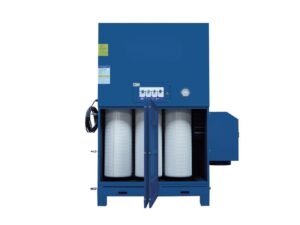
Welding dust collector cost depends on the welding stations, capture method, airflow requirement, duct layout, filter configuration, installation space, and whether sparks or mixed dust need review. A useful quotation cannot be based only on the phrase “one welding dust collector.”
For a single flexible welding area, a local or portable solution may be enough. For several fixed welding stations, a central ducted system with a cartridge collector, fan, ductwork, and balanced capture points may be more practical.
If you are still defining the full project, start with the main welding fume extraction system page. This article focuses on the cost factors buyers should prepare before requesting a welding dust collector quotation.
How This Article Differs From a General Dust Collector Cost Guide
Novazure already has a published guide to industrial dust collector cost factors. That article explains broad cost drivers across different industries, such as airflow, dust type, collector type, filtration, fan, ductwork, controls, discharge method, and project requirements.
This welding cost guide is narrower. It focuses on the questions that usually change a welding fume extraction quotation:
- Is the project one station or multiple fixed stations?
- Are the welding points flexible or fixed?
- Will the buyer use suction arms, hoods, booths, or downdraft tables?
- How much airflow is needed at each active capture point?
- Is a portable unit enough, or is a central ducted system needed?
- How long is the duct route?
- Are cartridge filters suitable for the fume load and working hours?
- Are sparks, cutting dust, grinding dust, or coated materials part of the process?
This keeps the article useful for welding buyers without duplicating the broader cost article.
Quick Answer: What Affects Welding Dust Collector Cost?
The main welding dust collector cost factors are:
| Cost Factor | Why It Changes the Quotation |
|---|---|
| Station count | More stations may require more capture points, higher total airflow, more duct branches, and a larger collector. |
| Active stations | A workshop with many stations may not run all of them at the same time. Simultaneous operation affects airflow and fan sizing. |
| Capture method | Suction arms, fixed hoods, booths, and downdraft tables require different airflow and connection layouts. |
| Airflow requirement | Airflow affects collector size, fan selection, filter area, duct diameter, and system resistance. |
| Portable or central system | A portable unit may fit one flexible point, while a central system needs planned ductwork and branch balancing. |
| Filter configuration | Cartridge quantity, filter area, filter media, and pulse cleaning affect equipment size and maintenance. |
| Duct layout | Long duct distance, elbows, branches, and installation height affect fan pressure and material scope. |
| Installation space | Maintenance access, filter replacement space, dust collection access, and fan position must be planned. |
| Spark or mixed dust condition | Welding sparks, grinding dust, cutting dust, or coated materials may require extra review before quotation. |
The lowest initial price is not always the best option. An undersized system can lead to weak capture, unstable airflow, frequent filter cleaning, or faster filter replacement.
Station Count: Single Station or Multiple Fixed Stations
Station count is one of the first details to confirm because it affects the overall system direction.
For one welding station or a flexible work area, a portable dust collector may be the simpler path. It can be positioned near the welding point and usually requires less fixed ductwork.
For multiple fixed welding stations, a central ducted welding fume extraction system is often more practical. In that case, the quotation may include:
- a central collector body
- filter cartridges and pulse cleaning
- fan and control cabinet
- main duct and branch ducts
- suction arms, hoods, booth connections, or table connections
- balancing dampers or branch adjustments when needed
- dust collection and maintenance access
The important detail is not only how many welding stations exist. Novazure also needs to know how many stations operate at the same time. Six welding stations do not always mean all six require full airflow at once, but that operating pattern must be confirmed before system sizing.
Capture Method Changes Airflow and Cost
The capture method decides how close the system can collect the fume before it spreads into the workshop. It also changes the airflow and duct connection design.
| Capture Method | Cost-Related Impact |
|---|---|
| Flexible suction arm | Often used for manual welding stations. Cost depends on arm quantity, reach, airflow, and operator positioning. |
| Fixed hood | Useful for repeated welding points. Cost depends on hood size, distance from the source, and duct connection. |
| Booth or enclosure connection | Can improve control around repeated welding areas, but may require larger airflow and a more planned layout. |
| Downdraft table | Useful for suitable small parts, but table size and part coverage affect airflow and collector selection. |
| Machine or robotic cell connection | Requires clear connection points, operating cycle review, and duct routing. |
Poor capture design can make the system more expensive without solving the real problem. If the hood is too far from the welding point, simply buying a larger collector may not create good capture at the source.
Airflow Requirement: The Biggest Sizing Input
Airflow is one of the strongest cost drivers in a welding dust collection system. Higher airflow can require:
- a larger collector body
- more filter area
- a larger fan and motor
- larger duct diameter
- more duct material
- higher system resistance review
- more installation space
However, more airflow is not automatically better. Oversized airflow may increase equipment cost, energy use, noise, and filter loading. Undersized airflow may allow welding fumes to escape from the capture point.
For early planning, buyers can review how to calculate airflow for a dust collection system. For welding projects, the final airflow should still be checked against the capture method, active station count, duct route, and fume load.
Useful airflow information includes:
- airflow needed at each suction arm, hood, booth, or table
- number of points connected to the system
- number of points operating at the same time
- duct diameter, if already planned
- available fan position and duct route
- whether future welding stations may be added
Portable Unit or Central Ducted System
The system type changes both initial equipment scope and installation scope.
| System Type | Best Fit | Cost Factors to Check |
|---|---|---|
| Portable welding fume extractor | One station, flexible work area, temporary welding point | Unit airflow, arm or hose, filter type, mobility, working hours, local maintenance. |
| Central ducted welding dust collector | Multiple fixed stations, repeated welding area, planned workshop layout | Collector size, fan, ductwork, branch balance, capture devices, filter area, installation space. |
A portable unit may have a simpler quotation because the scope is more contained. A central system may cost more at the beginning because it includes more equipment and layout work, but it can be more suitable when several fixed stations need one organized extraction system.
The right comparison is not “portable is cheaper” or “central is better.” The right comparison is whether the system matches the station layout, working pattern, and maintenance expectations.
Filter Configuration and Maintenance
For many fine dry welding fume projects, a cartridge dust collector is a practical product path. Cartridge collectors can provide large filter area in a compact structure, which is useful for welding fume and many metal fabrication layouts.
Filter-related cost factors include:
- number of filter cartridges
- total filter area
- filter media selection
- pulse cleaning design
- compressed air requirement
- dust drawer, bin, or hopper design
- access space for filter replacement
- working hours and expected fume load
If the filter area is too small, pressure drop may rise faster and maintenance may become more frequent. If the filter media is not suitable for the actual process, filters may load quickly or require replacement sooner than expected.
Welding mixed with grinding, cutting, oily smoke, sticky residue, or high dust concentration needs extra review before assuming a standard cartridge configuration.
Duct Layout and Installation Space
Duct layout can change the final quotation significantly. A short connection from one capture point to one local collector is very different from a long central duct system across a fabrication workshop.
Important layout details include:
- distance from welding stations to collector position
- number of duct branches
- number of elbows or direction changes
- ceiling height and overhead restrictions
- whether the collector is indoor or outdoor
- fan position and discharge direction
- filter replacement access
- dust drawer or hopper access
- available forklift or maintenance clearance
Longer duct routes and more branches can increase duct material, installation planning, and fan pressure requirements. Tight workshop space may also require a more compact collector arrangement or a different maintenance access plan.
For central systems, a simple workshop sketch is often more useful than a long written description. Mark the welding stations, possible collector location, duct route, and available space around the equipment.
Spark or Mixed Dust Conditions
Welding projects should be reviewed carefully because sparks, hot particles, grinding dust, cutting dust, coated materials, or mixed metal dust may enter the extraction path.
These conditions can affect:
- capture method
- duct route
- spark review before filtration
- pre-separation consideration
- filter media selection
- maintenance frequency
- dust discharge method
- site safety review by the buyer’s responsible team
Novazure can help review the dust collector and system configuration, but site safety, regulatory compliance, fire protection, and worker exposure requirements should be checked by the buyer’s responsible safety team or qualified local professional.
Avoid treating a welding dust collector quotation as a standard item if the process includes frequent cutting sparks, heavy grinding dust, oily smoke, unknown coatings, or mixed production dust.
What Should Be Included in a Welding Dust Collector Quotation?
A practical welding dust collector quotation may include more than the collector body.
| Quotation Item | Why It Matters |
|---|---|
| Collector body | Main filtration equipment size and structure. |
| Filter cartridges | Filter quantity, media, and replacement planning. |
| Fan and motor | Selected according to airflow and system resistance. |
| Control cabinet | Controls fan, pulse cleaning, and basic system operation. |
| Capture devices | Suction arms, hoods, booth connections, or table connections. |
| Ductwork | Main duct, branch ducts, elbows, and connection scope. |
| Dust collection method | Drawer, bin, hopper, or other discharge arrangement. |
| Maintenance access | Space for filters, dust discharge, fan, and controls. |
| Spark or mixed dust review | Needed when hot particles or other dust sources may enter the system. |
This is why two welding workshops can receive different quotations even if both ask for a welding dust collector. The equipment scope follows the working conditions.
Information to Prepare Before Contacting Novazure
For a more useful welding dust collector cost review, prepare:
- welding process
- base material and coating condition
- number of welding stations
- number of stations operating at the same time
- capture method, such as arm, hood, booth, or downdraft table
- airflow estimate, if available
- workshop layout or simple sketch
- duct distance from capture points to collector position
- working hours per day
- whether sparks, cutting, grinding, or mixed dust are present
- available installation space
- maintenance access limitations
- photos or videos of the welding area
If some information is not confirmed, send the available details first. Novazure can review the project direction and identify which technical points need confirmation before a final quotation.
FAQ
Station count is important, but it is not the only pricing basis. The quotation also depends on active station count, capture method, airflow, duct layout, filter area, fan selection, working hours, and spark or mixed dust conditions.
A portable unit usually has a smaller and simpler scope for one flexible station. A central system may require more equipment and ductwork, but it can be more suitable for multiple fixed welding stations. The better choice depends on the workshop layout and production pattern.
Higher airflow often increases collector size, fan size, filter area, and ductwork. But airflow should not be oversized without reason. The right airflow should match the capture method, active stations, and duct layout.
Frequent filter loading can come from high fume load, poor capture position, undersized filter area, long working hours, mixed grinding dust, oily or sticky particles, or unsuitable filter media. These details should be reviewed before selecting the collector.
Novazure can make an initial review if the buyer provides welding process, station count, capture method, layout, duct distance, working hours, and dust condition. Final airflow and system configuration may still need confirmation before final quotation.
Conclusion
Welding dust collector cost is mainly determined by station count, active welding points, capture method, airflow, filter configuration, duct layout, installation space, and spark or mixed dust conditions.
For buyers, the best way to control the quotation process is not to ask for a fixed standard price. It is better to prepare the welding process, station count, capture method, airflow estimate, workshop layout, duct distance, spark or mixed dust condition, and installation space.
You can contact Novazure with these details. Novazure can review whether a portable collector, central cartridge dust collector, or another welding fume extraction configuration is more suitable for your workshop.