
Quick Answer
For many plastic recycling processes, we usually recommend a cartridge dust collector with source capture because it is compact, suitable for fine dry plastic dust, and can support pulse cleaning for continuous production points.
If the line produces coarse flakes, mixed chips, or heavy dust load, a cyclone dust collector can be used before the final filter to reduce loading. For larger central recycling lines with multiple machines and higher airflow, a baghouse dust collector may be more suitable.
If the dust is sticky, hot, moist, statically charged, or potentially combustible, we would first check the plastic type, process temperature, dust behavior, airflow, and local safety requirements before recommending the final system.
Dust Sources in Plastic Recycling
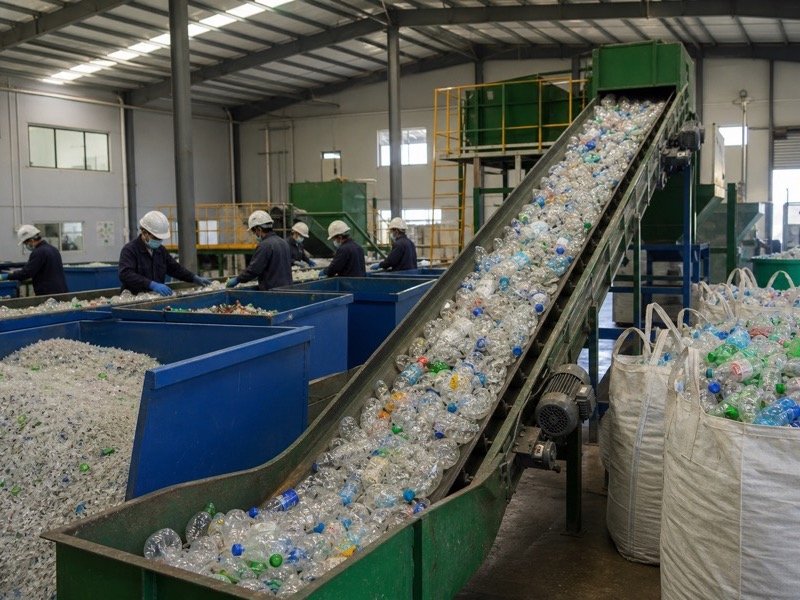
Plastic recycling dust is usually created when waste plastic is moved, broken, cut, rubbed, screened, or conveyed. Common dust points include manual sorting tables, crusher inlets, shredder discharge points, granulator outlets, grinder enclosures, vibrating screens, conveyor transfers, silo vents, bagging points, and pellet handling lines.
The dust is not always a single material. A recycling line may handle PET, PE, PP, ABS, PVC, nylon, acrylic, polycarbonate, rubber-like materials, labels, paper residue, fillers, and dirt from incoming waste streams. Because of this variation, the dust collector should not be selected only by machine size.
Source capture is usually better than trying to clean the whole room after dust has already spread. Hoods, machine enclosures, duct connections, and local pickup points should be placed where dust escapes from the process.
Dust Characteristics and Collection Challenges
Plastic recycling dust may include coarse flakes, fine polymer powder, light floating fines, fibrous material, mixed contaminants, and additive dust. Some plastic dust can carry static charge, cling to filters, or settle on equipment surfaces. Some dust may also be combustible when finely divided and suspended in air.
Filter cleaning is one of the main design concerns. Fine plastic dust can load filters quickly if airflow, filter area, and pulse cleaning are not matched to the dust behavior. Coarse flakes can also increase abrasion or block ductwork if the duct route is poorly designed.
Moisture and heat should be checked carefully. Washed plastic, wet flakes, hot grinding points, or thermal processing areas may need a different capture strategy. Dry dust collectors are mainly for particulate control. Odor, vapor, smoke, and thermal-process emissions should be reviewed separately.
Recommended Dust Collector for Plastic Recycling
For local plastic grinders, granulators, small shredders, and transfer points, a cartridge collector is often a practical first option. It has a compact footprint and is suitable for many fine dry dust sources when the filter media, filter area, and pulse cleaning are selected correctly.
For coarse plastic chips or mixed dust with large particles, a cyclone can be useful as a pre-separator. The cyclone helps remove heavier particles before they reach the final filter, which can reduce filter loading and make dust discharge easier. It is usually not enough as the only collector for fine plastic dust.
For larger recycling plants with several capture points, a central baghouse may be more suitable. Baghouse systems can handle higher airflow and heavier dust loads, especially when the line runs continuously. For early comparison, the existing baghouse vs cartridge dust collector guide can support collector selection.
How the Dust Collection System Works
A plastic recycling dust collection system starts at the dust source. The capture point may be a hood at the shredder inlet, an enclosure around the granulator outlet, a pickup hood over a conveyor transfer, a vent connection on a silo, or a local duct connection near a screen or bagging point.
The captured air then moves through ductwork to the collector. In many systems, coarse particles first pass through a cyclone pre-separator. The remaining fine dust is filtered by a cartridge collector or baghouse. Cleaned air is discharged according to the project layout and local requirements.
For multi-point systems, branch ducts and dampers help balance airflow between machines. The duct route should be as direct as possible. Low velocity, long horizontal runs, and sharp turns can allow light flakes and fines to settle inside the duct.
Key Selection Factors
Before choosing a plastic recycling dust collector, review the process details and dust behavior first.
| Factor | What to check |
|---|---|
| Process | Sorting, shredding, crushing, grinding, granulating, screening, conveying, silo venting, or bagging. |
| Plastic type | PET, PE, PP, ABS, PVC, nylon, acrylic, polycarbonate, rubber, or mixed material. |
| Dust form | Coarse flakes, fine powder, fibrous dust, label residue, filler dust, or mixed waste dust. |
| Dust load | Number of machines, operating hours, simultaneous working points, and dust generation rate. |
| Airflow | Hood size, machine opening, duct length, branch quantity, and pressure loss. |
| Safety review | Static charge, combustible dust potential, temperature, moisture, and site rules. |
If airflow is not clear, start with machine photos, opening size, dust escape points, number of operating machines, and a simple layout drawing. The guide on how to calculate airflow for a dust collection system can help with early planning.
Recommended System Configuration
A small plastic recycling workstation may use a local hood, short duct, compact cartridge collector, fan, and dust bin. This works best when the dust point is simple, the dust is dry, and the airflow requirement is moderate.
A medium recycling line may use several hoods, branch ducts, a cyclone pre-separator, a cartridge collector, a fan, a control panel, and a dust discharge bin. This layout is useful when the process creates both plastic flakes and fine dust.
A larger central system may use enclosed capture points, balanced duct branches, a cyclone or drop-out section, a baghouse collector, fan, controls, and rotary discharge equipment. The final configuration depends on airflow, dust load, operating schedule, installation space, and maintenance access.
Safety and Special Design Considerations
Plastic recycling dust should be reviewed carefully before final design. Fine polymer dust, mixed waste dust, and contaminated material streams can create different risks from clean pellet handling. Static charge, combustible dust potential, hot particles, moisture, and mixed contaminants should all be checked.
If combustible dust is possible, explosion protection, isolation, grounding, housekeeping, and local safety requirements should be reviewed by qualified parties before installation. Novazure should not treat one standard collector as suitable for every plastic recycling line.
Avoid connecting wet washing exhaust, melting fumes, odor sources, or corrosive vapor streams into a dry dust collector without process review. The Application page keeps this section concise, while detailed static control, filter media, and combustible dust review topics are planned as future Blog guides.
Why Choose Novazure for Plastic Recycling Dust Collection
Novazure provides practical industrial dust collector systems for plastic recycling and other industrial dust applications. For recycling projects, we help review the plastic type, dust source, capture method, airflow, dust load, collector type, duct route, discharge method, and installation space.
The goal is not only to quote a collector model. The system should match the actual recycling line, whether the main issue is fine dust from a grinder, coarse flakes from a shredder, dust at conveyor transfers, or a central system for several machines.
If your project also includes powder transfer or silo venting, our bulk powder and material handling dust collection page may be useful. For other factory dust scenarios, the dust collection applications hub can help compare related pages.
FAQ
For many plastic recycling lines, a cartridge dust collector is suitable for fine dry dust near grinders, granulators, and transfer points. If the line creates coarse flakes or heavy dust load, a cyclone pre-separator or baghouse system may be needed.
Usually not as the final filter. A cyclone can remove coarse flakes and reduce dust load before the main collector, but fine plastic dust normally needs cartridge or baghouse filtration.
Some fine plastic and polymer dust may be combustible when suspended in air. The actual risk depends on the plastic type, particle size, concentration, ignition sources, and site conditions. A qualified safety review is recommended before final design.
Send the plastic type, process flow, machine photos, number of dust points, operating schedule, dust condition, known airflow if available, temperature, moisture, installation space, and layout drawing.
Request a Plastic Recycling Dust Collection Solution
If you need a dust collection system for plastic shredding, grinding, granulating, conveying, screening, or pellet handling, send us your process information, dust source photos, airflow requirement, working points, and layout drawing.
Novazure will help you review whether a cartridge dust collector, cyclone pre-separator, baghouse collector, or central plastic recycling dust collection system is more suitable for your production line.