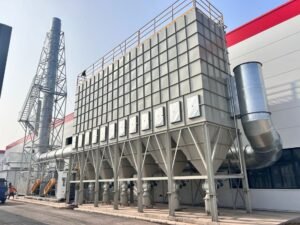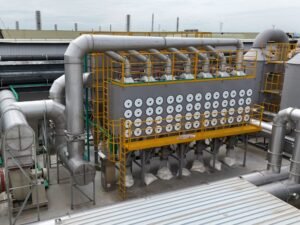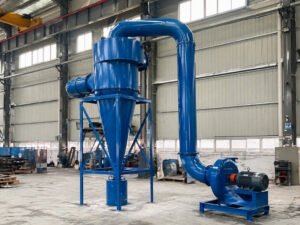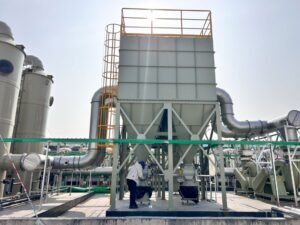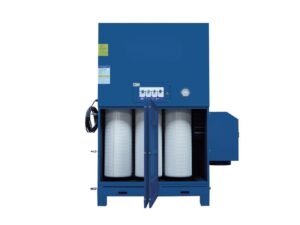
Choosing between a baghouse and a cartridge dust collector is not simply a choice between two filter types. In real industrial projects, the better choice depends on the dust characteristics, airflow requirement, dust concentration, temperature, installation space, and how the production process operates.
For example, a factory handling heavy dust, high dust loading, or high-temperature gas may need a baghouse dust collector for more stable long-term operation. But for fine dry dust, welding fume, grinding dust, laser cutting fume, or powder coating applications, a cartridge dust collector may be more compact and easier to maintain.
The wrong choice can lead to high pressure drop, frequent filter replacement, poor dust capture, or unnecessary equipment cost. This guide compares baghouse and cartridge dust collectors from the viewpoint of working conditions and applications, so you can better understand which system is more suitable for your project.
Quick Selection Guide: Baghouse or Cartridge?
The table below gives a quick reference based on common working conditions. It is not a final design rule, but it can help you understand which dust collector is usually more suitable for different applications.
| Working Condition / Application | More Suitable Choice | Why |
| Large airflow system | Baghouse dust collector | Better for medium to large central dust collection systems |
| High dust concentration | Baghouse dust collector | Filter bags usually handle heavy dust loading more stably |
| High-temperature gas | Baghouse dust collector | High-temperature filter bags can be selected for suitable conditions |
| Heavy or abrasive dust | Baghouse dust collector | More suitable for demanding and continuous-duty applications |
| Cement, mining, crushing, or bulk powder | Baghouse dust collector | These applications often have high dust load and large airflow demand |
| Fine dry dust | Cartridge dust collector | Pleated cartridges provide large filter area in a compact structure |
| Welding fume | Cartridge dust collector | Commonly used for fine fume and metalworking dust extraction |
| Grinding or polishing dust | Cartridge dust collector | Suitable for many fine and dry metal dust applications |
| Powder coating dust | Cartridge dust collector | Compact design and fine dust filtration are usually preferred |
| Limited installation space | Cartridge dust collector | Smaller footprint compared with many baghouse systems |
| Frequent filter replacement requirement | Cartridge dust collector | Cartridges are usually easier and faster to replace |
In simple terms, baghouse dust collectors are usually better for heavy-duty, high-load, large-airflow applications, while cartridge dust collectors are often better for compact, fine-dust, and medium-airflow applications.
However, the final choice should still be confirmed according to dust type, airflow, temperature, moisture, operating hours, and site layout.
Choose by Dust Type and Dust Loading
Dust type and dust loading are usually the first factors to check when choosing between a baghouse and a cartridge dust collector. The same airflow may require different collector designs if the dust is heavy, abrasive, fine, sticky, or generated in large quantities.
For high dust concentration, heavy particles, or continuous dust generation, a baghouse dust collector is often the safer choice. Filter bags usually provide better tolerance for heavy dust loading, especially in applications such as cement, mining, crushing, woodworking, metal smelting, and bulk powder handling.
For fine, dry, and lighter dust, a cartridge dust collector can be a better option. Cartridge filters have a pleated structure, which provides a large filtration area in a compact body. This makes them suitable for welding fume, grinding dust, polishing dust, laser cutting fume, and powder coating dust.
The key risk is filter plugging. If a cartridge collector is used in a process with very high dust loading or sticky dust, the cartridges may clog quickly, pressure drop may rise, and filter replacement may become frequent. In that situation, a baghouse may provide more stable long-term operation.
A simple way to judge is:
- Heavy dust load or large amount of powder → Baghouse dust collector
- Fine dry dust or fume with moderate dust load → Cartridge dust collector
- Sticky, wet, or oily dust → Needs special review before selection
Choose by Airflow and System Size
Airflow and system size are also important when comparing a baghouse and a cartridge dust collector. In many projects, the required airflow is not only determined by the dust collector itself, but also by the number of collection points, hood size, duct layout, and whether the system is used for a single machine or a central dust collection system.
For large airflow systems, a baghouse dust collector is often more suitable. Baghouse systems are commonly used for central dust collection, multiple production lines, high dust loading, and continuous operation. They can be designed with multiple filter compartments and larger filtration areas for heavy-duty applications.
For small to medium airflow systems, a cartridge dust collector may be more practical. Cartridge collectors are compact and can provide a large filter area within a smaller body. This makes them suitable for individual machines, welding stations, grinding tables, laser cutting machines, powder coating booths, and other localized dust collection points.
A simple way to understand the difference is:
- Large airflow, multiple dust sources, central system → Baghouse dust collector
- Medium airflow, compact equipment, local dust source → Cartridge dust collector
However, airflow alone should not be the only decision factor. A high-airflow cartridge system may not be ideal if the dust load is heavy, and a small baghouse may not be necessary if the dust is fine, dry, and generated from a compact workstation. The final choice should always combine airflow, dust type, filter area, pressure drop, and actual operating conditions.
Choose by Temperature and Working Conditions
Temperature and working conditions can strongly affect the choice between a baghouse and a cartridge dust collector. In some projects, the dust collector is not only handling dust, but also hot gas, moisture, oil mist, sparks, or corrosive air.
For high-temperature gas, a baghouse dust collector is usually more flexible. Different filter bag materials can be selected according to the operating temperature, such as polyester, aramid, fiberglass, or PTFE-coated filter bags. This makes baghouse systems more common in high-temperature or heavy-duty applications.
For normal-temperature, dry dust, a cartridge dust collector is often a good choice, especially when the dust is fine and the installation space is limited. However, cartridge filters are usually more sensitive to moisture, sticky dust, oil mist, and high dust loading.
If the working condition includes sparks, explosive dust, moisture, or corrosive gas, the selection should be reviewed carefully. The final system may need special filter media, spark protection, explosion venting, anti-static filters, stainless steel parts, or anti-corrosion treatment.
A simple way to judge is:
- High temperature, heavy-duty operation, harsh conditions → Baghouse dust collector
- Normal temperature, dry fine dust, compact installation → Cartridge dust collector
- Wet, oily, sticky, corrosive, or explosive dust → Requires special review before selection
The safest approach is to confirm the actual gas temperature, dust characteristics, and operating environment before choosing the collector type.
Choose by Installation Space
Installation space is another practical factor when choosing between a baghouse and a cartridge dust collector. Even if both systems can meet the airflow and filtration requirement, the available floor space, ceiling height, maintenance access, and duct connection position may affect the final choice.
A baghouse dust collector usually requires more space. It often has a taller structure, larger hopper, longer filter bags, and more space for maintenance. This is not a problem for outdoor installation or large workshops, but it may be difficult for factories with limited ceiling height or compact production layouts.
A cartridge dust collector is usually more compact. Because pleated cartridge filters provide a large filtration area in a smaller body, cartridge systems are often easier to install near production machines, welding stations, grinding areas, or laser cutting equipment.
A simple way to judge is:
- Large workshop, outdoor installation, enough height → Baghouse dust collector
- Limited space, indoor installation, compact workstation → Cartridge dust collector
However, compact size should not be the only reason to choose a cartridge collector. If the dust load is too high or the dust is sticky, wet, or heavy, a cartridge system may still face frequent filter clogging even if it fits the available space. Space is important, but it should be checked together with dust type, airflow, and operating conditions.
Choose by Industry and Application
Different industries generate different types of dust, so the right dust collector should be selected according to the actual application instead of choosing only by equipment appearance.
For heavy-duty industries such as cement, mining, foundry, metallurgy, woodworking, and bulk powder handling, a baghouse dust collector is often more suitable. These applications usually involve large airflow, high dust concentration, continuous operation, or heavier particles. A baghouse system can be designed with larger filtration area and more stable dust handling capacity.
For metalworking and fine dust applications such as welding fume, grinding, polishing, laser cutting, plasma cutting, and powder coating, a cartridge dust collector is often preferred. These applications usually generate fine, dry dust or fume, and the equipment often needs to be installed near workstations or production machines.
A simple application-based reference is:
- Cement, mining, bulk powder, woodworking, foundry → Baghouse dust collector
- Welding, grinding, polishing, laser cutting, powder coating → Cartridge dust collector
However, industry alone is not enough for final selection. For example, a woodworking factory with heavy chips and large airflow may need a baghouse, while a small sanding workstation may use a cartridge collector. A metalworking shop may use cartridge collectors for welding fume, but a large-scale metal grinding line with heavy dust loading may require a different design.
The best approach is to match the dust collector with the actual process, dust amount, airflow, temperature, and installation layout.
Maintenance and Filter Replacement Considerations
Maintenance is another factor to consider when choosing between a baghouse and a cartridge dust collector. The right choice is not only about filtration efficiency, but also about how easy the system is to maintain during daily operation.
A baghouse dust collector usually has more filter bags and a larger structure. For heavy-duty applications, this can provide stable operation, but filter bag replacement may take more time and labor. If the system is large, maintenance access, platform design, and shutdown time should be considered before installation.
A cartridge dust collector is usually easier to maintain in small and medium systems. Cartridge filters are compact and can often be replaced faster than long filter bags. This is one reason why cartridge collectors are commonly used for welding fume, grinding dust, powder coating, and other localized dust collection applications.
However, easier replacement does not always mean lower maintenance cost. If the dust loading is too high, or if the dust is sticky, wet, or oily, cartridges may plug faster and require more frequent replacement. In that case, a baghouse or another system design may be more suitable.
A simple way to compare maintenance is:
- Heavy dust load and continuous operation → Baghouse may be more stable
- Fine dry dust and compact systems → Cartridge may be easier to maintain
- Sticky, wet, or oily dust → Needs special filter and system review
When comparing maintenance cost, it is better to consider filter life, pressure drop, cleaning frequency, replacement labor, and downtime together instead of only comparing the initial filter price.
How to Choose the Right Dust Collector for Your Project
The best way to choose between a baghouse and a cartridge dust collector is to start from the working conditions, not from the equipment name. Before selecting the system, the following information should be confirmed:
| Information to Confirm | Why It Matters |
| Dust type | Determines whether filter bags or cartridges are more suitable |
| Dust concentration | High dust loading may require a baghouse or larger filtration area |
| Particle size | Fine dust and heavy particles need different filtration and transport design |
| Airflow requirement | Affects collector size, filter area, and fan selection |
| Gas temperature | High-temperature gas may require special filter bag materials |
| Moisture or oil mist | Wet, sticky, or oily dust may cause filter clogging |
| Flammable or explosive dust | May require explosion-proof components or safety design |
| Installation space | Compact workshops may prefer cartridge collectors |
| Number of collection points | Affects total airflow and duct layout |
| Working hours | Continuous operation may require a more heavy-duty design |
For a quick preliminary judgment:
- Choose a baghouse dust collector if your process has large airflow, high dust concentration, heavy dust, high temperature, or continuous operation.
- Choose a cartridge dust collector if your process has fine dry dust, medium airflow, limited space, or localized dust sources such as welding, grinding, laser cutting, or powder coating.
If your working condition includes moisture, oil mist, sticky dust, explosive dust, sparks, or corrosive gas, the selection should be reviewed more carefully. In these cases, the dust collector type, filter media, fan, duct layout, and safety configuration should be considered together.
Not sure which type is suitable? Send us your airflow, dust type, temperature, dust source, and workshop layout. Novazure can help recommend a suitable dust collection solution based on your actual working conditions.
FAQs
Not always. A baghouse dust collector is usually better for heavy dust loading, large airflow, high-temperature gas, and continuous operation. A cartridge dust collector is usually better for fine dry dust, compact installation, and localized dust sources such as welding fume, grinding dust, and powder coating dust.
The better choice depends on the actual working conditions, not only on the equipment type.
In some applications, yes. If the dust is fine, dry, and the airflow is not too large, a cartridge dust collector may be a compact alternative to a baghouse.
However, for high dust concentration, heavy particles, sticky dust, high-temperature gas, or large central systems, a baghouse may still be more reliable. A cartridge collector is not always an upgrade from a baghouse.
For most welding fume applications, a cartridge dust collector is commonly used. Welding fume is usually fine and dry, and cartridge filters can provide large filtration area in a compact structure.
However, the final selection still depends on the number of welding points, airflow, capture method, working hours, and whether sparks or explosive dust risks are present.
A baghouse dust collector is usually more suitable for heavy dust or high dust concentration. It is often used in cement, mining, crushing, woodworking, foundry, metallurgy, and bulk powder applications.
If a cartridge collector is used in very heavy dust loading, the cartridges may clog faster and require more frequent replacement.
Conclusion
Choosing between a baghouse and a cartridge dust collector is not about which one is universally better. The right choice depends on the dust type, dust concentration, airflow requirement, gas temperature, installation space, maintenance expectations, and actual working conditions.
In general, a baghouse dust collector is more suitable for large airflow, high dust loading, heavy particles, high-temperature gas, and continuous industrial operation. A cartridge dust collector is often a better choice for fine dry dust, welding fume, grinding dust, powder coating dust, compact installation, and small to medium dust collection systems.
If your application involves moisture, oil mist, sticky dust, sparks, corrosive gas, or explosive dust, the system should be reviewed carefully before selection. In many projects, the final decision should consider the dust collector, filter media, fan, duct layout, and safety configuration together.
Not sure which dust collector is right for your project? Send us your airflow, dust type, temperature, dust source, and workshop layout. Novazure can help recommend a suitable dust collection solution based on your real working conditions.