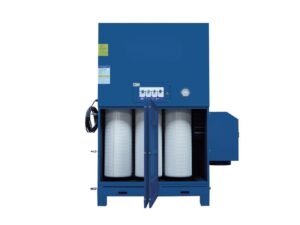
Choosing the right industrial dust collector should start from the working conditions, not only from the equipment name or initial price. Different dust sources, dust types, airflow requirements, temperatures, and installation layouts may require different dust collection solutions.
If the dust collector is too small, dust may escape from the capture point and affect the workshop environment. If the system is oversized, it may increase equipment cost, power consumption, and filter load. In some applications, the wrong collector type may also cause frequent filter clogging, high pressure drop, or unstable operation.
This guide explains how to choose an industrial dust collector based on real application needs. We will compare common options such as baghouse dust collectors, cartridge dust collectors, cyclone dust collectors, sintered plate dust collectors, and portable dust collectors, and show which type is more suitable for different working conditions.
Quick Answer: How Do You Choose an Industrial Dust Collector?
The right industrial dust collector depends on the dust source, dust type, airflow requirement, temperature, installation space, and working conditions. There is no single dust collector that is suitable for every application.
The table below gives a quick selection reference:
| Working Condition | Usually Recommended Collector |
| Fine dry dust, welding fume, grinding dust | Cartridge dust collector |
| High dust loading, large airflow, heavy dust | Baghouse dust collector |
| Coarse particles or pre-separation | Cyclone dust collector |
| Small workstation or mobile use | Portable dust collector |
| High-temperature or continuous heavy-duty operation | Baghouse dust collector |
| Compact indoor installation | Cartridge dust collector |
| Very fine or difficult dust requiring surface filtration | Sintered plate dust collector |
| Sticky, wet, oily, explosive, or corrosive dust | Special review required |
For many industrial projects, the selection does not rely on one factor only. For example, a cartridge dust collector may be suitable for fine welding fume, but it may not be ideal for very high dust loading. A baghouse dust collector may handle heavy dust better, but it usually requires more installation space.
A good selection should always combine the following factors:
- Dust source
- Dust type
- Airflow
- Dust concentration
- Temperature
- Moisture or oil mist
- Installation space
- Working hours
- Safety risks
In simple terms, choose the dust collector according to the process, not only according to the equipment name.
Start with the Dust Source
Before choosing a dust collector type, first identify where the dust is generated. The dust source determines how the dust should be captured, how much airflow may be required, and which collector type is more suitable.
For example, dust from a welding station is usually different from dust generated by a woodworking machine, cement transfer point, food powder process, or laser cutting machine. Even if the required airflow looks similar, the correct dust collector design may be different.
Common industrial dust sources include:
| Dust Source | Typical Dust Problem | Possible Selection Direction |
| Welding station | Fine welding fume | Cartridge or portable dust collector |
| Grinding or polishing table | Fine metal dust | Cartridge dust collector |
| Laser cutting machine | Fine fume and particles | Cartridge dust collector |
| Woodworking machine | Wood dust, sawdust, chips | Baghouse, cyclone, or cartridge depending on dust size |
| Cement or construction material handling | Heavy powder and high dust loading | Baghouse dust collector |
| Food powder processing | Fine food powder | Cartridge or baghouse depending on dust properties |
| Bulk powder transfer point | Powder leakage during conveying or loading | Baghouse or cartridge dust collector |
| Powder coating booth | Fine dry powder | Cartridge dust collector |
The key point is that the dust collector should match the process, not just the general industry name. For example, a large woodworking plant may need a central baghouse system, while a small sanding workstation may use a compact cartridge collector. A metalworking shop may use cartridge collectors for welding fume, but heavy grinding dust may require a different design.
So before asking for a dust collector model, it is better to confirm the dust source, collection point, working hours, and whether the dust is generated continuously or intermittently.
Identify the Dust Type and Dust Loading
After confirming the dust source, the next step is to identify the dust type and dust loading. These two factors have a strong influence on the dust collector structure, filter media, cleaning method, and long-term maintenance cost.
Different dusts behave differently inside a dust collection system. Fine dry dust may be easy to capture but may require high filtration efficiency. Heavy powder or abrasive dust may need a stronger collector structure and larger filtration area. Sticky, wet, or oily dust may cause filter clogging and should be reviewed carefully before selection.
A simple reference is shown below:
| Dust Condition | Selection Direction |
| Fine dry dust | Cartridge dust collector is often suitable |
| Welding fume or fine metal dust | Cartridge dust collector is commonly used |
| Heavy dust loading | Baghouse dust collector is usually more stable |
| Coarse particles | Cyclone dust collector can be used for pre-separation |
| High dust concentration | Baghouse dust collector or larger filtration area may be needed |
| Wood chips or larger particles | Cyclone pre-separation or baghouse system may be considered |
| Very fine or difficult dust | Sintered plate dust collector or special filter media may be reviewed |
| Sticky, wet, or oily dust | Special review is required before choosing the collector type |
| Flammable or explosive dust | Explosion protection design should be considered |
The risk of choosing the wrong collector is often not visible at the beginning. For example, if a cartridge dust collector is used for very high dust loading or sticky dust, the cartridges may plug quickly, pressure drop may rise, and filter replacement may become frequent. On the other hand, using a large baghouse for a small fine-dust workstation may increase the equipment cost and take more installation space than necessary.
In general, the dust collector should be selected according to how the dust behaves during actual operation, not only according to the dust name. Dust concentration, particle size, moisture, oil content, abrasiveness, and explosibility should all be checked before final selection.
Confirm the Required Airflow
Airflow is one of the most important parameters when choosing an industrial dust collector. It affects the collector size, filter area, fan selection, duct design, and dust capture performance.
If the airflow is too low, dust may escape from the capture point and spread into the workshop. If the airflow is too high, the system may become more expensive, consume more power, increase filter load, and create unnecessary noise.
The required airflow should be estimated based on the actual dust collection points, not only by the workshop size. In most projects, airflow is related to:
| Airflow Factor | Why It Matters |
| Hood size | A larger suction hood usually needs more airflow |
| Number of collection points | More active points require higher total airflow |
| Capture distance | A hood farther from the dust source usually needs more airflow |
| Duct diameter and duct velocity | Proper duct velocity helps transport dust without settling |
| Simultaneous operation | Not all machines may operate at the same time |
| Dust type | Heavy dust, fine dust, and fumes may require different design approaches |
For example, a welding workstation, a grinding table, and a cement powder transfer point may all need dust collection, but their airflow calculation methods and system design can be very different.
For preliminary selection, it is useful to know the approximate airflow in m³/h or CFM. However, the final dust collector should also be checked together with static pressure, duct resistance, filter area, and fan performance.
If you are not sure how to estimate airflow, start by confirming the number of suction points, hood size, duct layout, and whether all machines operate at the same time.
Choose the Right Dust Collector Type
After confirming the dust source, dust type, dust loading, and airflow requirement, you can start comparing different dust collector types. Each collector type has a more suitable application range, and the best choice should match the actual working conditions.
| Dust Collector Type | Best Suited For | Typical Applications |
| Baghouse dust collector | Large airflow, heavy dust loading, high dust concentration, continuous operation | Cement, woodworking, mining, metallurgy, bulk powder handling |
| Cartridge dust collector | Fine dry dust, welding fume, grinding dust, compact installation | Welding, grinding, polishing, laser cutting, powder coating |
| Cyclone dust collector | Coarse particles, large dust particles, pre-separation before filtration | Wood chips, metal particles, sand, pre-separation systems |
| Sintered plate dust collector | Fine dust, difficult dust, higher filtration demand | Fine powder, chemical powder, special industrial dust applications |
| Portable dust collector | Small workstation, mobile use, single dust source | Small grinding station, welding point, local dust collection |
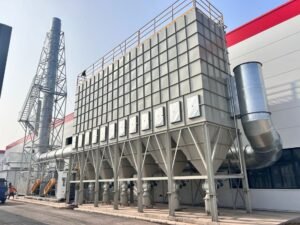
A baghouse dust collector is usually selected when the system needs to handle large airflow, heavy dust load, high dust concentration, or continuous operation. It is often used in larger central dust collection systems.
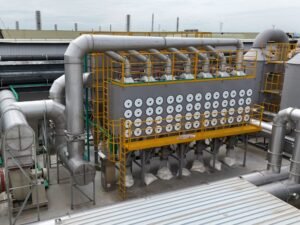
A cartridge dust collector is usually selected for fine and dry dust applications where a compact structure is preferred. It is common in welding fume extraction, grinding dust collection, laser cutting fume, and powder coating dust collection.
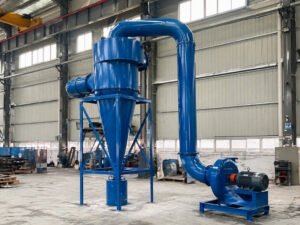
A cyclone dust collector is often used when the dust contains coarse or heavier particles. In many systems, it can also work as a pre-separator before a baghouse or cartridge collector to reduce the dust load on the filters.
A sintered plate dust collector can be considered for fine or difficult dust conditions where stable surface filtration is required. It is not always necessary for general applications, but it can be useful in certain fine powder or special dust processes.
A portable dust collector is more suitable for small workstations, single dust sources, or mobile use. It is not usually the best choice for large central systems, but it can be practical for localized dust control.
The key point is that the collector type should be selected according to the process. A larger dust collector is not always better, and a compact collector is not always suitable for heavy-duty dust loading.
Baghouse or Cartridge Dust Collector?
Baghouse and cartridge dust collectors are two of the most common choices for industrial dust collection. In many projects, the selection comes down to dust loading, airflow, temperature, installation space, and maintenance expectations.
A baghouse dust collector is usually more suitable for applications with large airflow, high dust concentration, heavy particles, high-temperature gas, or continuous operation. It is often used when the process generates a large amount of dust over long working hours.
A cartridge dust collector is usually more suitable for fine dry dust, welding fume, grinding dust, powder coating dust, laser cutting fume, and compact indoor installation. Its pleated cartridge filters provide a large filtration area in a smaller structure, which makes it practical for many small to medium dust collection systems.
A simple way to compare them is:
- Large airflow, heavy dust, high dust loading, high temperature → Baghouse dust collector
- Fine dry dust, welding fume, grinding dust, compact installation → Cartridge dust collector
However, cartridge collectors are not always an upgrade from baghouse collectors. If the dust load is too high, or if the dust is sticky, wet, or heavy, cartridge filters may clog faster and require more frequent replacement. In those cases, a baghouse system may provide more stable long-term operation.
For a detailed comparison, you can refer to your dedicated baghouse vs cartridge dust collector article.
Check Temperature, Moisture, and Safety Risks
Some working conditions require special attention before choosing an industrial dust collector. Temperature, moisture, oil mist, sparks, corrosive gas, and explosive dust can all affect the final equipment design.
For high-temperature gas, a baghouse dust collector is often more flexible because different filter bag materials can be selected according to the operating temperature. For example, polyester, aramid, fiberglass, or PTFE-coated filter bags may be considered depending on the actual gas condition.
For moisture, oil mist, or sticky dust, the selection should be reviewed carefully. Wet or oily dust may cause filter clogging, increase pressure drop, and reduce filter life. In some cases, a standard baghouse or cartridge collector may not be the best solution without pretreatment or special filter media.
For sparks, flammable dust, or explosive dust, safety design is very important. The system may need explosion-proof electrical components, anti-static filter media, explosion venting, spark protection, or other safety configurations based on the dust properties and installation conditions.
For corrosive gas or acid/alkali fumes, the system may require stainless steel, anti-corrosion treatment, or a different air treatment solution such as a wet scrubber.
A simple way to judge is:
- High temperature → Check filter material and collector structure
- Moisture, oil mist, or sticky dust → Review clogging risk
- Sparks or explosive dust → Review explosion protection design
- Corrosive gas or acid/alkali fumes → Review anti-corrosion design or wet scrubber solution
These conditions should not be ignored during selection. A dust collector that works well in a normal dry dust application may not perform well in a hot, wet, oily, corrosive, or explosive environment.
Consider Installation Space and Duct Layout
Installation space and duct layout can also affect the dust collector selection. Even if the dust type and airflow are clear, the final equipment must still fit the workshop layout, maintenance space, and duct connection requirements.
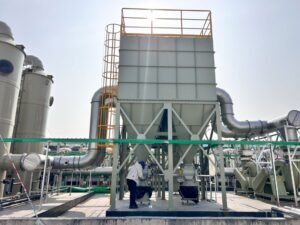
For large central dust collection systems, a baghouse dust collector is often installed outdoors or in an area with enough height and floor space. It may require space for the filter housing, hopper, dust discharge device, fan, control cabinet, and maintenance access platform.
For compact indoor workshops, a cartridge dust collector may be easier to install because it usually has a smaller footprint. It can often be placed near welding stations, grinding machines, laser cutting equipment, or powder coating booths.
For small workstations or flexible production areas, a portable dust collector may be considered. It is more suitable for localized dust control when the dust source is limited and the system does not need to serve multiple machines.
Duct layout is also important. Long ducts, many elbows, poor branch design, or insufficient duct velocity can reduce suction performance even if the dust collector itself is correctly selected. For systems with multiple collection points, the duct layout and airflow balance should be reviewed carefully.
A simple way to judge is:
- Outdoor installation, large airflow, enough space → Baghouse dust collector
- Indoor compact layout, fine dry dust, medium airflow → Cartridge dust collector
- Single workstation or movable dust source → Portable dust collector
- Long ducts or multiple suction points → Check duct design and static pressure
The dust collector should not only match the dust type, but also the actual installation conditions. A good system design should consider the equipment location, duct route, maintenance access, dust discharge method, and fan pressure together.
Match the Dust Collector with Your Industry
Different industries generate different types of dust, so the dust collector should be matched with the actual process and application. The same collector type may not work equally well in every industry.
A quick industry-based reference is shown below:
| Industry / Application | Common Dust Problem | Possible Collector Direction |
| Welding | Fine welding fume | Cartridge or portable dust collector |
| Grinding & polishing | Fine metal dust | Cartridge dust collector |
| Powder coating | Fine dry powder | Cartridge dust collector |
| Woodworking | Wood dust, sawdust, chips | Baghouse, cyclone, or cartridge depending on dust size and airflow |
| Cement & construction materials | Heavy powder, high dust loading | Baghouse dust collector |
| Food processing | Fine food powder | Cartridge or baghouse depending on dust properties |
| Metal cutting / laser cutting | Fine fume and particles | Cartridge dust collector |
| Bulk powder handling | Powder leakage during transfer or loading | Baghouse or cartridge depending on dust loading |
This table is only a starting point. The final choice still depends on airflow, dust concentration, particle size, temperature, moisture, safety risks, and site layout.
For example, a welding workshop may use a cartridge dust collector for central fume extraction, but a small repair station may only need a portable dust collector. A woodworking factory may use a baghouse system for large airflow and wood chips, but a small sanding process may use a cartridge collector if the dust is fine and dry.
The best approach is to choose the dust collector according to the actual dust source and operating conditions, not only by industry name.
What Information Should You Provide Before Quotation?
To recommend the right industrial dust collector, engineers need more than just the equipment name. The more accurate the working condition information is, the easier it is to select the right collector type, filter media, fan, duct layout, and safety configuration.
Before asking for a quotation, it is helpful to provide the following information:
| Information | Why It Matters |
| Dust source | Determines how the dust should be captured |
| Airflow requirement | Determines collector size, filter area, and fan selection |
| Dust type | Helps choose baghouse, cartridge, cyclone, or other collector types |
| Dust concentration | Affects filter area, cleaning system, and dust discharge design |
| Particle size | Affects filtration efficiency and duct transport velocity |
| Gas temperature | Determines filter material and system structure |
| Moisture or oil mist | May cause filter clogging and pressure drop increase |
| Flammable or explosive dust | May require explosion protection design |
| Installation space | Affects equipment size, layout, and maintenance access |
| Number of collection points | Affects total airflow and duct design |
| Working hours | Affects duty level, filter life, and maintenance frequency |
If you do not have all the data, you can start with the basic information: dust source, dust type, approximate airflow, number of suction points, temperature, and workshop layout. Based on these details, Novazure can help review your working conditions and recommend a suitable dust collection solution.
FAQs
The right dust collector depends on your dust source, dust type, airflow requirement, dust concentration, temperature, installation space, and working conditions.
For fine dry dust, welding fume, grinding dust, or powder coating dust, a cartridge dust collector is often used. For large airflow, heavy dust loading, high dust concentration, or continuous operation, a baghouse dust collector is usually more suitable. For coarse particles, a cyclone dust collector may be used as a pre-separator.
For many fine and dry dust applications, a cartridge dust collector is commonly used because the pleated cartridge filters provide a large filtration area in a compact structure.
However, if the dust is very fine, sticky, wet, oily, or difficult to clean from the filter surface, the system should be reviewed carefully. In some special cases, sintered plate filters or special filter media may be considered.
For heavy dust loading, high dust concentration, large airflow, or continuous production, a baghouse dust collector is usually more stable.
Baghouse systems are commonly used in cement, woodworking, mining, metallurgy, construction materials, and bulk powder handling applications. The final design should still consider dust type, temperature, duct layout, filter area, and dust discharge method.
Yes, one dust collector can handle multiple machines if the system is designed properly.
The total airflow should be calculated based on each dust collection point, the number of machines operating at the same time, duct layout, and required static pressure. For multi-point systems, duct balancing and fan selection are very important.
Conclusion
Choosing the right industrial dust collector should start from the real working conditions, not only from the equipment name, appearance, or initial price. Dust source, dust type, airflow, dust concentration, temperature, installation space, and safety risks all affect the final selection.
In general, a baghouse dust collector is more suitable for large airflow, heavy dust loading, high dust concentration, high-temperature gas, and continuous industrial operation. A cartridge dust collector is often used for fine dry dust, welding fume, grinding dust, powder coating dust, laser cutting fume, and compact indoor installations. A cyclone dust collector can be used for coarse particles or pre-separation, while a portable dust collector is more suitable for small workstations or movable dust sources.
No single dust collector is suitable for every application. If the process includes moisture, oil mist, sticky dust, sparks, explosive dust, or corrosive gas, the system should be reviewed carefully before final selection.
If you are not sure which industrial dust collector is suitable for your project, send us your dust source, airflow, dust type, temperature, number of collection points, and workshop layout. Novazure can help review your working conditions and recommend a suitable dust collection solution.