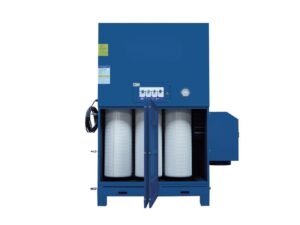
Dust collectors are important because factory dust is not only a housekeeping problem. In many production environments, dust affects air quality, equipment reliability, product cleanliness, maintenance workload, and the way a factory should design its ventilation and filtration system.
In simple terms, a dust collector helps capture dust close to the source, move it through ductwork or a local suction point, separate particles from the airflow, and return cleaner air or exhaust it safely depending on the system design. For industrial buyers, the real question is not only “Do we need a dust collector?” The better question is: “What dust problem are we trying to control, and what type of system will actually work in our production area?”
If you are comparing industrial dust collection systems, this article explains the common benefits first, then looks at five practical reasons dust collectors matter from a buyer’s point of view.
Quick Answer: Why Are Dust Collectors Important?
Dust collectors are important because they help factories:
| Common Benefit | What It Means In A Factory |
|---|---|
| Cleaner air | Less airborne dust around operators, machines, and production areas. |
| Better workplace conditions | Dust is captured before it spreads across the workshop. |
| Equipment protection | Motors, sensors, cabinets, bearings, and production equipment face less dust buildup. |
| Product quality support | Dust is less likely to settle on products, packaging, or process surfaces. |
| Easier inspection and documentation planning | A controlled dust collection system is easier to evaluate than uncontrolled dust emission. |
These benefits are real, but they are still only the first layer. Many factories still struggle after buying a dust collector because the system was not selected around the actual dust source, dust type, airflow, temperature, moisture, layout, and maintenance conditions.
That is where the deeper value begins.
1. A Dust Collector Helps You Control The Dust Source, Not Just The Dust In The Air
Many factories notice dust only after it becomes visible on floors, beams, machines, lighting, or finished products. By that time, the dust has already escaped from the source.
A good dust collection plan starts earlier. It asks:
- Where is the dust generated?
- Is the dust coming from cutting, grinding, conveying, mixing, dumping, welding, polishing, coating, or packaging?
- Is the dust released continuously or only during short production cycles?
- Is source capture possible, or does the process need enclosure, hood capture, or local collection?
This matters because a dust collector cannot solve every dust problem by itself. If the capture point is weak, dust will escape before the collector has a chance to remove it. If the hood is too far from the source, or the duct layout is poorly balanced, even a large collector may perform badly.
For buyers, this is one of the most important lessons: dust collection performance starts at the dust source, not at the collector body.
Before selecting equipment, it is useful to calculate airflow for a dust collection system based on hood size, duct velocity, collection points, and process conditions. The right airflow is not always the biggest airflow. It is the airflow that captures dust effectively without creating unnecessary cost, noise, or energy use.
2. The Right Dust Collector Reduces The Risk Of Buying The Wrong Equipment
Not all dust collectors are suitable for all dust types.
Some buyers start with a simple question such as “What dust collector should I buy?” But a practical supplier will usually ask several questions first:
- Is the dust fine, coarse, sticky, oily, abrasive, hot, moist, or combustible?
- Is the dust load light or heavy?
- How many dust points need capture?
- Is the process continuous or intermittent?
- Is there enough installation space for the collector, hopper, ductwork, fan, and maintenance access?
- Does the factory need a central system or a local unit?
Different dust conditions may point to different equipment choices.
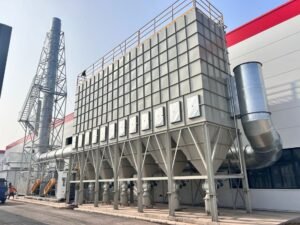
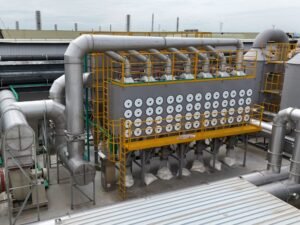
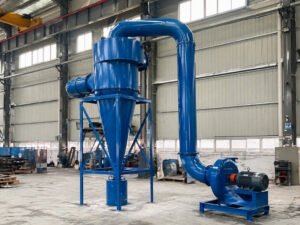
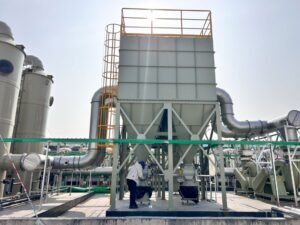
A baghouse dust collector is often considered for larger airflow, heavier dust loading, high-volume production, mineral dust, cement dust, or bulk powder handling. A cartridge dust collector is often useful for fine dry dust, compact layouts, welding fume, grinding dust, powder coating dust, and some pharmaceutical or food powder applications. A cyclone dust collector may be used for coarse particles or as a pre-separator before fine filtration. A portable dust collector may be more suitable for local workstations, flexible production areas, or smaller capture points.
This is why buyers should not choose only by price, airflow, or machine size. The wrong collector can lead to weak capture, frequent filter clogging, high maintenance, poor dust discharge, or extra modification later.
If your team is still comparing collector types, the guide on how to choose the right industrial dust collector can help you review dust type, airflow, space, temperature, moisture, and application fit before requesting a quote.
3. A Dust Collector Helps Keep Production More Stable
Dust problems are often treated as cleaning problems, but in real factories they can become production problems.
Dust buildup can affect:
- sensors and electrical cabinets
- motors, bearings, and moving parts
- packaging surfaces
- powder transfer points
- welding or grinding visibility
- filter loading and pressure drop
- maintenance schedules
When dust is not controlled, production teams may spend more time cleaning, stopping equipment, changing filters, checking blocked ducts, or dealing with complaints about dust in the work area. In some industries, dust can also affect product appearance or process cleanliness.
A dust collector does not replace normal maintenance, but it can make the dust problem more predictable. Instead of letting dust spread everywhere, the system directs dust into a controlled airflow path and collects it in filters, hoppers, drums, or discharge devices.
This is especially important in dust collection applications such as cement and construction materials, food processing, pharmaceutical powder, welding fume extraction, powder coating, grinding and polishing, woodworking, metal cutting, and bulk powder handling. Each application has different dust behavior, so the system should be designed around the process rather than copied from another factory.
4. A Dust Collector Makes The Real Cost Of Dust Control Easier To Understand
Many buyers ask for a dust collector price before the dust collection problem is clear. That is understandable, but it can also lead to wrong comparisons.
Two dust collectors with similar names can have very different total system costs because of:
- airflow volume
- number of capture points
- filter area
- filter material
- fan pressure
- duct length and duct diameter
- hopper and dust discharge design
- control cabinet requirements
- temperature, moisture, or abrasive dust
- installation space and maintenance access
This is why a dust collector should not be evaluated only as a single machine. In many industrial projects, the collector body is only one part of the full dust collection system.
For example, a small local system may need a compact collector and short ducting. A large cement, powder, or metalworking system may need multiple suction points, a larger fan, pulse cleaning, heavier steel structure, explosion relief considerations, or pre-separation for coarse dust. These differences affect not only the initial price, but also installation, filter replacement, power consumption, and long-term maintenance.
If cost is a major concern, it is better to review the main industrial dust collector cost factors before comparing quotations. A clear process description usually leads to a more accurate recommendation than asking for a standard price.
5. A Dust Collector Supports Future Expansion And Process Changes
Factories change. A production line may add more workstations, increase output, change materials, add packaging steps, install new machines, or move equipment into a different layout.
If the original dust collection system has no flexibility, these changes can create problems:
- airflow becomes too weak at new dust points
- duct branches become unbalanced
- filters load faster than expected
- the fan cannot handle added resistance
- maintenance access becomes difficult
- new dust types do not match the original filter selection
This is why dust collector planning should consider more than the first installation. Buyers should think about whether the process may expand, whether future collection points may be added, and whether the system layout leaves enough space for service.
In some cases, a central dust collection system is better because the factory has several fixed dust points. In other cases, several local or portable units may be more practical because the workstations move, the dust load is smaller, or the process is not continuous.
The best choice depends on the factory’s dust type, airflow demand, working schedule, and layout. A dust collector is not only a machine for today. It is part of a production environment that may need to keep working as the factory changes.
What Information Should You Prepare Before Choosing A Dust Collector?
Before requesting a quotation, prepare as much of the following information as possible:
| Information Needed | Why It Matters |
|---|---|
| Dust source | Determines hood, enclosure, local capture, or central collection method. |
| Dust type | Affects filter media, collector type, cleaning method, and dust discharge. |
| Airflow requirement | Helps size the collector, fan, ductwork, and capture points. |
| Number of collection points | Affects duct layout, branch balance, and fan pressure. |
| Temperature and moisture | Impacts filter selection and condensation risk. |
| Dust load | Helps decide filter area, hopper design, and cleaning frequency. |
| Working schedule | Continuous and intermittent processes may need different configurations. |
| Installation space | Affects collector size, maintenance access, fan location, and duct route. |
| Discharge method | Dust storage, drums, rotary valves, bags, or other discharge choices affect system design. |
The more clearly you describe your process, the easier it is to recommend a practical system.
Conclusion: A Dust Collector Is Important Because Dust Control Is A System Decision
Dust collectors are important because they help factories control airborne dust, support cleaner working conditions, protect equipment, improve production stability, and make dust control easier to manage.
But the real value is not only buying a dust collector. The real value is choosing a system that fits your dust source, dust type, airflow, working conditions, layout, maintenance needs, and future production plans.
If your factory is comparing dust collector options, Novazure can help review your dust source, airflow requirement, dust characteristics, and installation conditions before recommending a suitable system path.
To prepare the next step, send your dust type, process description, collection points, airflow estimate, temperature, layout, and photos or drawings if available. You can request a dust collector quotation and use the information above to make the discussion more accurate from the beginning.