
Quick Answer
For many dry lithium battery powder handling and electrode production processes, we usually recommend a cartridge dust collector because battery dust can be fine and dry, source capture points often need compact equipment, and cartridge filters provide a large filtration area in a relatively small footprint.
If the system handles larger airflow, multiple production lines, heavy loading, or central collection from several process points, a baghouse dust collector may be more suitable. If the process includes coarse material from crushing, screening, or recycling preparation, a cyclone dust collector may be considered as a pre-separator.
If the dust may be combustible, conductive, reactive, toxic, or difficult to clean safely, the material properties and site safety requirements should be reviewed before the final collector design is selected.
Dust Sources in Lithium Battery Manufacturing
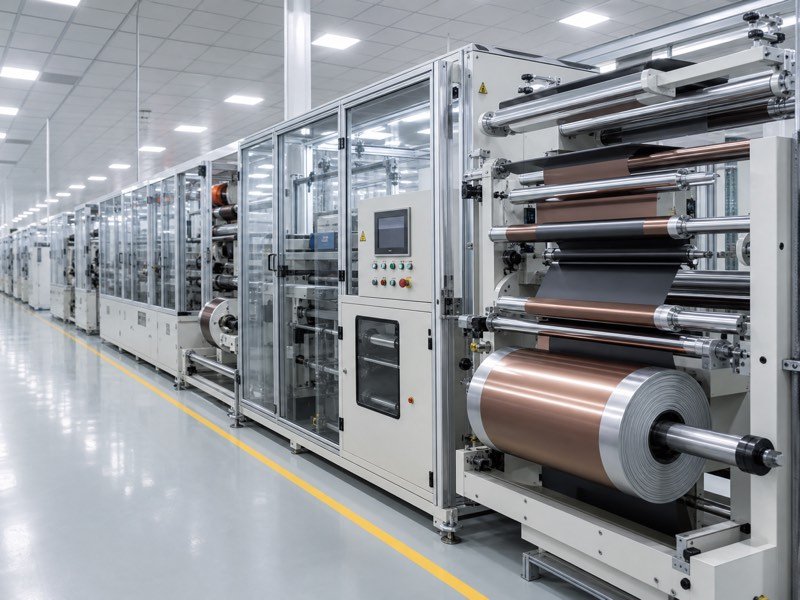
Lithium battery dust can appear around cathode and anode powder unloading, weighing, dosing, dry powder transfer, mixing preparation, coating-area cleaning, electrode slitting, cutting, trimming, roll edge collection, cell finishing, pack assembly cleaning, and recycling preparation.
The dust source may be a machine port, enclosed powder point, transfer chute, local hood, or wider production area that needs source capture. In electrode manufacturing, fine powder may come from graphite, carbon black, binder-related residues, cathode active material, aluminum or copper foil edge dust, and other materials.
Battery recycling and black mass handling should be reviewed separately from clean electrode production. Wet slurry, solvent vapor, electrolyte vapor, acid mist, or thermal smoke should also be treated as a different exhaust or air treatment problem.
Dust Characteristics and Collection Challenges
Lithium battery dust can be fine, light, dry, conductive, abrasive, or difficult to contain. Depending on the chemistry and process, dust may include graphite, carbon black, lithium metal oxide materials, lithium iron phosphate, nickel, cobalt, manganese compounds, aluminum, copper, or mixed battery material.
The main challenge is stable source capture without disturbing production. Fine powder can escape through small openings, settle on nearby equipment, contaminate sensitive materials, or settle inside poorly routed ductwork. Some battery-related dusts also require extra review for static control, combustible dust behavior, material compatibility, dust discharge, cleaning method, and maintenance access.
Recommended Dust Collector for Lithium Battery Dust
For local powder handling points, electrode production stations, slitting machines, trimming stations, and dry cleaning points, a cartridge dust collector is often the first option. It is compact, suitable for fine dry particulate, and can support pulse cleaning when the filter media and air volume are selected correctly.
For central systems serving several powder handling points, coating support areas, slitting lines, or finishing stations, a baghouse dust collector may be more practical. A cyclone is usually not enough as the final filter for fine lithium battery dust, but it may help reduce coarse loading before a final cartridge or baghouse collector in recycling or screening-related areas.
A portable dust collector may be used only for simple local maintenance, prototype work, or temporary dust points when the dust is not highly reactive or hazardous and the site safety review allows it.
For early equipment comparison, the existing guide on baghouse vs cartridge dust collector can help buyers understand the basic difference between compact cartridge systems and larger fabric-filter systems.
How the Dust Collection System Works
A practical lithium battery dust collection system starts at the source. The capture method may be a machine port, transfer point, hood, downdraft station, branch duct, or dedicated enclosure around a slitting, cutting, mixing, or powder handling point.
After capture, dust-laden air moves through ductwork to the collector, where cartridge filters or bag filters separate dust from the air stream. Pulse cleaning moves dust into the hopper or dust bin, while the fan provides airflow and the control cabinet manages operation when included.
For battery production, avoid mixing incompatible dust streams without review. Dry powder dust, recycling dust, vapor, mist, and hot smoke may need separate treatment. The duct route should be direct, with enough conveying velocity to reduce dust settling.
Key Selection Factors
Before selecting a lithium battery dust collector, review the process and material details first.
| Factor | What to check |
|---|---|
| Process | Powder unloading, weighing, mixing, coating support, slitting, cutting, trimming, finishing, or recycling preparation. |
| Dust material | Graphite, carbon black, LFP, NMC, aluminum, copper, black mass, or mixed battery material. |
| Dust condition | Fine, dry, conductive, abrasive, combustible, reactive, toxic, sticky, or moisture-sensitive. |
| Capture points | Machine ports, hoods, enclosures, transfer points, manual stations, and simultaneous operating points. |
| Airflow | Hood size, port size, duct distance, branch quantity, pressure loss, and required capture velocity. |
| Discharge method | Dust bin, sealed collection, product recovery, waste handling, and safe maintenance access. |
| Site requirements | Cleanliness level, static control, hazardous area review, explosion protection review, and local safety rules. |
If airflow is unclear, start with the dust point size, number of working points, process photos, and layout drawing. The guide on how to calculate airflow for a dust collection system can help with early planning, but the final selection should follow the actual capture method and material properties.
Recommended System Configuration
For one or two local dust points, a compact cartridge collector with short ductwork may be enough if the dust load is moderate and the safety review is simple. This layout is easier to install near a powder handling station, slitting machine, trimming point, or local cleaning area.
For several fixed machines or a production line, a central cartridge or baghouse system may be better. This configuration may include branch ducts, balancing dampers, filter collector, fan, control cabinet, dust discharge device, grounding review, and safety components selected according to the material and site requirements.
For recycling preparation, crushing, screening, or heavy particulate transfer, a cyclone pre-separator may be added before the final collector. The right configuration depends on airflow, dust load, working points, duct route, dust chemistry, recovery needs, and maintenance method.
Safety and Special Design Considerations
Lithium battery dust collection requires careful safety review. Fine powder and metal-containing dust can create health, fire, static, contamination, and maintenance concerns. Some battery dust may also need combustible dust testing, dust hazard analysis, grounding, isolation, explosion venting or suppression review, and local code review by qualified parties.
Do not connect unknown battery dust, wet chemical exhaust, solvent vapor, electrolyte vapor, hot smoke, or incompatible materials into a standard dry dust collector without checking the process. Filter media and system components should be selected from the actual dust test data, safety data sheet, temperature, humidity, and plant rules.
This Application page gives equipment-selection guidance only. Final safety and compliance decisions should be reviewed by qualified safety, process, and fire-protection professionals.
Why Choose Novazure for Lithium Battery Dust Collection
Novazure provides practical industrial dust collector systems for factory dust sources, including cartridge collectors, baghouse collectors, cyclone collectors, fans, ductwork, controls, and related system components.
For lithium battery dust collection, we help review the process type, battery material, dust source, capture method, airflow, dust load, duct layout, discharge requirement, maintenance access, and site safety concerns. Instead of only quoting a standard collector, we help match the collector type and system layout to the actual production process.
If your process is closer to general powder transfer, you can also review our bulk powder and material handling dust collection page. For other industries, the dust collection applications hub can help you compare related dust control scenarios.
FAQ
For many fine dry lithium battery dust sources, a cartridge dust collector is often the first option. For larger airflow, multiple production lines, or heavier dust loading, a baghouse dust collector may be more suitable.
Yes, a cartridge dust collector can be suitable for many dry electrode dust sources when the dust is fine, dry, and the filter media is selected correctly. Static control, material compatibility, and safety requirements should still be reviewed.
Usually not as the final filter. A cyclone may help with coarse particulate or heavy loading in recycling or material handling areas, but fine battery dust normally needs cartridge or baghouse filtration after separation.
Send the battery material, process type, dust source photos, number of collection points, airflow requirement if known, operating temperature, moisture condition, safety data sheet, dust load, recovery requirement, and layout drawing.
Request a Lithium Battery Dust Collection Solution
If you need a dust collection system for lithium battery powder handling, electrode production, slitting, cutting, finishing, or recycling preparation, send us your material information, dust source, airflow requirement, working points, and layout drawing.
Novazure will help you review whether a cartridge dust collector, baghouse dust collector, cyclone pre-separator, local capture unit, or central lithium battery dust collection system is more suitable for your production line.